Showing posts with label Desert Wheatear. Show all posts

Sunday, 30 November 2025

Waiting for the weekend

The clocks going back in October signals the end of any chance to get out birding after work until the spring, and there's precious little time to do so before work, so, for the fully employed, the opportunities to be in the field are pretty much restricted to weekends for the foreseeable future. This can lead to significant frustration, especially given the apparent propensity of good birds to turn up on a Monday. 

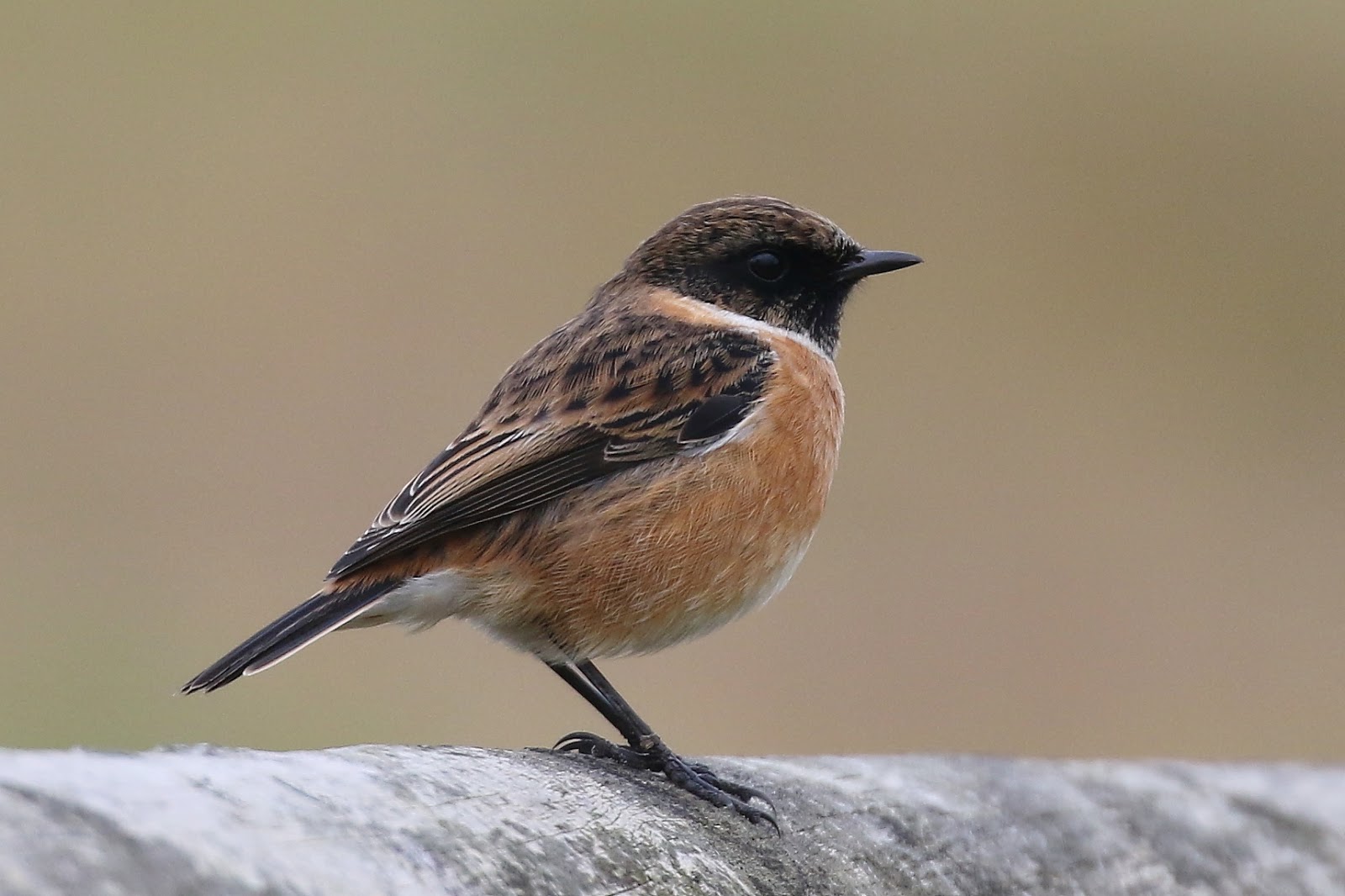
1st winter female Desert Wheatear

In the shade on the dung heap
Brett Spencer almost broke this rule of thumb in locating a Desert Wheatear near Wyke Regis last Sunday, but with barely an hour's daylight remaining when news broke, there was no way I would make it there by bike before dark. With an intense week at work ahead, I tried to put the bird from my mind - surely it would not stay until the following weekend? To my surprise the bird was still there on Monday, Tuesday, Wednesday and Thursday. To add insult to injury, several local birders with a limited grasp of auto-correct insisted on posting their photos of the 'Dessert Wheatear', implying they were going back for seconds before I even had chance of firsts!
Desert Wheatear photographed through the Bridging Camp fence

The bird spent a lot of time with it's bill open, not quite gagging but not far off - hopefully not a sign of ill health
When it was reported as still there on Friday I started to make plans for an early start on Saturday. With the mountain bike already up on blocks for major works, I dropped the hybrid off at my local bike shop for a minor repair on Friday lunchtime with the intention of collecting it before closing time. With my head down in work, however, I completely lost track of time and by the time I thought 'better collect the bike' it was too late! Fortunately they open at 0900 on a Saturday, and the enforced lie-in turned out to be a blessing in disguise as the rain was hammering down at 0800 and stopped just a few minutes before I knocked on the door at Wareham Cycleworks to collect my wheels. Just before that the continued presence of the bird was also confirmed, causing the heart to beat a little faster. Returning home, a pannier was already packed so I was away within a few minutes, heading west towards Wool, Weymouth and on to Wyke Regis.
Desert Wheatear

At one point it looked like the Wheatear might perch on my bike but this is as close as it got - my kickstand in the background
A nasty bout of flu kept me off the bike for the first half of November and its seemingly long tail left me feeling pretty worn out well into last week. The feeling of being out of shape was not helped by a stiff south westerly which contributed to my sluggish pace: the first 11 miles to the high point of the journey near Warmwell, which I can do in 50 minutes on a good day, took closer to 70 minutes as I laboured against the wind. Things got a bit easier after that but not much, and it was gone 1120 when I arrived at the Bridging Camp, temporary home to the Desert Wheatear. 
The Desert Wheatear during a short hover

The Desert Wheatear during a short hover
On arrival Durwyn Lilley, a fellow Wareham birder, was already there and another, Hilary Jordan, arrived shortly after. While I envied the more sensible forms of transport they had used to travel the 21 miles to the Bridging Camp, I could at least look forward to a following breeze to push me home. But first there was a bird to find, and there had been no sign of it since 1000. A somewhat discouraging message from the previous afternoon suggested that the Wheatear had flown across The Fleet to feed on the back of Chesil Beach - it would be bad news if this had happened again as I would struggle to see it from my position, particularly as I had left the telescope at home.
Desert Wheatear

Looking smart in the sun
After about an hour of no sign Durwyn headed back towards Camp Road to check other parts of the Bridging Camp - a large fenced compound within which the Wheatear had spent much of it's stay. Shortly after doing so he called me to say he had relocated it much closer to the road. I informed other birders along the western fence-line and scooted around on the bike, just in time to see the Wheatear distantly inside the compound, but it vanished before I could get a photograph. It eventually reappeared for a few record shots and with time pushing on I started to pack up with a view to heading for home. No sooner than I had put the camera away I saw Durwyn pointing down just beyond the fence - the Desert Wheatear was sitting just a few yards in front of him.
Desert Wheatear

Desert Wheatear
The camera was rapidly reassembled but photos remained difficult through the tight mesh of the fence. This mild inconvenience was soon overcome when the bird flew out of the compound onto our side of the fence and proceeded to feed in and around a dung heap at point blank range. The sun had also come out by this point, making for altogether better conditions for photography. Satisfied that I must have a few decent images in the can, I reluctantly packed the camera away for the second time and began the long journey home.
The Desert Wheatear was loosely associating with a small flock of Pied Wagtail

A Black Redstart was also at the Bridging Camp (photographed badly through the fence)
Unfortunately the wind had eased a fair bit so did not help as much as I had hoped, and as I climbed the last hill to the west of Wareham I was really struggling. Once at the top though, I could freewheel the last mile into town with the knowledge that I would soon be adding Desert Wheatear to the non-motorised year list (bringing it to 214) and my all time non-motorised list (which nudges up to 277). 
Desert Wheatear

Desert Wheatear

Monday, 20 February 2017

Bunker birding

I made the trip to Thurlestone Bay in Devon last November with my friend Trevor to see my first male Desert Wheatear in Britain. The bird was a bit bedraggled that day, so as I was heading to Cornwall with the family for a few days over February half-term, we took the southerly route along the A38 putting me within striking distance of this attractive rarity again.
On arrival at Leasefoot Beach, the Desert Wheatear was not present - a bit of a worry as it had been consistently there for several months, even returning after a short absence when it seemed to take a dislike to being trapped and ringed. I stuck around admiring the folded geology at each end of the sandy beach, and on returning to the base of the dunes was pleased to find the Wheatear catching the last rays of sun. When flushed by a dog it vanished over the dunes and I refound it perched on the roof of a small shed belonging to the local golf course. Away from the crashing surf I could hear its quiet sub-song - a scratchy warble mingled with a bit of melody - a real treat to hear this in the UK.
 
The Wheatear then perched up on some scrub at the edge of the golf course and continued to sing - I got some decent pictures of it with one of the greens as a backdrop, a pleasing contrast and a change from the classic views of it on the sandy beach which have littered the internet in recent months! It won't be long before the Desert Wheatear's northern cousins are arriving on spring migration - there must be a good chance of seeing both species together on Leasefoot Beach before the Desert Wheatear moves on.  
 

Friday, 30 December 2016

November...

This review of the year by instalments has become the blogging equivalent of Christmas turkey: I was sick of it after about the 5th portion, but I know it just has to be finished. So pour yourself another tot of Gaviscon, dear reader, and tuck in to my highlights for November - a rare month in that, for precious little effort invested, I saw some really good birds. Other than for work, I think I left the house on three occasions, which produced, in decreasing order of rarity:
A Forster's Tern in Essex, burying the decade-and-a-half old ghost of multiple dips on the same species in the same county - in those days I lived a lot closer in neighbouring Kent. An unexpected bonus tick late in the year and supporting evidence for my theory of the last few years that November is the new October. A straightforward choice for my bird of the month.
A waterlogged Desert Wheatear in neighbouring Devon - the first male of this species I have seen in Britain. Seen the day before twitching the Forster's Tern, so a good weekend in the year's litany of family neglect. 
And even closer to home a patch tick in the form of a flock of Barnacles at Swineham. Barely deserved in what I think was my only visit of the month.
Picking a photo of the month was a bit of a challenge for November, on account of the dearth of candidates and the complete absence of sunlight. So it'll have to be this Stonechat from Swineham.

Monday, 21 November 2016

Desert Storm

Motivation and opportunity to get out with the camera have both been a bit lacking recently. With autumn migration largely over and done with, the allure of Swineham in mid-November is pretty limited, being, as it generally is, mild, wet and devoid of interesting bird life. I was discussing this problem with fellow Swineham regular Trevor on the train on the way home from work mid-week, and by the end of the conversation we had talked each other into twitching the long-staying Desert Wheatear in neighbouring Devon if it remained until the weekend. A patch-neglect pact, if you will.
Trevor doesn't generally twitch but had never seen Desert Wheatear in the UK, and I had never seen a male, incentive enough for us both to make the effort. After an exhausting week at work neither of us fancied an early start, so a leisurely departure time of 0800 was agreed and not long after the good news came through that the Desert Wheatear was still present. This made the journey a breeze, and despite signs diverting us off the A35 due to an accident (if being dumped on the outskirts of Axminster with literally no signage can be called a 'diversion') we followed our noses westwards arriving at Thurlestone around mid-morning.
The forecast had been sufficiently good for the morning to support, we thought, our decision not to head down too early but we stepped out of the car into the what appeared to be an early appetiser for Storm Angus. A fierce squall soon had us running for cover behind a raised bank at the back of Leasefoot Beach before we had even raised our bins to look for the bird. The squall had also caused other birders to flee the beach but as we stood there wiping our spectacles, wondering if it had also caused the Wheatear to beat a retreat, a passer-by who had seen it earlier pointed it out in a favoured spot on the beach.
With the squall passed we were soon crawling around in the sand trying to get close enough for a few photos. The Wheatear was reasonably confiding but also very active, flying regularly to the end of the small beach to preen on rocks and the low cliff face before heading back to the strand line to feed. Unfortunately the weather had taken its toll and the bird was looking a bit bedraggled, its breast feathers looking particularly waterlogged. Any concerns that this might have done any lasting damage were fortunately allayed by photos from the following day which showed it looking all fluffy and handsome again. A charming bird, and an enjoyable excursion.

Friday, 22 February 2013

Reminisce with a list

It's been a frustrating week with continuing back problems preventing me doing pretty much anything on the birding front. With a slight improvement yesterday, and with driving easier than walking, I twitched the Pied-billed Grebe in neighbouring Somerset. The journey there was fine but, having seen the bird, something else in a hitherto OK bit of back went ping, and I literally limped home to spend the rest of the day in bed, where I remain as I write this.
 
So rather than dwell on the things I haven't seen this week, I thought I would cheer myself up by focusing on the things I have seen over the years. And what better way to do it than that tried and tested birding format: the list. Today's list is my top five long-distance twitches. Most of these birds were photographed pretty poorly (click the links below for proof) before I bought a decent camera, so rather than inflict grainy sepia pictures on you, the war stories are broken up with some of my favourite rarity photos from the last decade. Two lists for the price of one, you lucky things.

American Robin, Grimsby (Jan 2004). A trip from Kent with Matt Jones. Of about a million digiscoped shots, this was the only sharp one.
1. Black-Browed-Albatross, Sula Sgeir, May 2007. I started birding in the late 1990s so had never seen the long-staying Albatross at the Hermaness Gannetry. So when one was located on Sula Sgeir, and Dick Filby organised a series of three boat trips to look for it the following year, we booked on the first one available. Probably my most expensive twitch ever, I think Matt Jones and I paid £300 for a berth on the Professor Multanovsky to sail overnight toward this rocky outcrop in the Atlantic. As the boat steamed out of Ullapool on a chilly evening Matt said, 'what are we doing? We've spent a fortune to twitch a bird that hasn't been seen for nearly a year'. Fortunately it was still there. Four species of Skua plus White-tailed Eagle from the boat capped the trip off nicely.
Pied-billed Grebe, Hollingworth Lake (Nov 2010). Not as Pied-billed as the recent Somerset bird of the same species, but pretty special anyway. This bird swam just yards in front of a hide I was sitting in.
2. Harlequin Duck, Lewis, April 2004. Another trip with Matt as we made a week of it in Scotland. Apart from the occasional chopper to the Isles of Scilly, this was the only time in the last 10 years that I have broken a self-imposed flying ban, going short-haul from Glasgow to Stornoway before hiring a car and heading for Grais where the Harlequin Duck was last seen. We overshot the spot but after some high speed reversing were soon enjoying views of this mega-rarity. American Herring Gull in Stornoway Harbour and enough Iceland Gulls to fill a freezer were a bonus.
White-billed Diver, Cornwall (March 2007). If this picture looks a bit like I was stood over the bird, that's because I was. It swam under a footbridge up a creek off the Hayle Estuary. We saw this, a Franklin's Gull, a Spotted Sandpiper and a Yellow-browed Warbler all within a couple of hours of watching a Gyr Falcon leave the roost at Stepper Point.
3. Snowy Egret, Balvicar, April 2002. The first time I saw this bird was in Ardeer, on the way back from a winter trip to Islay in 2001, but it was such a long-stayer that I caught up with it the following April back at Balvicar. An epic day started at Loch Garten with Capercaillie and Osprey, continued with Black Grouse at Loch Laggan and a King Eider at Dunstaffnage before seeing the Egret mid-morning, then back east for a Red-breasted Goose near Kinross, a couple of Surf Scoter in Fife and a Waxwing flock in Dunfermline before dusk.

Red-flanked Bluetail, St Martin's (Oct 2010). Not such a major rarity these days but still a stunning bird.
4. Masked Shrike, Kilrenny, Nov 2004. Probably my longest day-trip to date, 1000 miles on the clock exactly, for the ultimate solo smash and grab. I left Kent at 0200, crossed the border just after 0700, saw the bird about 0930, headed for home about 1100 and was back in time to put my son in the bath that evening. Apart from getting out of the car to see the bird, I stopped only once, at Gretna services, to fill up and, more importantly, to twitch some Waxwings by the petrol pumps.
Desert Wheatears are often confiding. This one on Cooden Beach, East Sussex (Nov 2006) was no exception.
5. White-tailed Plover, Caerlaverock, June 2007. Matt and I finished work and drove through the night to be on site for first light with several hundred others. We were packed into the Tower Hide like Russian dissidents on the train to the Gulags, the waking dead nodding off on each others shoulders. I still have flashbacks. Then dawn broke, and we watched thick fog for the next four hours. When it eventually cleared it was obvious that the Plover had moved on. To top it all off, the car broke down. Unsuccessful, but still epic, and every list of top twitches should include a spectacular dip, I reckon.
Sandhill Crane, Suffolk (Oct 2011). Not the best photo but a great trip with Steve Smith and Jol Mitchell.
There, I feel better already. More of these trips down memory may follow, depending on how quickly the back mends...
Green Heron, Lost Gardens of Heligan, Cornwall (Oct 2010).