Well it's
Big Butterfly Count time of year again, and unlike in previous years when the obligation on me to promote it via this neglected corner of the internet was purely moral, happily I am now professionally obliged to big it up. Not that it needs much help from me of course: it is already the world's biggest butterfly survey and the data gathered represents one of our finest examples of 'citizen science'. Spending 15 minutes in a sunny spot - and there have been plenty of those around lately - is all it takes, and it's good for you too, so there's no excuse not to join in really. Even if you don't see much, it's still important to record it. So, off you trot. And if that's not encouragement enough, here are a few pictures to whet your appetite, highlights from many happy moments photographing butterflies over the last few months.
 |
| Painted Lady: this pristine migrant brightened up the weekend on the Purbeck coast |
 |
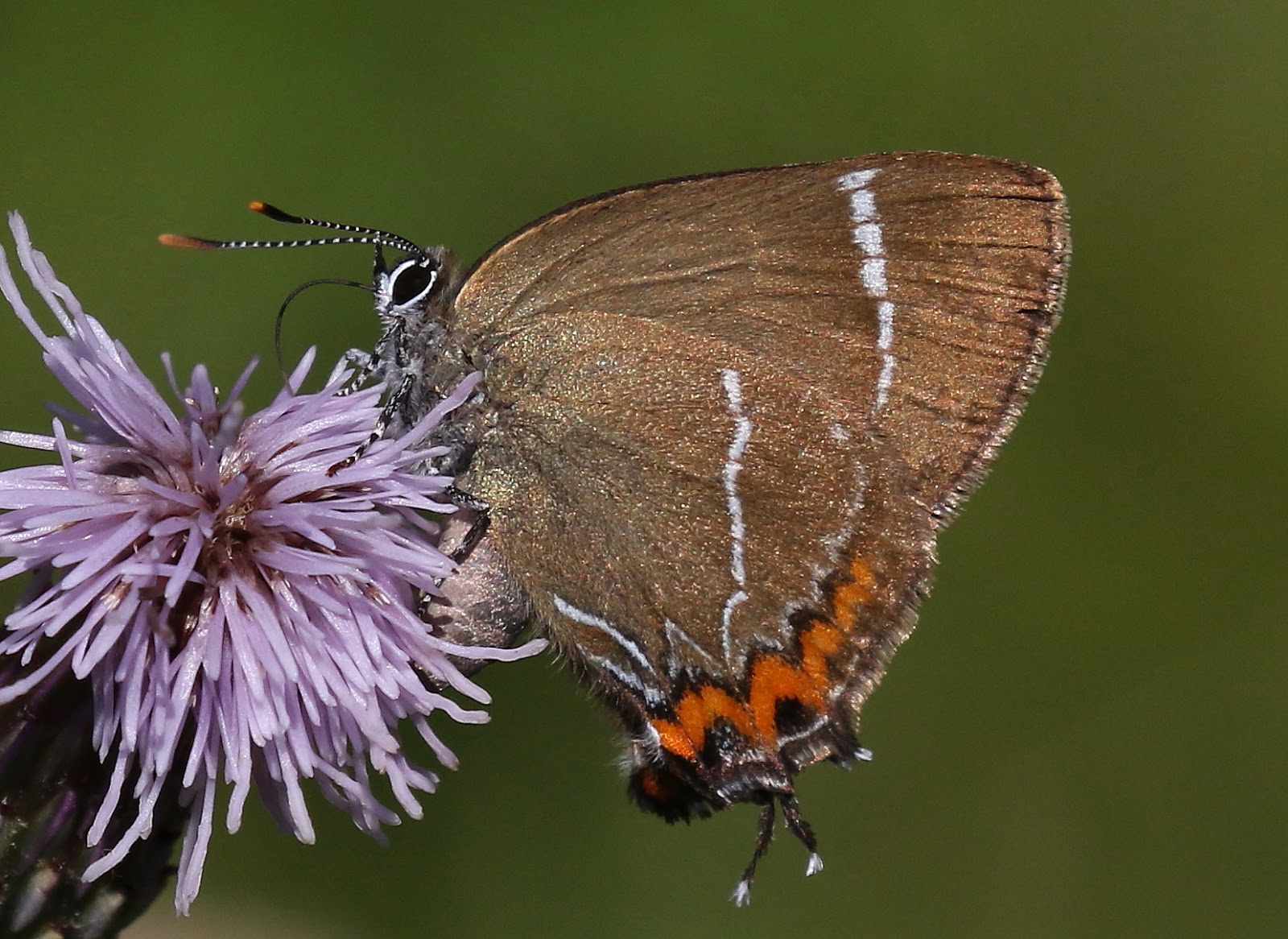
| This White-letter Hairstreak was also in good condition - my first in Purbeck (14 July) |
 |
| The underwing of this Silver-washed Fritillary reminds me of the iridescent lining of a mollusc's shell (Purbeck, 14 July) |
 |
| An Essex Skipper in my tiny town centre garden was a surprise |
 |
| The antennae tips look dipped in ink with black undersides |
 |
| Attracted into the garden by our fine display of drought-resistant lavender |
 |
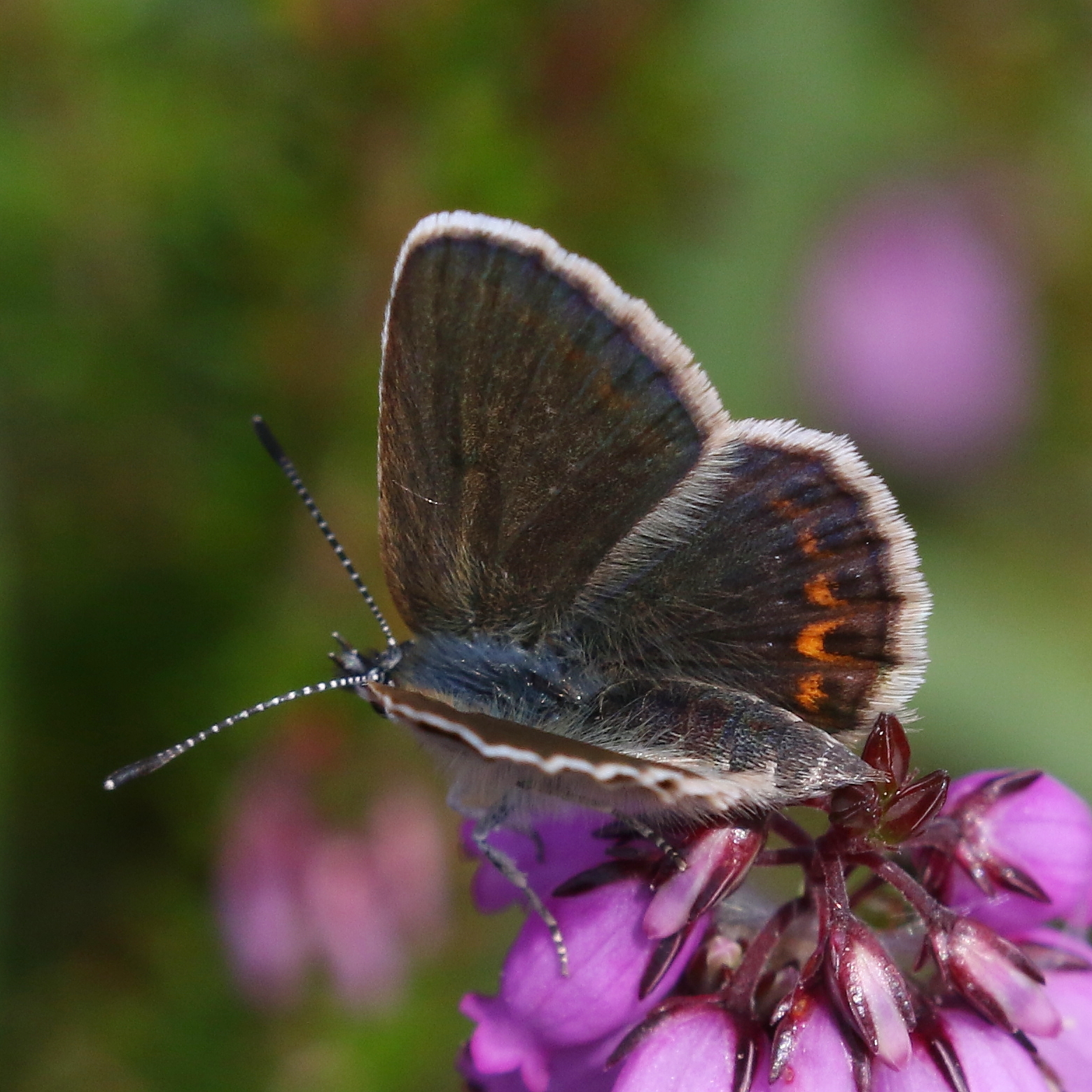
| Silver-studded Blues emerged in good numbers on the Dorset heaths this year - this a male... |
 |
| ...and this a female (Studland, 24th June) |
 |
| Silver-studded Blues have also been dispersing to non-traditional sites, presumably a function of the heatwave |
 |
| Note the silver studs on the hind-wing of this female |
 |
| White Admiral also appears to have had a good summer - this one was at Queen's Copse near Wmborne (23 June) |
 |
| I visited there shortly after the White Admirals had emerged |
 |
| 'Who doesn't love a White Admiral underwing' I asked on Twitter. 114 kind souls agreed! |
 |
| A business trip to Northern Ireland provided my first opportunity to see the Cryptic Wood White - having seen all the other regularly occurring species in the UK, this was a highlight of the year for me |
 |
| There was a good colony at Craigavon Lakes, a grassland site well managed for the butterfly by Craigavon Borough Council (8 June) |
 |
| We even saw a Cryptic Wood White egg-laying - I don't carry a macro lens so this photograph came out surprisingly well |
 |
| An evening visit to the extraordinarily beautiful Murlough NNR enabled us to catch up with the Irish form of Marsh Fritillary (7 June) - this an iPhone photo |
 |
| Adonis Blue at Dancing Ledge on 1 June - a species which doesn't cope well with drought conditions |
 |
| And here's the English form of Marsh Fritillary (Cerne Abbas, 26 May) |
 |
| Possibly my favourite fritillary underwing - Marsh Fritillary at Cerne Abbas on 26 May |
 |
| Marsh Fritillary, Cerne Abbas |
 |
| A fresh Brown Argus at Cerne Abbas (19 May) |
 |
| Duke of Burgundy, Cerne Abbas (19 May) |
 |
| The Duke is another species for which there is concern that the foodplant may be suffering in the drought, causing problems for the caterpillars |
 |
| Small Blue was doing well this spring on the Weymouth Relief Road verges - more good local authority management by my former employer Dorset County Council |
 |
| The Small Blue colony is thought to be one of the largest in England - and there were none there at all in 2011 (photo taken 18 May) |
 |
| So the warm weather has certainly been kind to some species - but there are growing concerns about the impact of drought on the next generation: all the more reason to submit your records for the Count. |