Showing posts with label Avocet. Show all posts

Sunday, 3 June 2018

Banished to the fens

Another family camping trip over the Whitsun Bank Holiday weekend saw me, again, surplus to requirements, opening up the possibility of a few days away at a destination of my choice. I have not seen Swallowtail butterflies in some time or photographed them since investing in some decent camera gear, so heading for the Broads and Fens of Norfolk seemed like an attractive option.
Avocet, Frampton Marsh
The reserve holds a healthy breeding population
Avocet feeding on the muddy scrapes
Not too difficult to photograph in flight due to its highly contrasting plumage making it easier for autofocus to lock on

Checking the forecast before departure, my first morning away didn't look like great butterfly weather so I started my road trip with an early start at Frampton Marsh, over the border and the from Norfolk in the Lincolnshire section of the Wash. A group of Ruff had been lekking on the reserve viewable from the car park and having only seen this spectacle once before the opportunity to do so again was not to be missed.
 A few Avocet chicks had hatched at Frampton Marsh
Avocet
Lapwing chicks were also on the reserve
The adult Lapwing was nearby
A Little Stint was another wader of note on the reserve
As a Schedule 1 breeding bird, Ruffs can't be photographed at or near the nest without a licence, but as these birds were viewable from a safe distance the RSPB has been encouraging visitors to the reserve to enjoy the spectacle. On arrival I parked near the reserve centre and walked to the old car park near the sea wall from where the lek could be viewed. Avocet chicks had recently hatched in the scrapes by the roadside and the adults were alert to danger, calling loudly and mobbing any passing traffic on the road.
Two of the three males present in the Ruff lek
The female can be seen skulking on the water's edge - looking a bit disinterested here
The male Ruff's headgear looks very Elizabethan
This male appeared to be bowing to the female
The battles between males were brief but fierce
Much has been written in natural history literature about the sexually charged nature of the Ruff lek but for an unconventional take on it, check out this Guardian article about 'Ruff Sex'. I would have borrowed 'Let's talk about leks, baby' from this piece as the title for this post but for the intellectual copyright theft it would have represented.
A distant Glossy Ibis was at Frampton Marsh
Several Little Gull were feeding over the water
Swift feeding over the neighbouring farmland
Tree Sparrows were around the nearby farm buildings
Spring was certainly in full swing at Frampton, and with so many farmland birds seemingly in trouble and numbers of migrants apparently down, it was a tonic to see Tree Sparrows and good numbers of singing Sedge Warblers alongside the breeding waders. Unfortunately I could not locate the Turtle Doves which were present on my last visit to the reserve but I was reassured that one of their favourite 'purring' trees had blown down in winter storms and that they were still in the wider area.
Sedge Warbler
An energetic singer
Sedge Warbler

Thursday, 16 November 2017

Busy...

Busy, busy...no time for blogging...some photos from the last few weeks...but not getting out much lately...Hawfinch invasion passing me by...can't win an argument at home because every time I get close they play the 'Shetland' joker...etc etc.
The Red Admiral is having a great year - I saw one at Wareham station this morning but this one on Ivy was taken last weekend at Middlebere
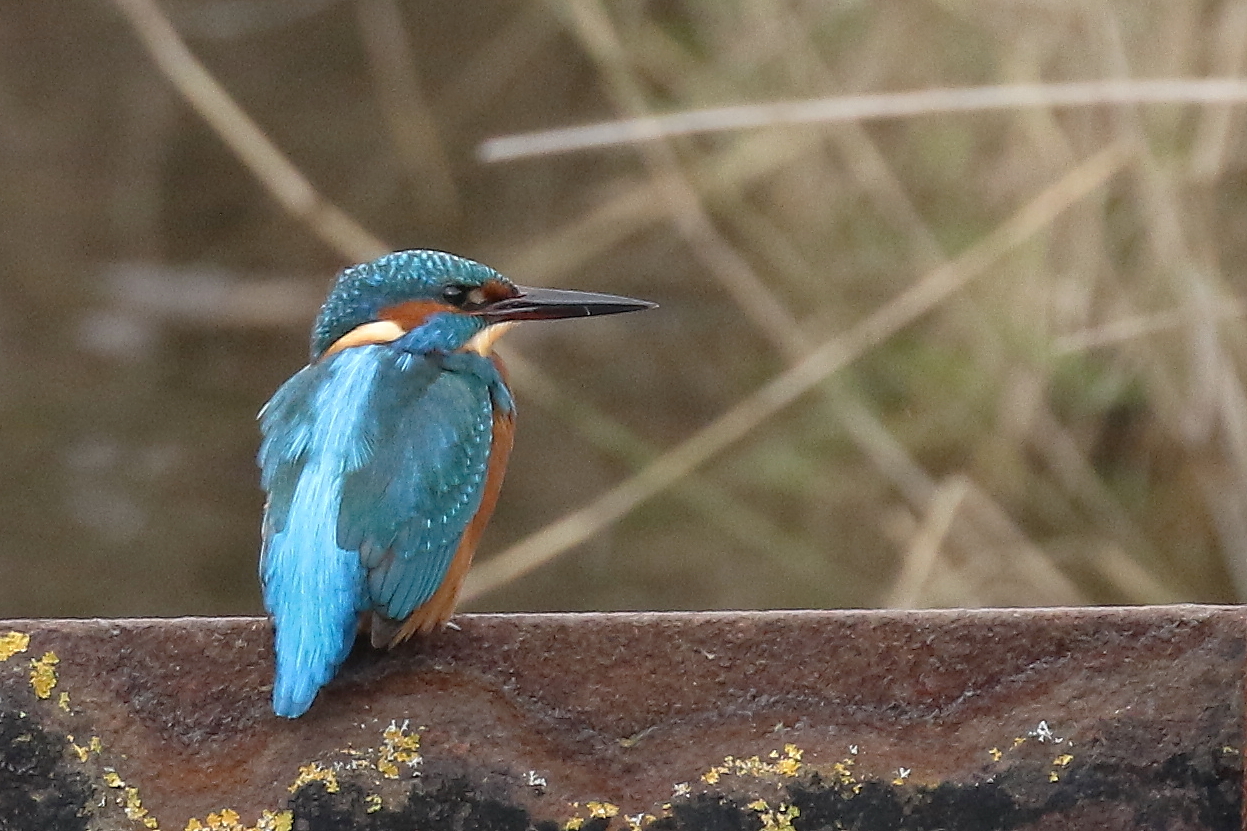
Kingfisher at Lodmoor
An obliging individual
Always brightens a dull day
A long-staying Lesser Yellowlegs at Lodmoor 
The second I have seen this year in Dorset....
...after another long staying bird at Lytchett last winter
Avocet are returning to Middlebere in numbers
A Middlebere Merlin put the waders to flight
A dashing male
Rare to get such a good view
Yellow-legged Gull also at Middlebere
Like the Merlin it was intimidating the waders

Tuesday, 14 February 2017

Wader wonderland

Almost forgot about these, languishing in a dusty corner of the hard drive labelled 'January'. Some cracking waders from around Poole Harbour last month.
This summer plumaged Bar-tailed Godwit was at Shore Road - the same bird I photographed this time last year
It has spent many winters now returning to this site, standing out among its more conventionally plumaged brethren
Bar-tailed Godwits, Shore Road
Compare to the more plain-backed Black-tailed Godwit 
This bird was feeding alone and at close range in Poole Park
Black-tailed Godwit
Oystercatcher, Shore Road
A blizzard of Avocets at Middlebere (click to enlarge)

Sunday, 18 September 2016

Brownsea through a variety of lenses

Both my sons have been showing an interest in photography lately so I've been digging out old camera bodies and lenses in the hope of encouraging them. I am thinking that if I can get them hooked now, I will have someone to drive me round in my old age while I sit in the back barking directions. The novelty of having their own cameras helped persuade them that a day trip to Brownsea yesterday would be a good idea, as opposed to their normal Saturday morning routine of slaying elf-lizards on Skyrim.
Taking the slightly complex but more scenic route from Wareham around the south side of Poole Harbour, over on the Studland ferry as foot passengers and to Brownsea via the famous yellow boat from Sandbanks, we got the first one of the morning and were in the hides overlooking the lagoon shortly before 1030. Large numbers of waders were present, the most numerous being Oystercathcer, Black-tailed Godwit and Avocet, flocks of which are building up for the winter.
Two Curlew Sandpipers close in to the Low Hide with a Dunlin behind
Juvenile Curlew Sandpiper on the right with characteristic peachy wash on the breast - with Dunlin for comparison
A very smart wader
Another juvenile Curlew Sand - the peach colouration has faded on this one
Much scarcer among the waders were a few each of Ruff and Curlew Sandpiper, both of which eventually came in close to the hides having initially been viewable only distantly through the telescope. A dozen Spotted Redshank were also hanging out with the Redshank flock.
Spotted Redshank - one of a dozen present
Avocet - part of a flock of almost 200
Black-tailed Godwit - a scaly-backed juvenile
A couple of Ruff were secreted amongst the Godwits
In truth, despite my efforts to tool them up with half-decent camera gear, the boys didn't take many photos of birds - they spent most of the time at opposite ends of the generously appointed hides photographing each other, or spraying imaginary bullets around using the camera's high speed burst mode to simulate semi-automatic assault rifles. Charming. But they did seem to appreciate the compelling nature of wildlife photography eventually when a tame Red Squirrel allowed a close approach near the Villa. A kindly soul had left a few nuts out and it kept returning to eat a few and bury the rest.
A flock of at least 25 Spoonbill was present - looking unusually awake here...
...and even more lively here
Red Squirrel
A slightly messy eater