Showing posts with label Lesser Yellowlegs. Show all posts

Wednesday, 20 July 2022

Friday night's alright for biking

With a title like that you might be hoping this post features rock n' roll exploits such as heavy drinking and drug-taking, but unless you count copious amounts of water and hayfever tablets, disappointment awaits. I confess to doing coke, but just the one can, to wash down fish and chips at Stanpit last Friday night. 

But this particular story starts two days before on Wednesday when work took me to Reading for a couple of days. Thanks to a post-pandemic flexibility on the part of my employer, a presence in the office is only required for things which are best done face-to-face, which translates to being there roughly once or twice a week. They are long days by train but productive, providing concentrated work time and the ability to manage the inbox thanks to the now ubiquitous onboard wifi. 

Caspian Tern, Stanpit, 15 July
Despite being relatively infrequent, however, these visits seem to have an uncanny habit of coinciding with the arrival of rare birds back in Dorset which would otherwise have been within cycling distance. This year alone I have missed Red-necked Phalarope, Rose-coloured Starling and Alpine Swift when in Reading, though I did at least manage to catch the Swift at the second attempt. Wednesday's visit provoked the arrival of a Caspian Tern at Stanpit Marsh. Its appearances were erratic but it was seen early and late on the Wednesday, causing me to wonder if I could get home on Thursday night in time to go for it.

My train was due to arrive back in Wareham at about 1900, and google maps suggested that if I got a shift on I could complete the 21 miles to Stanpit by 2045, assuming the journey home went smoothly. It did so until Bournemouth when, for reasons best known to themselves and their shareholders, South Western Trains decide that the westbound service to Weymouth would no longer stop at Wareham or anywhere else for that matter, rendering it useless for 95% of the hot and frustrated passengers turfed off at Bournemouth. 

Caspian Tern with juv Med Gull in the background
To compound the problem they simultaneously appeared to come to the conclusion that passenger information about the timing of any later trains was entirely superfluous. The line was clearly in some chaos and a taxi home seemed like the best option - but certainly not the cheapest! Despite my best efforts to persuade others in the queue to share, they all seemed to be travelling on business expenses and not interested, so I arrived home at 1920, £45 lighter in the wallet.

I had pretty much given up hope of making it to Stanpit, but info from Olly Frampton reminded me that it was 2125 before the bird had appeared the night before, so I decided to go for it against my better judgement. I made good time in the cool of the evening and arrived at Fisherman's Bank in Stanpit, from where the best views had been obtained, just after 2100. One other birder was present and we 'scoped the area in vain for the next 40 minutes before reluctantly giving up. Checking the live departure boards for the trains online I was surprised to find that order had been restored so, having dipped, I was at least able to take advantage of the unused portion of my ticket from the earlier journey to complete the Christchurch-Wareham stretch to home.

I put the Caspian Tern from my mind and hit the sack exhausted, rising bright and early for work the next morning feeling surprisingly fresh. Reports of the Tern still being present on and off throughout the day got me thinking about a re-match. The sensible thing to do might have been to leave it until the weekend, but that would have meant cycling into the rising heat of what was forecast to be one of the warmest days of the year. In this context, heading out on Friday evening as soon as work allowed was the better option, and with the bike already packed from the night before I made a prompt getaway, cutting the corner off the flatter but longer coastal route to climb up to the Wallisdown Road some 12 miles from home before dropping gently down the remaining 9 miles to Stanpit.

Arriving shortly before 1830 there was no sign of the Tern but I passed the time chatting to Charles Stubbs, editor of the Christchurch Harbour Ornithological Group's annual bird report. He had been out of the country, making him one of the last locals not to have seen the rare visitor. 

Charles mentioned that he had to leave at 1900 for a pre-ordered meal from the chip shop on the corner. The mere mention of food reminded me of the need to eat, and Charles kindly agreed to watch over my bike and optics while I ran to grab some sustenance. We exchanged numbers 'just in case', and after a bit of a delay to my order I was heading back in his direction, supper in hand. As I was about 100 yards away my phone started to ring and I could see Charles holding his mobile to his ear, obviously watching the bird in his telescope. 'On my way!', I yelled, quickening my pace.

Within seconds I was enjoying good views of the Tern as it rested on the mud in front of Fisherman's Bank. Charles suggested I might consider heading further east, over the border into Hampshire to add the Lesser Yellowlegs at Normandy Marsh to my bike list. Whilst the possibility had occurred to me, I hadn't given it serious consideration, but was now starting to do so. I resolved to make a decision by 1900 which would still leave plenty of daylight to get to Normandy. 

Charles headed off for dinner with my expressions of gratitude hopefully ringing in his ears while I stuck around for a few record shots. Another birder then arrived and after getting him onto the bird, and a jolly exchange of the 'are you that bloke on Twitter who cycles everywhere to see birds?' variety, I made the decision to go for the double. Although Normandy Marsh is 'just along the coast' from Stanpit for the driver, to the cyclist it meant another 13 miles worth of pedalling in the heat, followed of course by a 34 mile journey pedalling home.

Although I could have done without even the gentle ups and downs en route, I made reasonable progress to Normandy arriving around 2015. There was no sign of the bird on its preferred lagoon so I headed for a couple of birders - the only birders - further along the sea wall. Fortuitously, their telescopes were pointing out towards the Solent - and straight at the Lesser Yellowlegs! The gamble had paid off and for the second time that evening I found myself being grateful to fellow birders for making it so easy for me. We had a lovely chat as Little Terns, Redshanks and Oystercatchers bombed around and I even added a bonus Eider to the year list thanks to a small flock on a distant mudbank. My new friends seemed a bit incredulous that I had cycled from Stanpit, even more so when I told them that I started the journey in Wareham, and would be returning there later that night!

The Lesser Yellowlegs was a long way out but the telescope enabled good views of the legs, needle-thin bill and other features
It was a beautiful evening with the Isle of Wight as a backdrop, but as dusk was approaching I needed to get on the road. Retracing my steps as far as Stanpit, I then turned south to the coast to take advantage of the flat run home via Bournemouth seafront. Although hard going into a stiffening breeze, it was an enjoyable journey, the highlight of which was a huge moon, reddened by Saharan sand, just above the horizon as I passed the pier. 

I arrived home half an hour after midnight with 68.63 miles on the clock, shattered but content. Moreover, I had added two species not just to the non-motorised year-list (moving it on to 189) but also my non-motorised life list. The latter now stands at 247, offering the tantalizing prospect of attaining the landmark of 250 before 2022 draws to a close.

The closest of half-a-dozen Eider on the Solent

Thursday, 16 November 2017

Busy...

Busy, busy...no time for blogging...some photos from the last few weeks...but not getting out much lately...Hawfinch invasion passing me by...can't win an argument at home because every time I get close they play the 'Shetland' joker...etc etc.
The Red Admiral is having a great year - I saw one at Wareham station this morning but this one on Ivy was taken last weekend at Middlebere
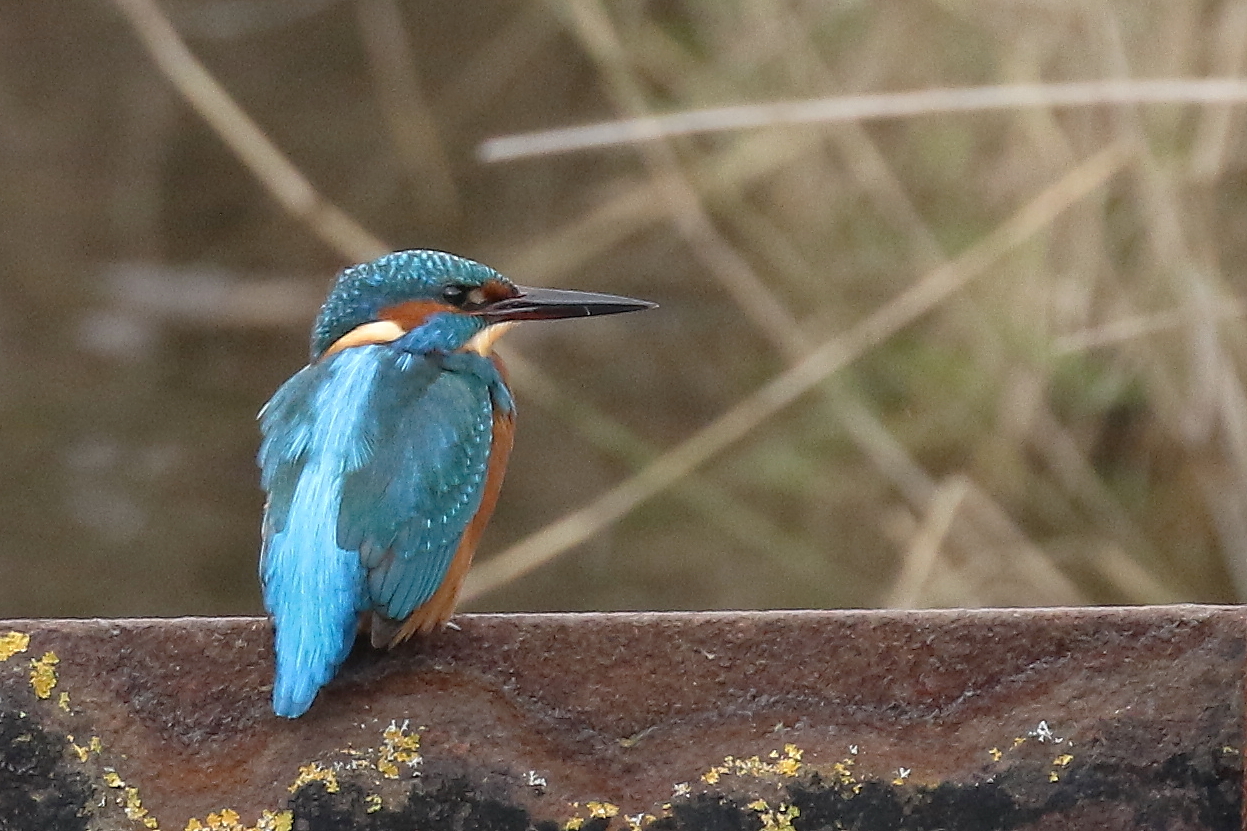
Kingfisher at Lodmoor
An obliging individual
Always brightens a dull day
A long-staying Lesser Yellowlegs at Lodmoor 
The second I have seen this year in Dorset....
...after another long staying bird at Lytchett last winter
Avocet are returning to Middlebere in numbers
A Middlebere Merlin put the waders to flight
A dashing male
Rare to get such a good view
Yellow-legged Gull also at Middlebere
Like the Merlin it was intimidating the waders

Tuesday, 17 January 2017

Birthday treats

It was my birthday recently - a stuttering but undefeated innings of 48, in case you were wondering. To celebrate almost half-a-century of under-achievement I cleared my professional decks, booked the day off work and did some birding around Poole Harbour. The children were at school and Claire was at work, affording me the luxury of neglecting the entire family to go looking for birds without guilt.
Lesser Yellowlegs at Lytchett Bay
Green-winged Teal, just leaving Lytchett Bay
Redhead Smew distantly in Holes Bay
The once fierce competition between Lytchett Bay and Swineham as Poole Harbour birding locations, a fire stoked in these pages on more than one occasion in the past, has tailed off somewhat in recent years. Lytchett has gone from strength to strength under sympathetic management by the RSPB, being diligently scoured by Top 10 Patchwork Challengers (impressive, though I still think Patchwork Challenge sounds like a needlecraft contest). Swineham has gone downhill under a less wildlife-friendly regime, being wilfully neglected by feckless regulars like yours truly. So much so that I felt barely a flicker of shame in shunning the latter for the former to go looking for Lytchett's two long-staying winter rarities from the Americas: a Lesser Yellowlegs and drake Green-winged Teal.
Dark-bellied Brent Geese at Baiter Park
Coot, Poole Park
Drake Goldeneye and Red-breaster Merganser were out in the middle of Poole Park lake
The Yellowlegs was easy enough, sitting out nicely with a Redshank for comparison, the only two medium-sized waders on one of the pools. The Teal required a bit more luck: it flew off just after I arrived, but not before a kindly soul had let me have a quick squint at it through his scope, hence the dodgy record shot above, hurriedly snapped as it pelted away. Around the corner a returning redhead Smew was in Holes Bay for its third winter, while Poole Park held a few photogenic fowl as always. I caught up with a trio of Great White Egrets slightly further afield at Longham Lakes before heading over on the Sandbanks ferry to complete a circuit of the Harbour.
A lone Black-tailed Godwit was on the shore of Poole Park lake
Little Egret, Poole Park lake
Three Great White Egrets at Longham Lakes
The last hour of daylight was spent at Studland, where the raucous calls of a couple of Sandwich Terns were a cruel reminder of just how far away is spring, and the even more raucous calls of the local Ring-necked Parakeets were an equally cruel reminder of just how far away and warm is their native India.
Ring-necked Parakeet, Studland
Sandwich Tern, Studland
I would say watching the sun go down at Studland completed the day, but that wasn't really the end of it as on arriving home there was a birthday present to play with: the US Capitol building from the Lego Architecture range. Quite repetitive assembling the orderly lines of neoclassical columns and other fiddly bits, but ridiculously satisfying, a pure indulgence, and, I am reliably informed by the teenager of the house, substantially more socially acceptable than making an Airfix model. The perfect gift for the middle-aged man-boy in your life.
The US Capitol Building courtesy of the Lego Architecture range - George Washington laid the first brick. If you listen carefully this model makes a strange whirring noise: the sound of a miniature George turning in his grave.

Wednesday, 28 December 2016

October...

October always brings a sense of anticipation, and October 2016, up next in my review of the year, was no exception. It brought its fair share of success, but also its fair share of frustration. First the successes, which featured a couple of American waders.
A Baird's Sandpiper at Davidstow airfield was worth an early morning visit. The closest I have seen one, photographed from the car window
This Lesser Yellowlegs was at Lytchett Bay - my second Dorset tick of 2016
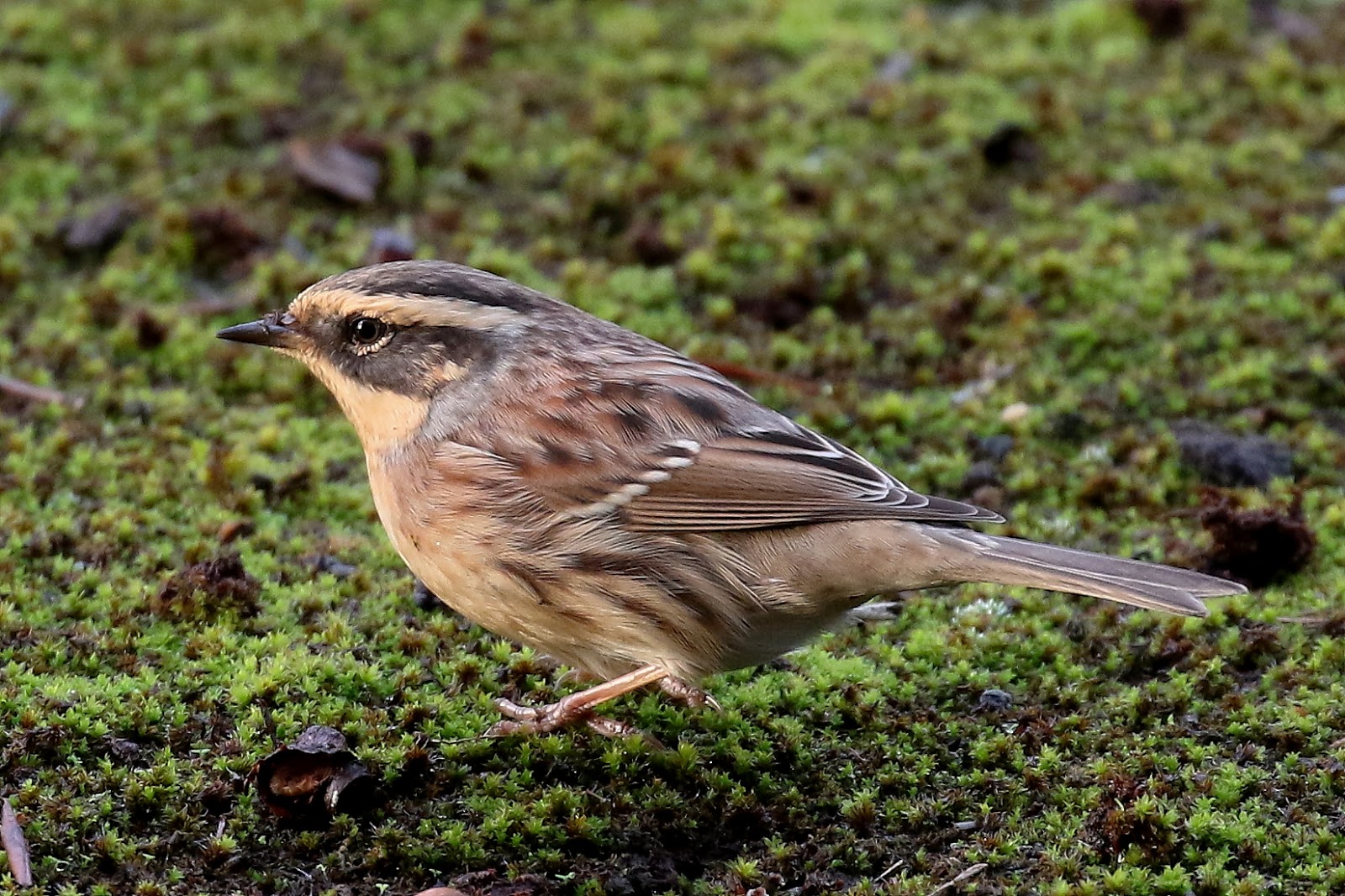
October 2016 will be remembered for the Siberian Accentor invasion, and I managed to catch up with the second one to turn up - the long-staying Easington bird which drew a crowd from the middle of the second week of the month. Fortunately it stayed until the Sunday allowing myself and Chris Patrick to pitch up, tick it before breakfast and be back home just in time to avoid social services taking our abandoned families into care.
Siberian Accentor, Easington - a special bird, and my bird of the month for October

This Shorelark was just down the road from the Siberian Accentor
A good first half to the month then - but less so the second half. Portland lay at the centre of October's frustrations with a short-staying Red-flanked Bluetail and a Pine Bunting failing to settle having been ringed at the Observatory. Still, a few scarce migrant birds made several visits more bearable over the course of the fortnight.
Hen Harrier, Portland
Turtle Dove on Portland - a sad comment on its rarity now that it was quite a well-twitched bird, My photo of the month for October
Another island - St Mary's added to the frustration at the month's end, when a day trip with Steve Smith produced nothing more exciting than a couple of Yellow-browed Warblers and a putative Eastern Yellow Wagtail. Still, it was good to be back on the island for the second time in two months, even though it wasn't as successful as the first.
Yellow-browed Warbler, St Mary's
Putative 'Eastern' Yellow Wagtail

Tuesday, 27 December 2016

September...

Good things seemed to come in twos in September, the latest month to be given the drive-by review treatment in my look back at 2016. Starting with two tickets to the Isles of Scilly for my youngest son and I to twitch a Cliff Swallow, with a point blank Lesser Yellowlegs making up a high quality American double for the day.
Cliff Swallow, St Mary's. Incredibly another was found in Suffolk later in the year but this was the smarter of the two ;-). Suffolk would have been cheaper of course - but not nearly as much fun! Bird of the month for September
Lesser Yellowlegs, St Mary's - my photo of the month for September
Seeing one Shrike always means it's a red-letter day, but two rarer members of the family in the same month was something to celebrate - especially when both the Woodchat (at Pirate's Cove near Weymouth) and the Lesser Grey Shrike (at Mountbatten near Plymouth) were so confiding.
Woodchat Shrike, Pirate's Cove
Lesser Grey Shrike, Jennycliff Beach
September produced some fine weather as well as some fine birds, and I made a few journeys to Portland during the month to look for migrants - the island can usually be relied on for seasonal scarcities like Rose-coloured Starling and Wryneck.
Rose-coloured Starling, Portland

Wryneck, Portland
Even Swineham had something to offer in September - an overdue patch tick in the form of a Great White Egret, and an approachable Kingfisher - common enough along the River Frome, but only rarely do they perch long enough for a photograph.

Great White Egret, Swineham

Kingfisher, Swineham
The final duo from September was extra special - my own sons, each seemingly taking an interest in wildlife photography. Rowan joined me on the trip to Scilly while they both tooled up with long lenses for a visit to Brownsea. I'm sad to report the passion for photography hasn't really lasted with either, but it was fun while it did, and may have sown the seeds of some future interest in this most absorbing of pastimes.

Tuesday, 13 September 2016

Bonus birds on Scilly

While the Cliff Swallow was the main target of Saturday's visit to St Mary's, the time of year meant that there was always likely to be a selection of other good birds to see even had it not been there.
Lesser Yellowlegs, Porth Hellick
Compare and contrast to this Greater Yellowlegs from Titchfield Haven, April 2015
The Lesser Yellowlegs in context of the habitat at Porth Hellick Pool
A dainty and attractive wader
A long-staying Lesser Yellowlegs was our first American vagrant of the day, entertaining us by strutting around outside the seaward hide at Porth Hellick at point blank range while we waited for the Cliff Swallow to wake up. It was accompanied by several Greenshanks, Dunlin and singles of Green and Common Sandpiper - though the juvenile Temminck's Stint which I had hoped would stick until the weekend seemed to have moved on.
I have seen several Lesser Yellowlegs, but not since my first at Abberton Reservoir in 1998 (before I was into photography) had I seen one so close
The white rump was obvious in flight
This reminds me of the cartoon Roadrunner
A good view of the open wing and tail
On leaving Porth Hellick, a few Wheatears punctuated the walk around the perimeter of the airfield as we ambled through the heat of the midday sun which had by then burnt off the grey clouds of early morning. The Standing Stones field in the Old Town proved to be a bit of a migrant trap with a Red-backed Shrike and a couple each of Spotted Flycatcher and Whinchat providing some variety. A Clouded Yellow which buzzed quickly past was my first of the year - Scilly is always a good place to see them.
Common Sandpiper, Porth Hellick
Dunlin, Porth Hellick
I thought we might have another American vagrant on our hands when Rowan said 'Dad, what's this Black Duck?' Hopes were dashed when I raised my bins to this iridescent freak-show reject!
Small Copper at Porth Hellick

All too soon Rowan and I had to return to the airport for our 1425 return flight - but it had already been a memorable day. A brief cruise around Davidstow Airfield on the way home failed to produce the hoped for Buff-breasted Sandpiper (one was found there today) but that still couldn't wipe the smile off our tired and happy faces. Looking back I can't quite believe I agonised so much over whether or not to go, and next time I have resolved to be more decisive. For me, that will mean eschewing the usual full business case development process in favour of just the outline version, slimming down the cost-benefit analysis to a mere 10 pages, and restricting the normally extensive stakeholder consultation to just immediate family. And maybe a few close friends...
Juv Red-backed Shrike near the Old Town
Spotted Flycatcher in the same field as the Shrike
The Flycatcher shares a branch with a Whinchat
Rowan gets the hang of photography at Porth Hellick