Showing posts with label Blackcap. Show all posts

Saturday, 14 October 2017

Shetland day 3: brightening up

We saw a proper Shetland rarity on the third day of our recent nine day visit: sunshine. As the morning dawned brightly we decided to check out some promising looking gardens in remote areas of the western mainland before relocating to our accommodation for the coming week in south mainland.
Yellow-browed Warbler, Culswick
Yellow-browed Warbler, Gardins
Pied Flycatcher, Culswick
Starting at Culswick, before long we had flushed a skulking locustalla from a roadside ditch. The most likely option in this scenario is the familiar Grasshopper Warbler, though there is always the chance of it being something rarer - Pallas's Grasshopper or Lanceolated Warbler being the most desirable. The Warbler buried itself in an iris bed but, with some gentle encouragement, flew to a ruined croft where it showed well enough to confirm it was 'just' a Gropper. Still, a promising start.
Grasshopper Warbler, Culswick
Willow Warbler, Gardins
Willow Warbler, Effearth
Male Redstart, Easter Skeld
At Gardins, Yellow-browed Warblers were the order of the day - including four together in one small bush at the gateway to a large house. The impression of there being good numbers of common migrants on the islands was confirmed as the morning progressed: Pied and Spotted Flycatchers, Redstarts, Blackcaps, Willow Warblers and Chiffchaffs. It felt very birdy and encouraged us to continue pishing our way around any suitable looking patch of habitat.
Blackcap
Blackcap, Wester Quarff
Lesser Whitethroat, Wester Quarff - probably of a race ;-)
Red Admiral - the only species of butterfly we saw in Shetland
Sparrowhawk, Wester Quarff
Highlights of the day were a couple of Red Grouse which appeared cackling over a fragment of heather-clad hillside near Easter Skeld and gave us a close flypast before vanishing over the horizon, and finally a Corncrake, flushed by David at Fladdibister where we were searching for a Red-backed Shrike. We assumed the Corncrake would run for cover and never be seen again but as we approached where it had landed, it flushed again to give conclusive (but unphotographable) flight views.
Red Grouse, Easter Skeld 
Red Grouse, Easter Skeld
Redwing, Easter Skeld

Sunday, 30 October 2016

Net migration

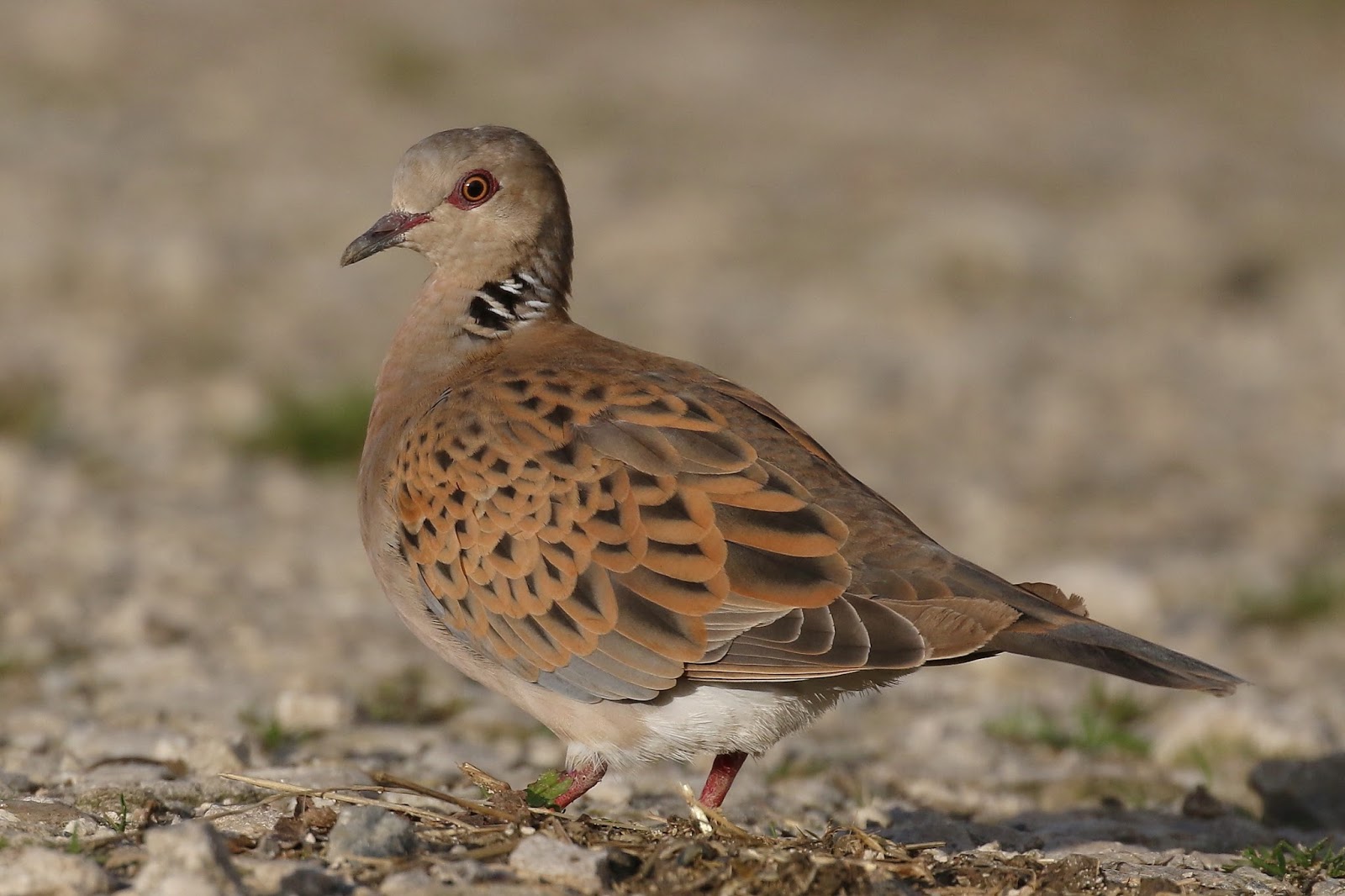
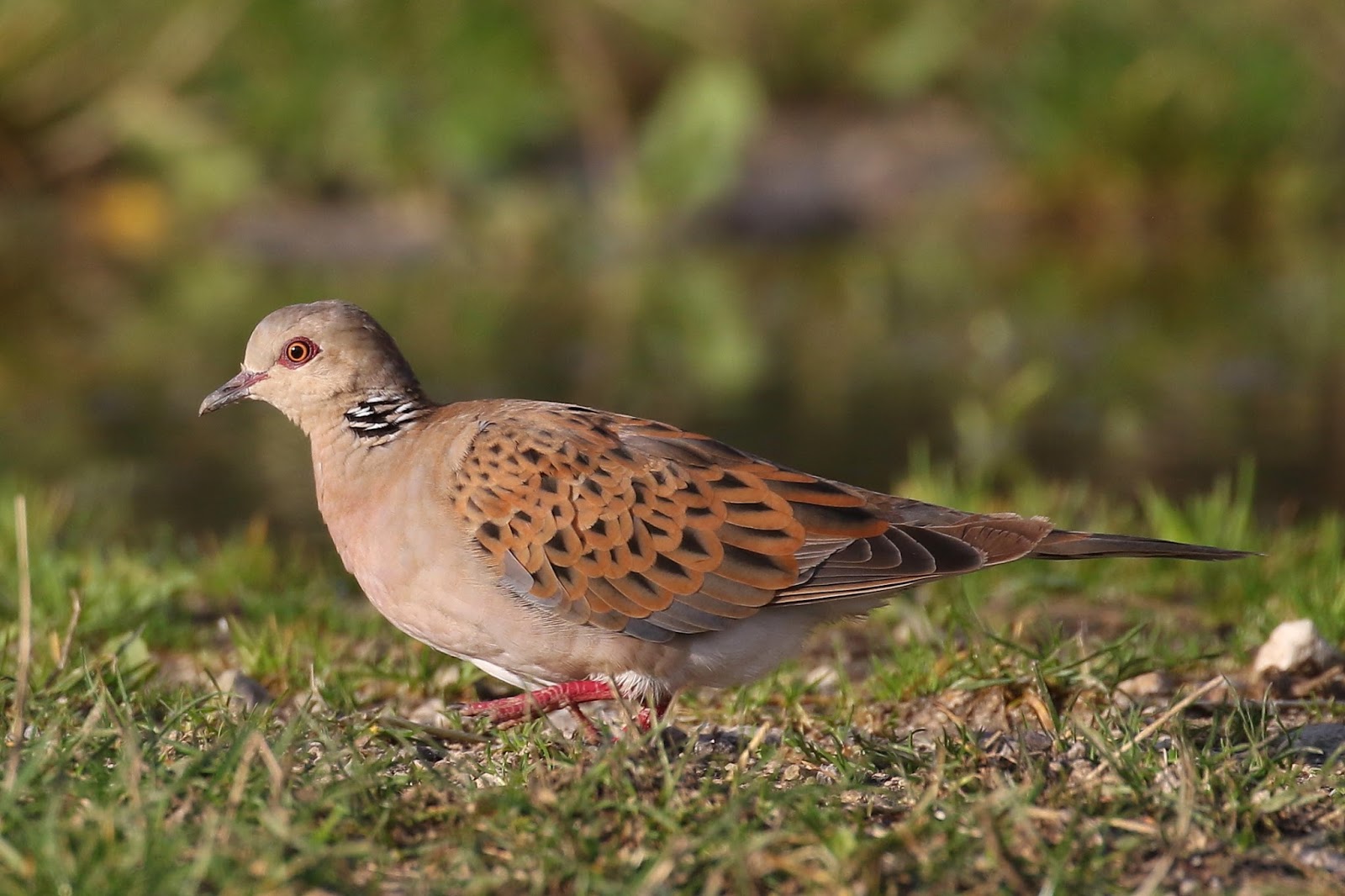
Four visits to Portland this half-term may have failed to deliver the hoped for Dorset mega - several rare migrants being netted and ringed but not seen again after their release - but in addition to the raptors featured in my last post, there were still some other attractive birds to photograph. Perhaps most widely appreciated by birders dipping on the Red-flanked Bluetail and the Pine Bunting was the Reap Lane Turtle Dove. The precipitous reduction in the number of this once commonplace species in Britain is well documented so I won't bang on about it here. Suffice to say if the depressing combination of factors which have contributed to its decline could be reversed we could all look forward to spring, and the sight and sound of this handsome bird, a little more.
Turtle Dove, Reap Lane
This bird seemed unperturbed by people, dogs and even the local cats
A few years since I last saw one in Dorset
I lay down to get these photos, doing well to avoid the obvious hazards of Reap Lane, a favoured area with dog walkers
When not on the ground it was roosting in a small Sycamore yards from the path
Stonechats always seem quite obliging on Portland
This the female of a pair
With the Siberian Accentor invasion still ongoing, Dunnocks have been getting a bit more scrutiny lately
A few Redwings were in evidence on Portland this week
A pair of Ravens on Portland
A small crowd of fellow Bluetail dippers at the Bill
West Cliffs, Portland
I also managed a visit to Durlston this week - Blackcaps were the most conspicuous warbler
This a female Blackcap
Skylarks were on the grasslands...
...and a late Small Copper was in the gully  
Evening mist in the Frome Valley
Turtle Dove
Turtle Dove

Saturday, 23 April 2016

More spring arrivals

Long-distance migrants have been arriving in force over the last week or so - I managed to catch up with ten of my favourites last weekend and this, all common summer visitors to British breeding grounds. Common maybe - but uncommonly difficult journeys they undertake to come back to these shores. A good excuse to flick through the old BTO Migration Atlas to marvel at the journeys they make, read the accounts of ringing recoveries and be reminded of the perils they face along the way.
Male Redstart, Suckthumb Quarry, Portland, 17th April. A trans-Saharan migrant, the Redstart heads through the Iberian peninsula before arriving in Britain, having wintered south of the Sahara.
Whinchat, Suckthumb Quarry, Portland, 17th April. Another long-distance migrant wintering in tropical Africa. Spring males are stunners!
Lesser Whitethroat, Swineham, 23rd April - quite a rare visitor to the patch. British Lesserthroats head to northern Italy for a stopover on migration across the Med to winter in east Africa - an unusual route for one of 'our' warblers.
Common Whitethroat, Suckthumb Quarry, Portland 17th April. They spend winter in the Sahel region of Africa.
Reed Warbler, Wareham, 23rd April. A trans-Saharan migrant, our Reed Warblers are thought to winter in west Africa, reaching us in spring via a westerly route through North Africa and Iberia.
Sedge Warbler, Swineham, 23rd April. Another trans-Saharan migrant, more ringed British Sedge Warblers have been recovered from Senegal than any other country.
Willow Warbler, Portland Castle, 17th April. Many British birds winter in the Gulf of Guinea.
Yellow Wagtail, Suckthumb Quarry. British birds winter in Senegal and the Gambia, following the west African coast and passing through Spain en route to Britain in spring.
Male Blackcap, Portland Castle, 17th April. British breeders spend winter in southern Iberia and northwest Africa. Blackcaps wintering in Britain are, however, thought to be continental breeders.
House Martin, Lodmoor, 17th April. Over a million House Martins have been ringed in Britain but only a couple of dozen of these have been recovered south of the Sahara. Knowledge of their wintering grounds is therefore limited.
Whinchat, Suckthumb Quarry. A very dapper beast.


Thursday, 29 October 2015

Another Purbeck Pallas's

Purbeck's Winspit Valley held two Pallas's Warblers yesterday so I headed there when the rain stopped this morning. I had barely left the village and started down the footpath to the valley when the bright yellow rump of a Pallas's Warbler buzzed down the track in front of me and ducked into the hedge. This was no doubt the same bird as that found yesterday by Andrew Lawson, brother of fellow Swineham regular Marcus. Down at the bottom end of the valley I could find nothing rarer than a Firecrest and a few Blackcaps, but with large numbers of Goldcrests present, the valley held a sense of promise at least.
Pallas's Warbler - my 3rd in Dorset in 2 days
Not perfect photos (taken at ISO 3200 in very low light) but an intimate view at least
Blackcap at Winspit
One of many Goldcrests in the valley
Goldcrest
The seaward end of Winspit Valley
A late male Southern Hawker at Winspit
Brambling in the car park at Arne RSPB to end the day