Showing posts with label Common Sandpiper. Show all posts

Monday, 4 September 2017

300 up

I come from a long-line of under-achievers so when it comes to listing, I try to keep my goals to a bare minimum to avoid disappointment. At this stage of mid-life, in fact, I have just two self-imposed targets - first, to see 300 species of bird in Dorset before reaching the age of 50 and, second, to see 500 species in Britain before I die. Daft these targets may be, but yesterday I ticked off the first of them by adding Baird's Sandpiper to my county list, and with a couple of years to spare.
Common Sandpiper was one of a number of migrant waders on Brownsea
300 species for Dorset is no big deal, of course - the top county listers are closer to 400 than 300, and the county list as a whole currently stands at 423, with at least 3 more species (Spectacled Warbler, Elegant Tern and Yellow Warbler) certain to be added when the 2017 record books come to be written. But having only moved here in 2007 I still think it represents a pretty good effort for a fully-employed father of two who can't always drop everything to chase rarities.
There weren't just migrant birds on Brownsea - this Painted Lady was also on the heath at the top of the island
Yesterday was a case in point: I wrote as recently as June how visits from family/friends were guaranteed to result in the appearance of a rare bird. This weekend the visit of my sister and sister-in-law threatened the same - the rare bird being the Baird's Sandpiper on Brownsea, found on Friday lunchtime by Paul Morton. Work commitments meant there was no chance of twitching it that day, and even though the bird went missing on the Friday afternoon and evening, a day trip to the island on Saturday seemed a good idea. Fortunately our visitors and the rest of the family agreed.
Redshank on the Brownsea lagoon
Soon after our arrival I was scanning the back of the lagoon for waders, and had a brief view of a bird with an obvious pectoral band, apparently smaller than the Dunlin with which it was associating. It was then lost to view in vegetation but I had seen enough to keep an eye on the same area. I was soon joined by Graham Armstrong and we simultaneously locked on to a bird which looked a good candidate, and similar to the one I had seen earlier.
The Spoonbill flock had risen to 26 birds by Saturday - they spent a lot of time in the air flushed by...
...the Red Arrows, in the area for the Bournemouth Air Show
Despite the heat haze and the considerable distance between us and the bird, we gradually pieced together the key features - the pectoral band in combination with otherwise pure white underparts, attenuated rear end, scalloping on the wings, shorter bill and legs, slightly paler and more concolorous upperparts compared to the more variable Dunlin it was with. It was often out of view behind vegetation, and re-locating it required some care due to the haze and the fact that a number of the Dunlin also showed relatively neat pectoral bands - but the latter invariably displayed scruffier underparts and larger heads and bills than the more diminutive Baird's.
In this record shot to end record shots, the bird on the left is the Baird's - even in this terrible image the impression of a slighter bird with a smaller bill, cleaner white underparts and more attenuated rear end is confirmed compared to the Dunlin on the right
Increasingly confident with the identification, we put the news out enabling several Dorset birders to catch up with the rare visitor in the afternoon. The rest of the day was then free to be devoted to touring Brownsea with the family and enjoying its exotic selection of non-native spongecakes and flans.
A slightly better comparison shot of Baird's Sandpiper (right) and Dunlin illustrates the key features mentioned above rather more clearly - this was taken last October at Davidstow Airfield in Cornwall

Monday, 15 May 2017

All over the place

A busy schedule, a disorganised hard-drive and a terrible memory have caused me to neglect to post details of our travels over the Easter break. So to make amends, here is the first of two posts with some photographic highlights of an unseasonably warm week in Cornwall and Devon:
Chough near the Lizard
Chough, the bird which appears on the Cornish coat of arms, returned to breed on the Lizard several years ago after a long absence. The Cornish population continues to increase steadily
Fulmar also breed on the cliffs at the Lizard
A Common Sandpiper was on an ornamental lakes at our cottage on the Bonython Estate
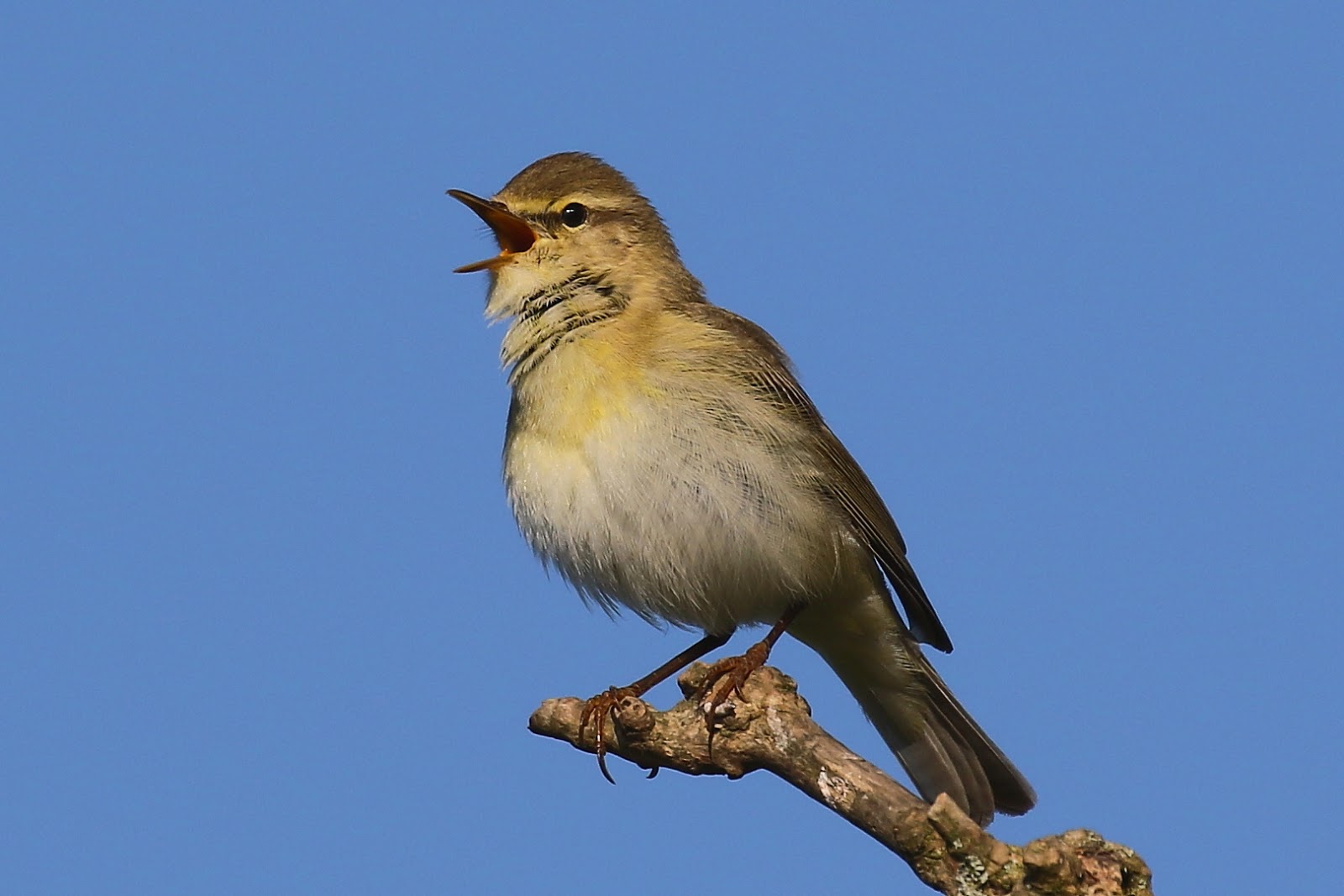
An early morning visit to Church Cove on the Lizard produced a few migrants, including this Willow Warbler
A vigorous songster
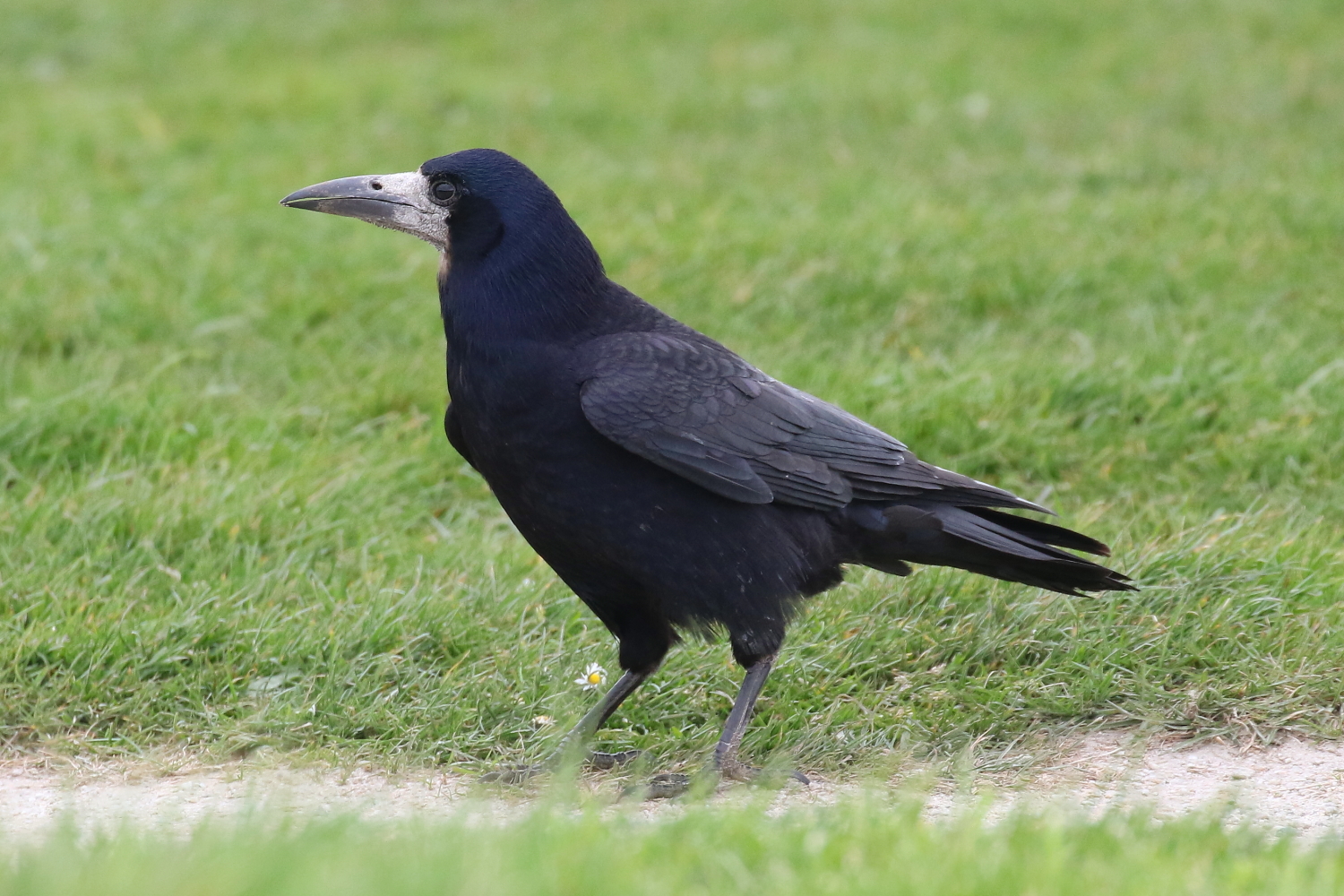
A common enough bird, the Rook, but still deserving of the occasional appearance on this blog
Hard to believe that when I started this blog, the one on the right was much shorter than the one in the middle, and the one on the left was still in a pushchair!
Green-winged Orchid near Mullion Cove

Tuesday, 13 September 2016

Bonus birds on Scilly

While the Cliff Swallow was the main target of Saturday's visit to St Mary's, the time of year meant that there was always likely to be a selection of other good birds to see even had it not been there.
Lesser Yellowlegs, Porth Hellick
Compare and contrast to this Greater Yellowlegs from Titchfield Haven, April 2015
The Lesser Yellowlegs in context of the habitat at Porth Hellick Pool
A dainty and attractive wader
A long-staying Lesser Yellowlegs was our first American vagrant of the day, entertaining us by strutting around outside the seaward hide at Porth Hellick at point blank range while we waited for the Cliff Swallow to wake up. It was accompanied by several Greenshanks, Dunlin and singles of Green and Common Sandpiper - though the juvenile Temminck's Stint which I had hoped would stick until the weekend seemed to have moved on.
I have seen several Lesser Yellowlegs, but not since my first at Abberton Reservoir in 1998 (before I was into photography) had I seen one so close
The white rump was obvious in flight
This reminds me of the cartoon Roadrunner
A good view of the open wing and tail
On leaving Porth Hellick, a few Wheatears punctuated the walk around the perimeter of the airfield as we ambled through the heat of the midday sun which had by then burnt off the grey clouds of early morning. The Standing Stones field in the Old Town proved to be a bit of a migrant trap with a Red-backed Shrike and a couple each of Spotted Flycatcher and Whinchat providing some variety. A Clouded Yellow which buzzed quickly past was my first of the year - Scilly is always a good place to see them.
Common Sandpiper, Porth Hellick
Dunlin, Porth Hellick
I thought we might have another American vagrant on our hands when Rowan said 'Dad, what's this Black Duck?' Hopes were dashed when I raised my bins to this iridescent freak-show reject!
Small Copper at Porth Hellick

All too soon Rowan and I had to return to the airport for our 1425 return flight - but it had already been a memorable day. A brief cruise around Davidstow Airfield on the way home failed to produce the hoped for Buff-breasted Sandpiper (one was found there today) but that still couldn't wipe the smile off our tired and happy faces. Looking back I can't quite believe I agonised so much over whether or not to go, and next time I have resolved to be more decisive. For me, that will mean eschewing the usual full business case development process in favour of just the outline version, slimming down the cost-benefit analysis to a mere 10 pages, and restricting the normally extensive stakeholder consultation to just immediate family. And maybe a few close friends...
Juv Red-backed Shrike near the Old Town
Spotted Flycatcher in the same field as the Shrike
The Flycatcher shares a branch with a Whinchat
Rowan gets the hang of photography at Porth Hellick

Tuesday, 30 August 2016

Wader therapy

When the full horrors of existence loom larger than my joie de vivre, which they did this weekend as a blissful fortnight's holiday with the family approached its end and a return to work beckoned, I go look for waders. Don't embarrass me by asking me to name them all, that's a cruel test. Especially since our second child arrived and there are now more of them to remember.
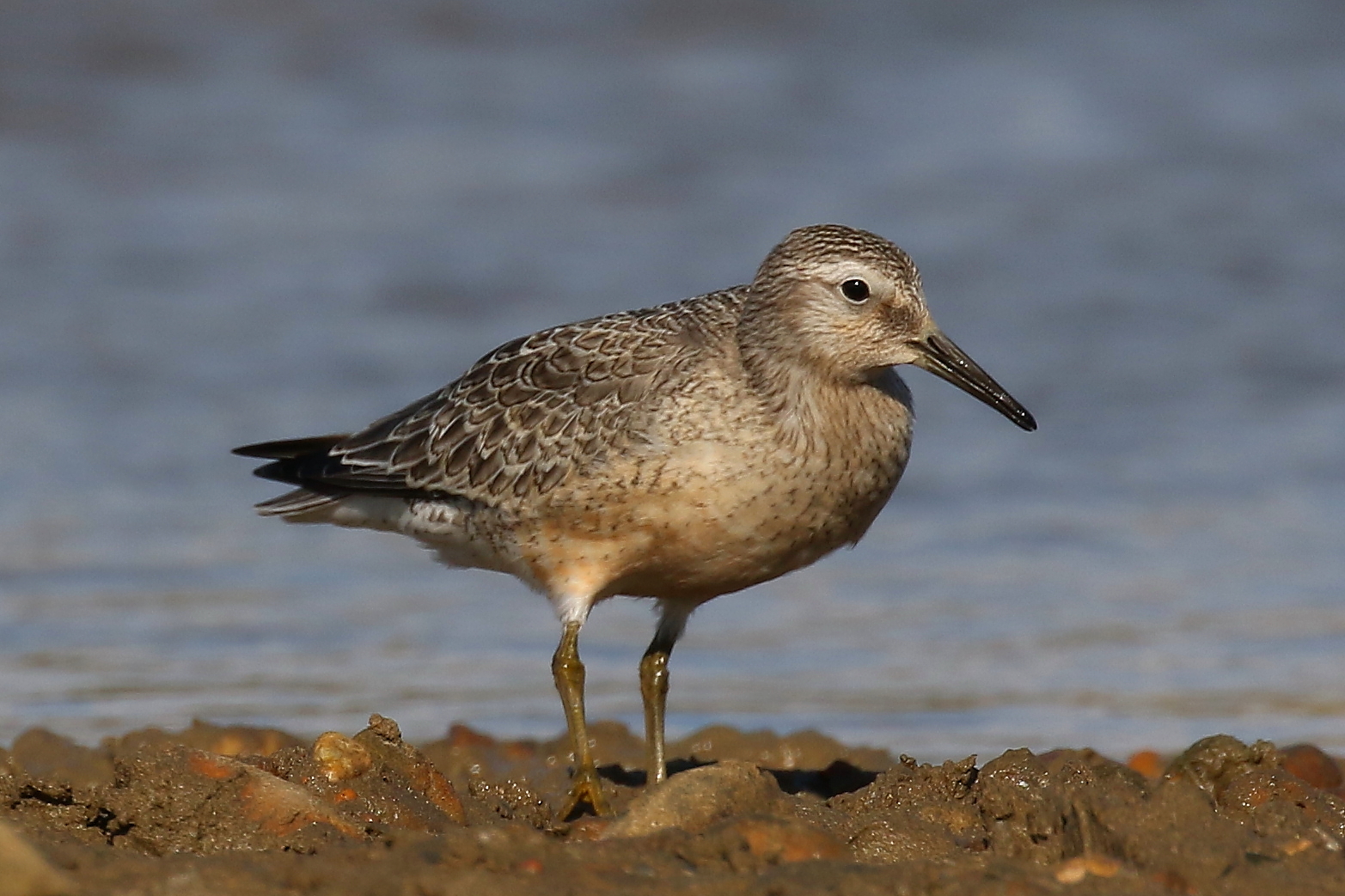
Knot, Ferrybridge
Knot, Ferrybridge
The waders, by contrast, were all utterly memorable. Even the common ones - Lapwings, Ringed Plovers, Blackwits - I find exquisite, and the rare ones when they turn up are also a delight, untainted, as they generally are, by thoughts of escapes, hybrids and so on associated with other bird families. The long weekend therefore saw me checking out some of Dorset's current wader hotspots - Lytchett Bay, Lodmoor and Ferrybridge. Oh, and of course Swineham, which was briefly a wader hotspot during the summer floods of 2012, but which hasn't offered much since bar some insolent Stilts which visited while I was elsewhere. No, I won't let that go.
Ringed Plover, feeding with the Knot at Ferrybridge on a small muddy island by the car park
A juvenile bird with frosted feather edges
A Green Sandpiper and a Greenshank were about all Swineham had to offer on the wader front in three recent visits (though a few other migrants were around - more on that in a later post). Bank Holiday Monday visits to Ferrybridge and Lodmoor were more productive, presenting some good photo opps in perfect light. The former would have been even better but for the inability of members of an allegedly smarter species to read the signs urging them not to disturb feeding and roosting birds.
Black-tailed Godwit wading in deep water at Lodmoor
Even this juvenile Dunlin, the regulation wader of British shorelines, is a stunner in my eyes, despite not being quite as smart a plumage as the adult
I arrived at Lytchett a few days after reports of the fields teeming with waders had peaked to find them not exactly teeming, but still good. As top Lytchett Bay-City-Roller Shaun Robson remarked, the fact that a trio of Little Stints was a slightly disappointing highlight of my visit is really testament to just what a good site it has become. The other top Bay-City-Roller, Mr Ballam, who I also bumped into at the Lytchett Fields (of dreams?) viewpoint, was kind enough to comment on the absence of posts in this space. At least, I interpreted it as kindly as 'I thought you were dead' can be interpreted. So this post is dedicated to Ian: for noticing the silence, and appearing to care.
Little Stint, of which there were three at Lytchett Bay, and four at Lodmoor
This one was photographed at Seaton Marshes in Devon earlier in the month en route to our Dartmoor holiday cottage - more on that trip later
Speaking of readers, regular ones will no doubt be delighted to see the return of gratuitous jokes at the expense of my nearest and dearest to these pages (para 1, if you missed it). New ones may be shocked at the flagrancy of the familial abuse, so, to reassure, it is all in jest: Claire, George and, er, the other one all know I couldn't live without them.
Evening light showed off this Lodmoor Lapwing at its best
Common Sandpipers were at Lytchett and Lodmoor (this juvenile again from Seaton Marshes)

Wednesday, 11 February 2015

Binge birding continued...

This post is the final hangover from a weekend of binge birding around Poole Harbour. Holes Bay certainly provided the highlights on Sunday - as well as the Spoonbill, waiting patiently by the PC World drain outflow provided ample opportunity to get up close and personal with a variety of other good birds.
This Buzzard was one of two scanning for prey from lampposts on the dual carriageway around Holes Bay. Buzzard has already appeared on my blog this year but the photo was taken in 2014 so this is officially an addition to the photo year list (#79). I know, mad isn't it!
This Common Sandpiper was one of two present. I walked most of the length of the bay without seeing one but when I sat by the outflow both dropped in.
Another addition to the photo year list (#80). Bang it in!

Cormorant also graced the outflow (#81)...
...while I had to walk further up the drain to find Grey Wagtail (#82)...
...and Kingfisher (#83)
Spotted Redshank, one of my favourite birds, can give close views around the edge of the Bay
Spotted Redshank
On Sunday morning I also paid what felt like my first visit of the year to Swineham. Yes, my allegiance to patch has become that degenerate. I was rewarded for my efforts: as in, not much effort, not much reward. It did at least add a few ropey ticks to the photo year list:

Goldfinch, making its first appearance this year (#84)
Great Tit (#85) - singing like it was spring
Redwing in the shadows in Lady St Mary Churchyard, Wareham
Male Reed Bunting at Swineham
Robin at Swineham
Shelduck at Swineham (#86)
Several Common Snipe flushed from the wet grass around Swineham (#87)
Stock Dove (#88) with Lapwing in the paddocks at North Bestwall
Snowdrops added a spring-like feel to Sunday morning
My last photo year tick of the weekend was a Coal Tit seen on a family walk around Wareham Forest (#89)
The Fellowship of the Ging, Wareham Forest

Little Egret showing off its plumes in Holes Bay