Tuesday, 2 June 2015

Better by bike

News of a White-Winged Black Tern at Swineham - our third in as many years - saw me hurtling down on the bike after work today to avoid the long walk down the private access road. I also calculated that I would need to go by bike to arrive before what is affectionately known locally as the 'Mitchell curse' could strike. Overtaking, among others, Mitchell and son on the way, I arrived just in time to see the tern before a Marsh Harrier flushed everything on the pits and it moved back out to the Wareham Channel before they arrived. Fortunately it came back after a tense wait, all those who I had overtaken saw it - and even the Mitchell curse was lifted.


Monday, 1 June 2015

A wader week

My travels over half-term enabled me to catch up with some common and some rarer members of my favourite family of birds: the waders. Diverse, colourful, and capable of amazing migrations, and, in the case of rare ones, generally untainted by the possibility of escapes from cages like songbirds or collections like the waterfowl!
This stunning summer plumaged Curlew Sandpiper was at Titchfield Haven in Hampshire (#192)
Superb views from the Meon Shore hide
An arctic breeder, Curlew Sandpiper winters mostly in Africa
Also at Titchfield Haven, the Greater Yellowlegs, a very rare vagrant from America - I couldn't resist going back for seconds
The plumage has advanced significantly since I first saw this bird in April. Compare the bolder, darker streaking on the head, neck and flanks with...
...this shot taken on 11th April. They breed in the boreal regions of Canada and Alaska and migrate as far south as South America
Also along the coast from the Yellowlegs, this tiny Red-necked Phalarope (#193) spent a day at Sidlesham Ferry Pool in West Sussex. Here with a much larger Black-tailed Godwit
I arrived late in the day when the bird was distant and against the light. A few pairs breed on the northern and western isles - one fitted with a geolocator clocked up a 16,000-mile round trip during its annual migration, flying from Shetland across the Atlantic via Iceland, south down the eastern  US, across the Caribbean and ending up off the coast of Ecuador and Peru
On leaving Bempton last week, I went to Frampton Marsh in Lincolnshire where a pair of Black-winged Stilts had appeared
This is the female
And here the pair - male on the right. A widespread species across Europe, Asia and the Mediterranean, 'our' birds are thought to come from populations on the near continent
Commoner waders at Frampton included Lapwing...
This Lapwing was at Titchfield Haven
Redshank, Frampton Marsh. A Temminck's Stint and a White-rumped Sand passed through the day after I did!
Avocets seemed to be doing well wherever I went - they were breeding successfully at Blacktoft Sands in Yorkshire, Frampton Marsh in Lincs and Titchfield Haven in Hampshire
This bird at Titchfield, photographed from the same hide as the Curlew Sandpiper at the start of this post, appeared to be making a nest scrape


Sunday, 31 May 2015

Café society

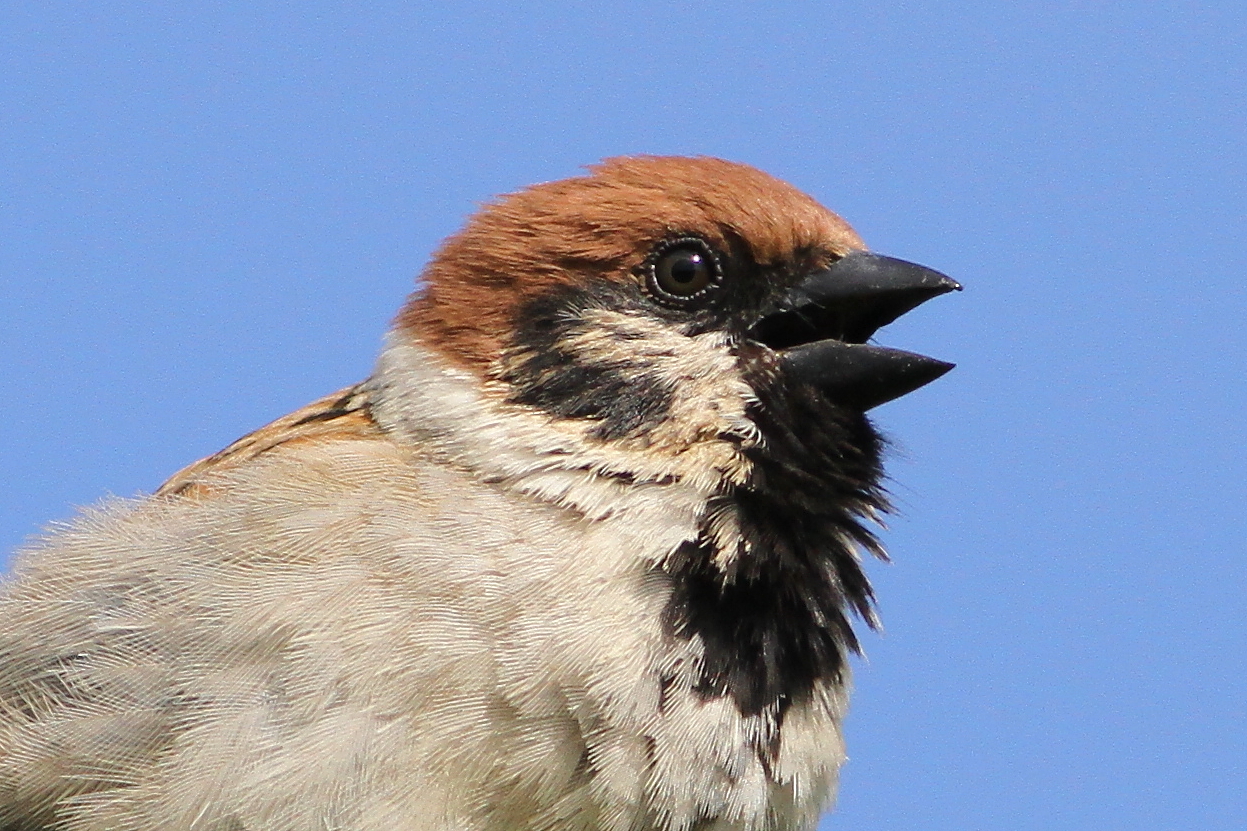
After the Gannets, the highlight of my recent visit to Bempton was the very sociable colony of Tree Sparrows which breed around the visitor centre. If you can get a seat on the patio outside the café there you will no doubt find yourself charmed by their nasal calls. The building itself is covered with nest boxes and most seemed to be occupied - breeding success was also obvious by the numbers of young birds around the feeders. Cracking birds, a real shame we don't get more down south. Species #191 on the photo yearlist.
http://petermooreblog.blogspot.co.uk/2015/05/also-at-bempton.html

Saturday, 30 May 2015

Rare breeders

For some reason I can't think about Monty's Harrier without being reminded of a famously sweary line from Withnail and I. This doesn't happen very often, as they have become a very rare breeding bird in Britain, having started off being not very plentiful in the first place. After an early start from Dorset en route to a Gannet-fest at Bempton cliffs for a couple of days, I was able to call in at another RSPB reserve, Blacktoft Sands, where a pair have set up shop this year.
Male Montagu's Harrier, Blacktoft Sands
A very slim and elegant raptor
Here the male and female together
Records of breeding Monty's are usually kept pretty quiet but once in a while a pair will turn up somewhere like this where they can be kept an eye on and birders can be encouraged to see them there where the risk of disturbance is low rather than go looking for them elsewhere. Keep up to date with the progress of the breeding pair here. Always distant, though the female got up for a stretch and did a circuit which brought her a fair bit closer than the male.
Female Montagu's Harrier
Showing the white tail band here
The female Monty's looked very rufous in the field
Marsh Harrier and Avocet used to be rare breeders in Britain not so long ago but both have seen an upturn in their fortunes - and both were plentiful at Blacktoft. They weren't getting along too well though as several passing Marsh Harriers experienced the wrath of nervous Avocet parents intent on protecting their newly fledged chicks.
Marsh Harrier mobbed by Avocet
A Grey Heron gets similar treatment
Marsh Harrier
On the way back south I detoured via the Brecks for a day to see another rare breeder which I haven't seen for a few years - Stone Curlew at the Norfolk Wildlife Trust reserve on Weeting Heath. Four adults were present and I glimpsed a couple of fluffy chicks tottering around in the long grass too.
Stone Curlew, Weeting Heath (#188)
The birds were very vocal in the early morning
The hides at Weeting Heath are a reliable place to see Stone Curlew without the risk of disturbing the birds
Just around the corner from Weeting Heath is Lakenheath Fen, the third major RSPB reserve on my itinerary. A Little Bittern had been barking there for a week, but chose the day of my arrival to go elsewhere. Frustratingly, it was back again today after a two day absence which coincided with my visit.
Common Cranes, Lakenheath Fen (#189)
Cuckoo among the Poplars which used to ring with the sound of Golden Oriole song
Interpretation board at Lakenheath
Lakenheath used to be a reliable breeding site for Golden Oriole but although a male sang briefly there earlier in the month, they appear to have given up the ghost in recent years. Very sad, but a distant view of a pair of Common Cranes, which returned to the Fen to breed in 2007, made up for the disappointment of not seeing the Little Bittern.
Jay with what looked like a Great Tit chick.
Whitethroat, Lakenheath - more showy than...
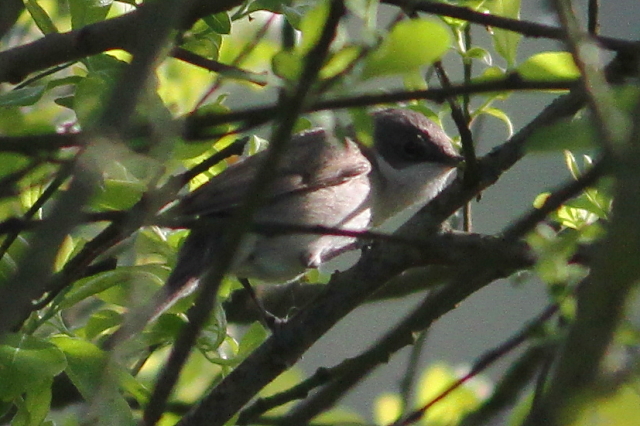
...Lesser Whitethroat, taken back in Wareham last week (#190)

Friday, 29 May 2015

Also at Bempton...

It's not just Gannets at Bempton Cliffs - there are also auks aplenty, gulls and the odd tubenose to look down on. In the nicest possible sense, of course.
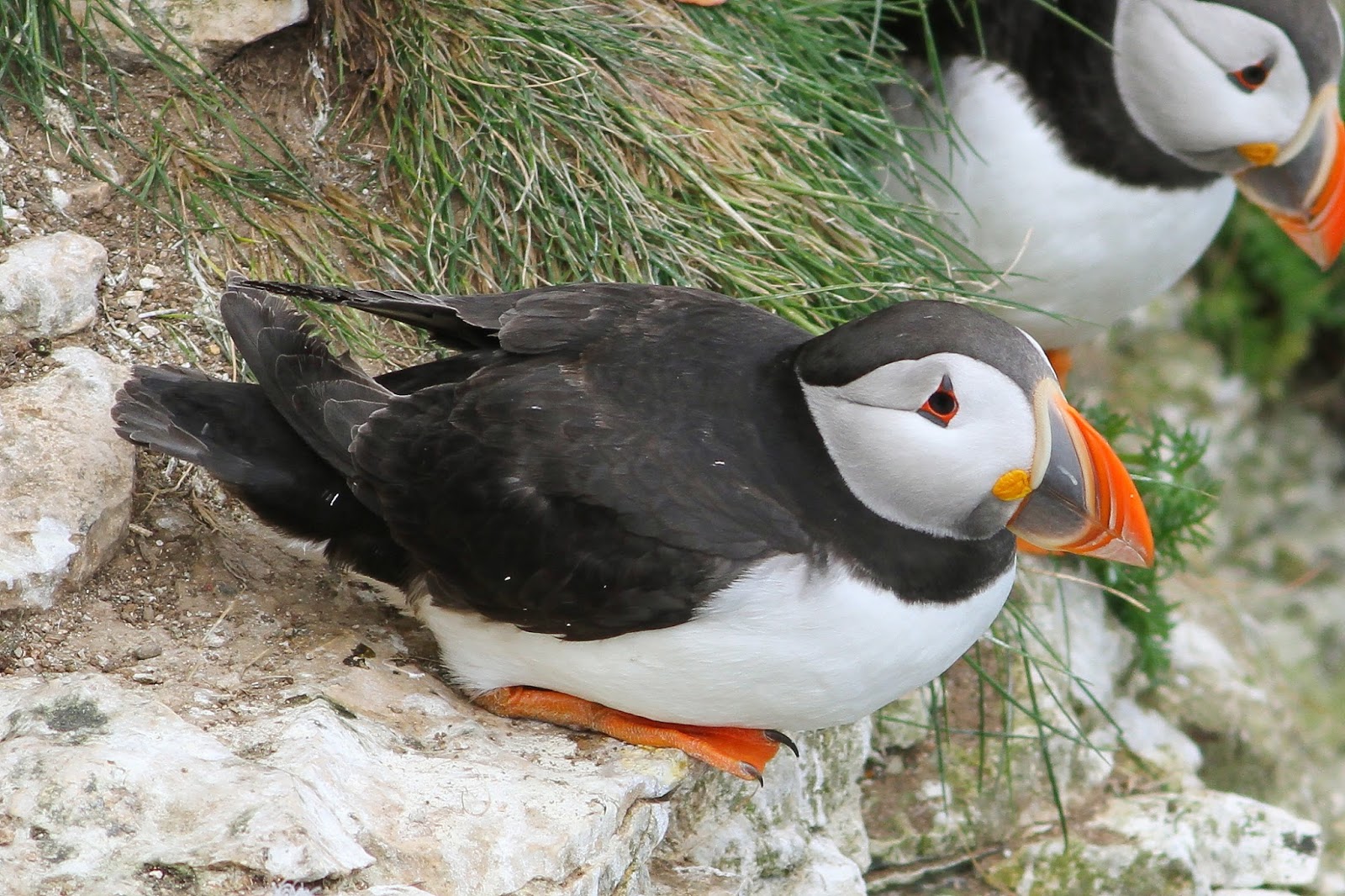
Puffins are a favourite with the visitors
Small numbers breed near the clifftop among the commoner auks


Probably the best place in mainland England to see Puffin up close
Razorbill
Bridled Guillemot
Kittiwake
These birds nest on the tiniest of ledges
Kittiwake calling in flight
Fulmar
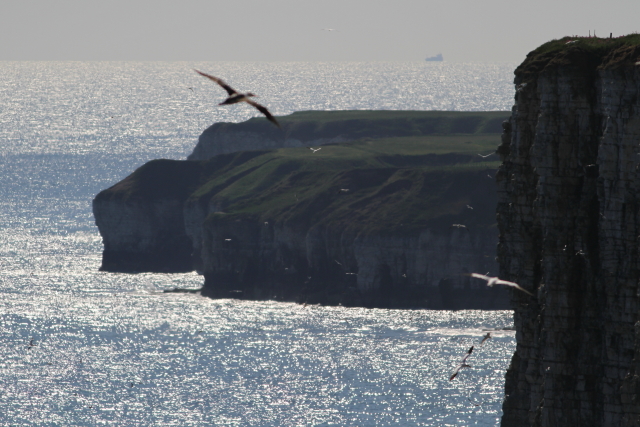
Flamborough Head from Bempton in morning light
The same view in late afternoon
100m chalk cliffs provide a dramatic location for the seabird colony
Staple Newk is the arch just catching the sun
Bempton Cliffs