Showing posts with label Marsh Harrier. Show all posts

Thursday, 14 June 2018

A pinch of saltmarsh

My sons are both 'Kentish Men', born in the Garden of England west of the Medway, but since we left the county in 2007, visits back there have been a bit few and far between. The recent birthday of a former neighbour provided one such opportunity, and Sunday morning offered a chance to reacquaint myself with an old favourite, the Elmley Marshes Natural Nature Reserve on the Isle of Sheppey.
A breeding plumage Yellow Wagtail always brightens the day 

Yellow Wagtails are very leggy enabling them to stalk through the long grass of the grazing marsh
This unusually bold bird was strutting up the entrance track calling constantly
A wider angle view perched on thistle
Although it was a brief encounter, after my last few visits when breeding birds seemed a bit thin on the ground, it felt a bit like the 'old days' at the turn of the century when I first started going there: breeding waders like Lapwing and Redshank appeared to be doing well, as were the ground-nesting passerines - Yellow Wagtail, Corn Bunting, Meadow Pipit and Skylark.
Wonderful close-up views of Redshank from the car window
Juvenile Redshank
Marsh Harriers were very much in evidence...
...much to the chagrin of the breeding Lapwings
All the photographs in this post were taken using the car as a hide on the 2 mile entrance track to the reserve centre. Since the reserve management reverted from the RSPB to the private owner a few years ago, the area around the farm complex has undergone some reconfiguration, with more provision for paying guests and conversion of farm buildings. But if that's helping to pay for the conservation work, I'm certainly not complaining.
This adult male Lapwing was sporting a spectacular crest
Increased Lapwing chick productivity is one of the key management aims on the reserve: here's one they prepared earlier
Stunning iridescence on this roosting bird
My car's reflection can be seen in the eye of this Lapwing photographed at close range
I rediscovered an interest in the natural world relatively late in life, and it was a visit to Elmley back in the late 1990s which re-ignited a childhood fascination with birds which had been dormant while I was studying and working in London in my 20s. One of my earliest memories of the reserve was a Corn Bunting singing from a trackside bush - so I was touched to see another singing from the same bush on Sunday. The children haven't yet learned to share my pleasure at being on the grazing marshes and saltmarshes of Sheppey. Thankfully, for as long as good conservation management continues, there is still time.
Meadow Pipit
A flock of Stock Dove was nice to see
Skylark
Corn Bunting

Wednesday, 25 April 2018

Beauty in Brittany

Before our recent family holiday in Brittany I had high hopes that we might see some different butterflies and moths on the continent compared to the species we are familiar with at home in Dorset. Although I took a portable moth trap, we found ourselves a bit too closely packed into the campsite to use it without it being considered anti-social behaviour by the neighbours! So it became more a case of waiting for the sun to come out and seeing what we could see.
Camberwell Beauty
A very obliging individual
The more subtle but equally beautiful underside of the Camberwell Beauty
When it eventually warmed up, we were in the middle of Le Parc naturel régional de Brière, the second largest area of marshland in France after the Camargue (technically in the Pays de la Loire Region, so you will have to forgive the poetic licence in the title of this post). Reminiscent of the Avalon Marshes in Somerset, this too is a vast former peat digging and reed harvesting area now restored and protected as a wetland paradise for its natural interest.
Male Marsh Harrier - one of over a dozen in the air at the same time
Two of the largest birds of the region gave only the most distant of views - this Sacred Ibis was at Pont de Paille. A non-native species which established having escaped from a zoo, the population is now being controlled to reduce predation in local heronries
I had read that White Storks bred on the pylons in the Briere - this one was about 2 miles away!
At about noon we had climbed the steps of a tower hide at a fantastic looking reserve called the Pierre Constant Site. There were reedbeds and Marsh Harriers as far as the eye can see, and I could hear Bluethroats and Savi's Warbler singing in the reedbeds ahead of us. But for reasons we couldn't quite fathom, the rest of the reserve was closed to visitors until 1 July. I later read that public spending cuts had something to do with it, a shame as we would willingly have paid good money to get onto the rest of the reserve.
Blue-headed Wagtail was another highlight at Pont de Paille
This continental race of Yellow Wagtail occasionally appears in the UK
White Wagtail in the salt pans at Geurande
To add to the frustration, I could see the unmistakable white petticoat of a Camberwell Beauty around a flowering bush in the distance which I assumed would also be out of bounds. In retracing our steps, however, we found that a canal towpath took us to that very bush, which was being frequented not by one but by two Camberwell Beauties, sparring with a couple of much smaller Peacocks. An undoubted highlight of the trip, and the first I had seen since a migrant at Pulborough Brooks in Sussex over a decade ago.
My third Camberwell Beauty of the month was sighted on a South London wall this week during a business trip.

Sunday, 19 March 2017

Winter highlights: part II

Spring migrants continue to trickle in and while it's not quite a flood, it's a reasonably safe call to declare winter as being over. A few more highlights to look back on then:
Short-eared Owl on Portland - one of a number of wintering birds
This one was flying up the west cliffs
Peregrine, also on Portland
Peregrine
Marsh Harriers have been entertaining visitors to Radipole Lake in Weymouth
A Great Grey Shrike spent much of the winter in Wareham Forest
A late winter arrival was this Snow Bunting on Studland Beach
Great Spotted Woodpecker, Arne
Sika Deer at Arne
Male Siskin at Arne
Female Siskin, Arne
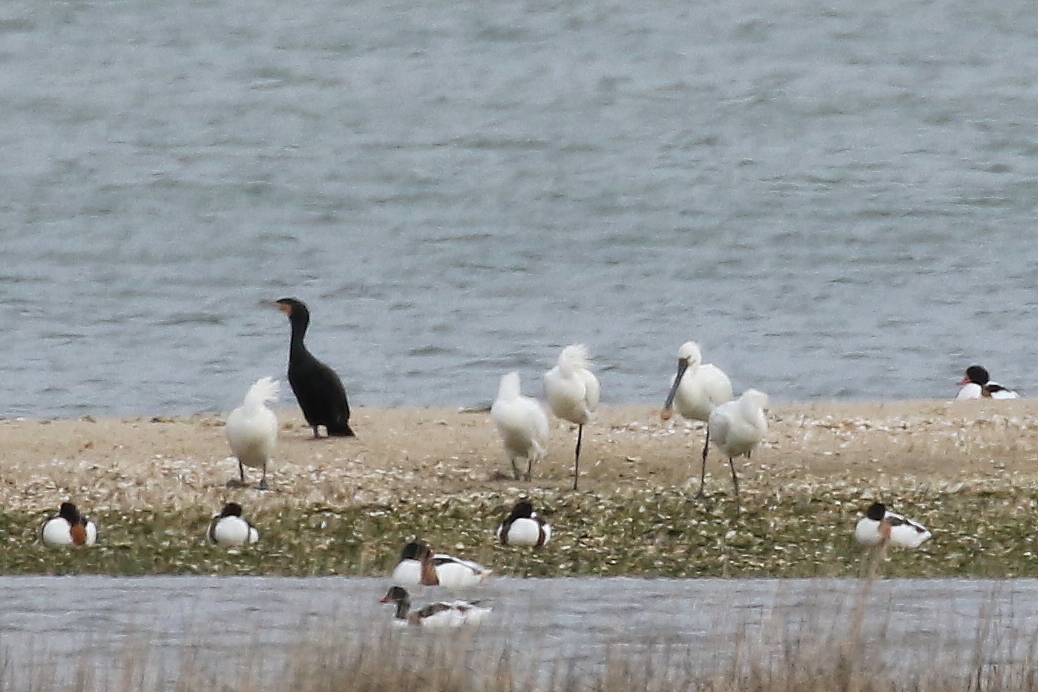
Spoonbills - 5 of 7 at Arne yesterday
And to close, as if to personally declare winter over, the first Wheatear of the year, on Studland beach last weekend.

Sunday, 15 January 2017

Man about town

Urban birding has become something of a habit lately, and we are fortunate in Dorset to have a number of good options in this regard. Last weekend saw me pottering around a few more of the county's birding hotspots between Portland and Dorchester. First stop was Fortuneswell and Chesil Cove at the southern end of Chesil Beach, where a pair of Black Redstarts were flitting on the rocks - same time, same place as a pair last year. A trio of Eider Duck were the highlight of a quick scan of Portland Harbour before lunch with the ducks and gulls at Radipole Lake in Weymouth. There was just time to twitch a first winter male Rose-Coloured Starling on the rooftops of suburban Dorchester before heading back to Purbeck to see about 10,000 of its more familiar cousin, the Common Starling, come in to a spectacular roost at Studland's South Haven.
Male Black Redstart, Chesil Cove
Black Redstart, Chesil Cove
Female Black Redstart, Chesil Cove
Rock Pipit, Chesil Cove
Meadow Pipit, Ferrybridge
Eiders in Portland Harbour
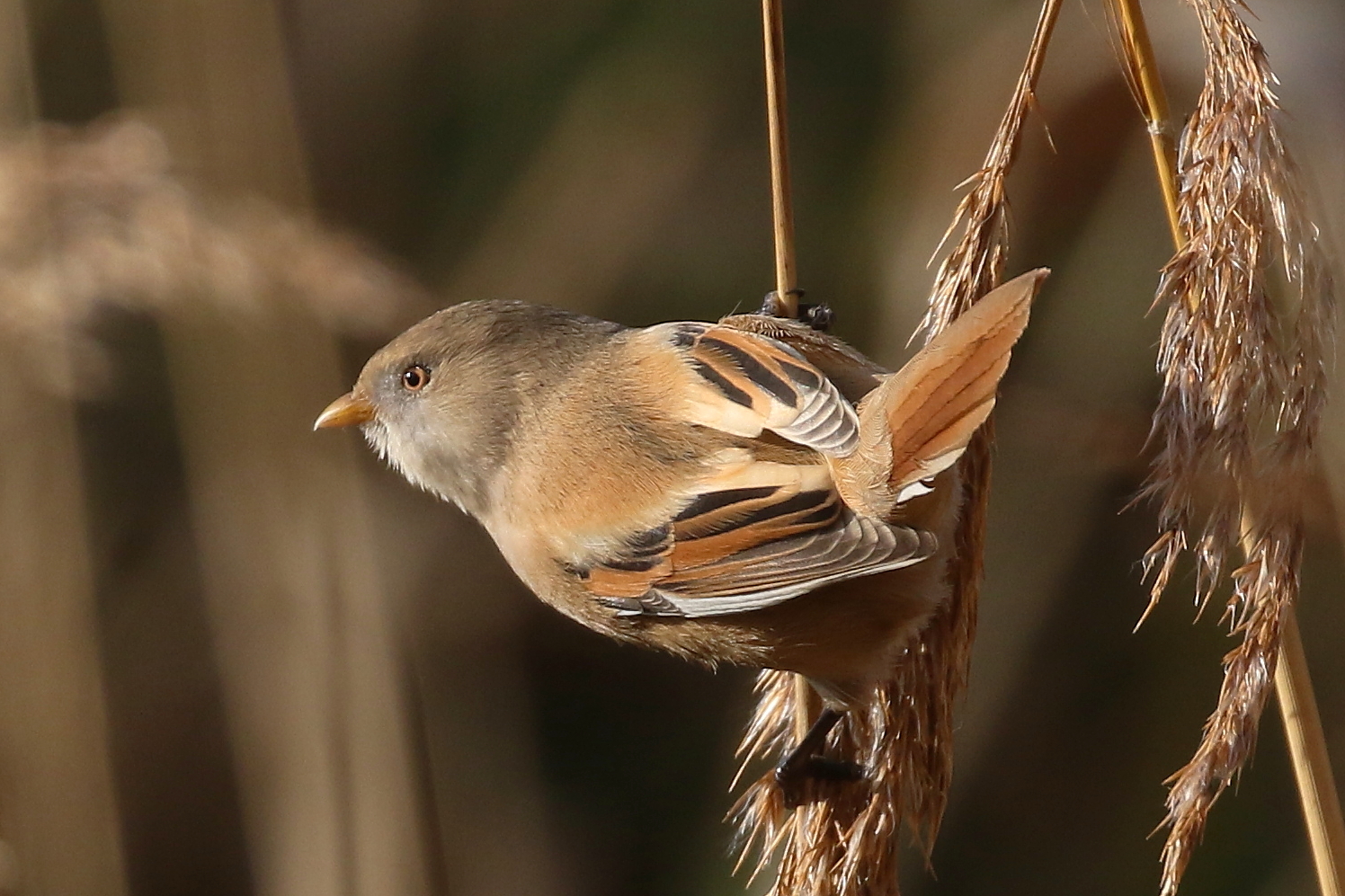
Bearded Tit, Radipole Lake
Blackbird, Radipole Lake
Carrion Crow, Chesil Cove
Dunnock, Radipole Lake
Shelduck, Radipole Lake
Black-headed Gull, Radipole Lake
Common Gull, Radipole Lake
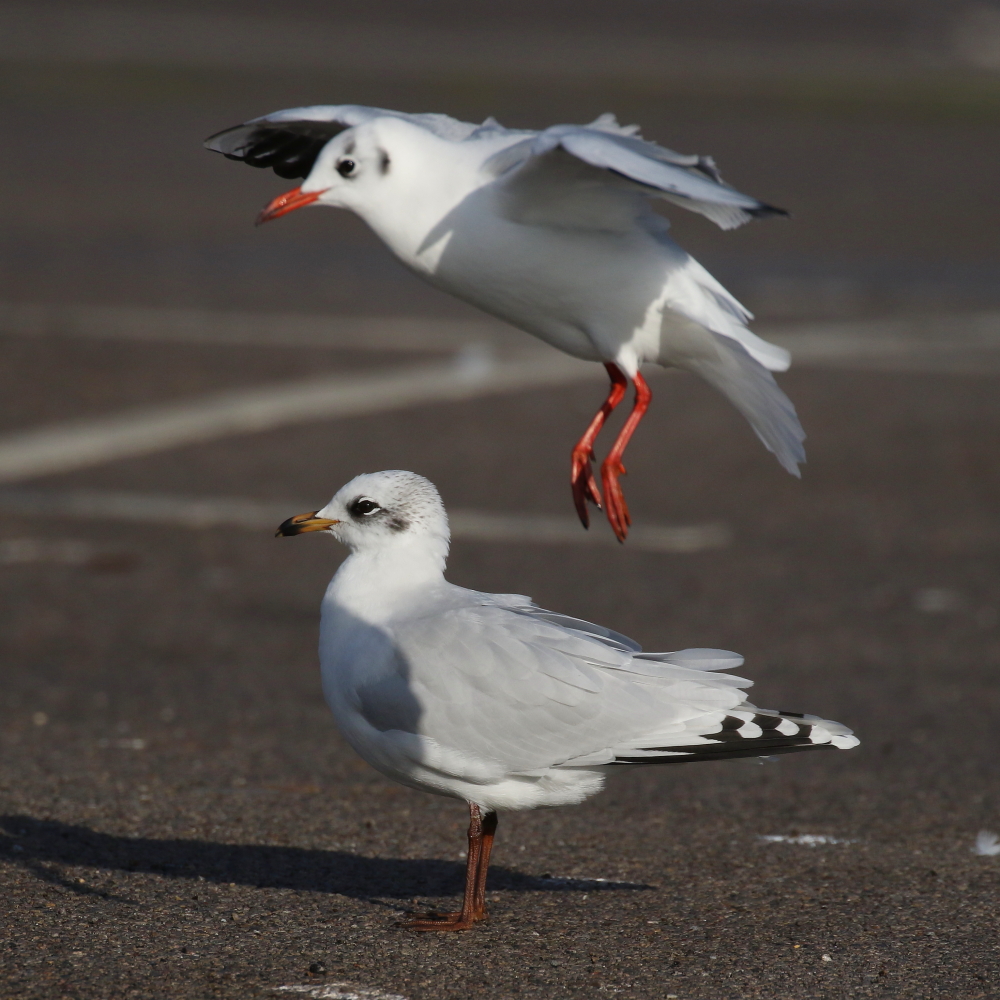
Mediterranean Gull, Radipole Lake
Med Gull with Black-headed Gull above
The drake Hooded Merganser still displaying at Radipole
Always a show-off

Male Marsh Harrier at Radipole
Moorhen, Radipole Lake
Feral Pigeon, Radiploe Lake
Rose-coloured Starling, Dorchester
Not looking so good after a bath
Starling murmuration at Studland