A partially-baked plan for a family holiday on North Uist this half-term sort of fell apart when competing demands for a camping trip at nearby Burnbake emerged a few months ago. Fortunately, as we've established over the years, I am generally regarded as surplus to requirements on family camping trips these days on account of my irrational dislike of sleep deprivation, insect bites and punctured airbeds. I was therefore delighted when my wife informed me that I could go and get lost on the Outer Hebrides on my own for a few days. At least I think that's what she said.
 |
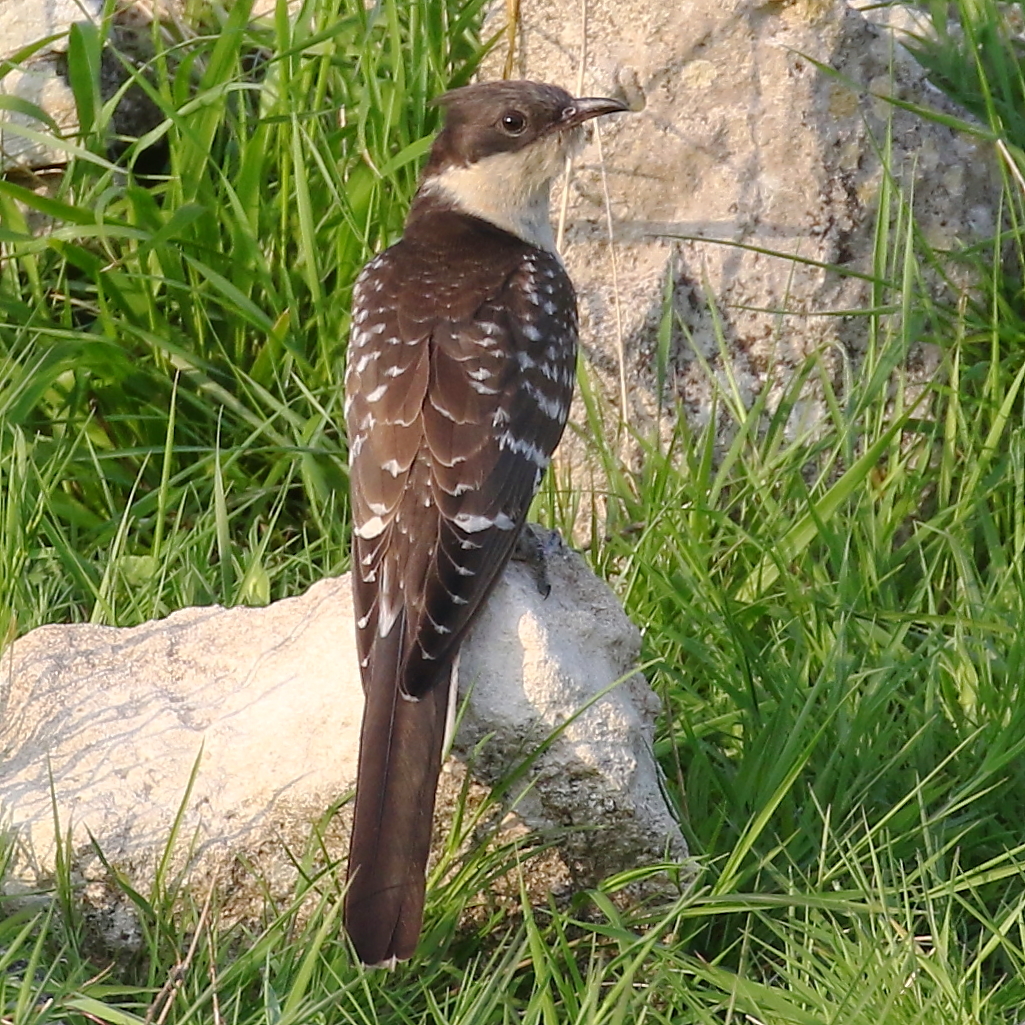
| Black-billed Cuckoo - the red eye-ring indicates this is an adult bird |
My desire to go was strong, but my plans to do so remained, as ever, slightly half-baked. The arrival of a Black-billed Cuckoo on North Uist last Monday, a rare vagrant from the Americas, helped solidify them, however, as, first it gave me the extra incentive to get my act together and, second, a couple of birding friends were keen to make the long pilgrimage north to see it. Some compromise was required as, while I was planning to go for four days to photograph the breeding birds on the Outer Hebs, my potential travelling companions didn't have the same flexibility and could only make the long weekend. Ultimately I concluded that the opportunity to share the company of friends, not to mention the driving, and the costs of the journey, was worth sacrificing the additional day on the islands.
 |
| The best flight shot I was able to get of this mobile bird |
Having made the commitment to travel together, plans came together remarkably smoothly, with accommodation, hire car, and ferry times all sussed out by the impeccably organised David Bradnum. All I had to do was pack a bag, sort out car insurance so we could share the driving as far as Uig, and detour via Surrey to pick up Paul Welling, before meeting Dave in Stafford. With his car ditched in a suburban side-street, we rotated the driving through the night to take advantage of the empty roads, arriving in Uig in good time to make the 1400 ferry.
 |
| The buffy throat can be seen here |
We had already seen Golden Eagle and White-tailed Eagle before leaving Uig, and Black Guillemot, Puffin, Great Skua and Harbour Porpoise were added to the trip list on the crossing to Lochmaddy. Remembering that the last time I had teamed up with Paul we had dipped on the closely related Yellow-billed Cuckoo in Cornwall, I wasn't wholly convinced that the Black-billed Cuckoo would still be present. So I kept telling myself that I was going for a few days premeditated birding and photography with the Hebridean specialities, not for the mega-rarity. By the time we disembarked at around 1600, I had almost convinced myself!
 |
| My first view of the Cuckoo was obscured, but showed the striking tail pattern very clearly |
Disembarking and collecting the hire car we headed straight for Bayhead, hoping to see the Cuckoo quickly to take the pressure off and be able to enjoy the islands at leisure. After a bit of aimless wandering about, the Cuckoo was rediscovered by one of the 50 or so twitchers who had come across on the ferry, and after a breathless scamper enabling us to catch up with it, we enjoyed extended views as it perched up in bushes, on wires and on fence-posts around the local gardens.
 |
| The silky white underparts made the Cuckoo easy to pick up from distance |
Most islanders seemed to embrace the influx of visitors who had come to see the Cuckoo, and the ferry crew said it had been a welcome boost to the local economy. We chatted to several residents who seemed quite amused by the whole thing, one of whom was casually mowing a lawn from which a Corncrake was calling (judging by the rasping calls before and after, it survived the ordeal just fine!). Others invited birders into their gardens to get better views of the Cuckoo, bearing out my own experience on my
last visit.
 |
| The more familiar Common Cuckoo seemed abundant on North Uist - no doubt due to the large numbers of breeding Meadow Pipit in whose nests they lay their eggs |
There have been only fourteen previous records of Black-billed Cuckoo in Britain, all of which have occurred in the period August-October, and most of them were found dead or dying on arrival. So it was a truly exceptional experience to see a spring adult thriving, apparently thanks to the abundance of caterpillars it was finding in the gardens of Bayhead. A special start to our stay on North Uist, and with the rarest island resident seen on our first afternoon, we could look forward to a few more days birding the rest of the island chain. More on that in my next post.
 |
| And the third Cuckoo of the day - Cuckooflower, adorned by a nectaring Green-veined White |