Showing posts with label Corncrake. Show all posts

Friday, 23 December 2016

May...

Donald Trump said yesterday that he thinks the USA needs to tool up with more nukes. Well, greetings of the season of peace and goodwill to you too, Mr President-elect. With 2016 being seriously discussed among historians as a candidate for 'the worst year ever', the ominous tweet seemed almost designed to underline how little there is to look forward to in 2017 for those on the lunatic fringe who think nuclear holocaust a very bad idea. A good excuse to look back, then, to a time before democracy proved it's not all it's cracked up to be - to spring, and to May in particular, whose turn it is in my review of the year, as migrant birds arrived in their millions to distract us from the grim realities of existence.

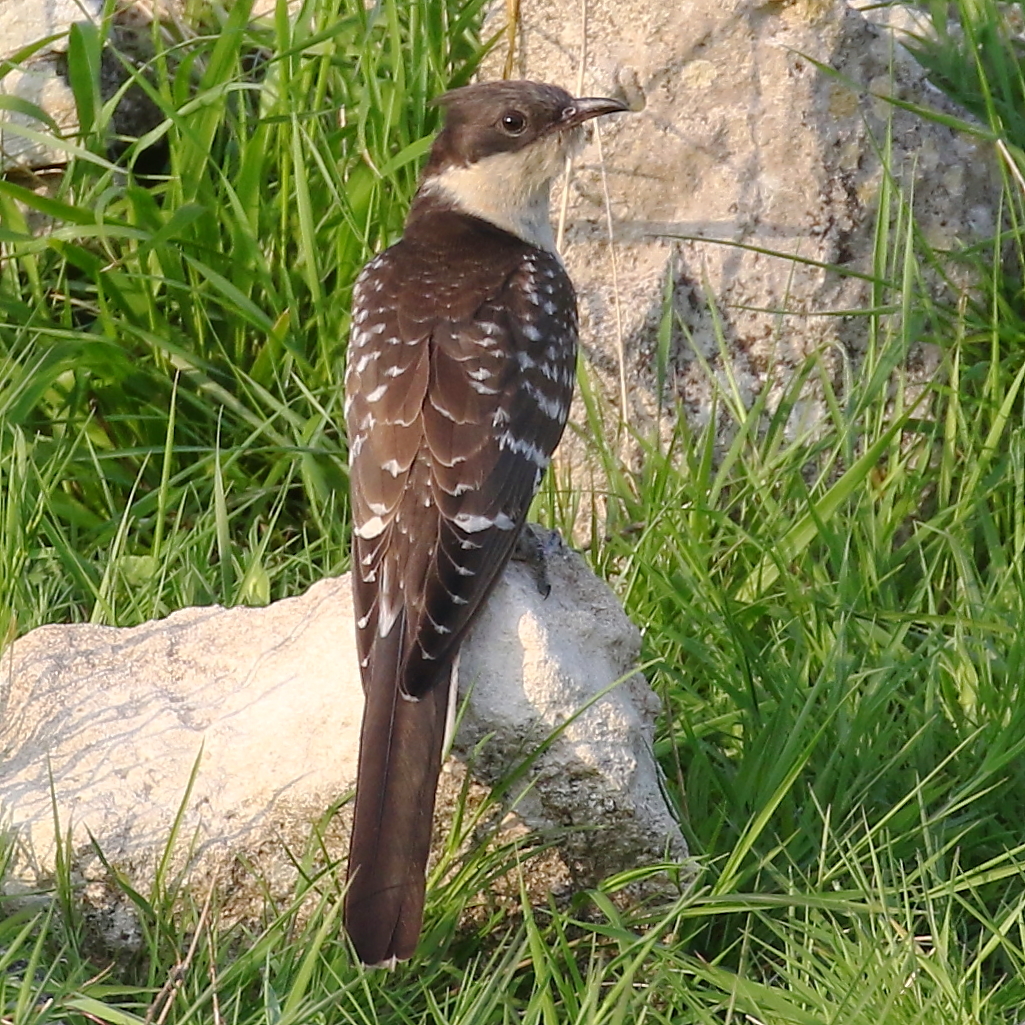
The first half of the month was enlivened by some rare and scarce visitors to my adopted home county of Dorset - Kentish Plover, Black-winged Stilt and Red-rumped Swallow were all good birds, but top billing went a to dashing female Red-footed Falcon at nearby Morden Bog and a Great Spotted Cuckoo on Portland - a Dorset tick for me and many others. It gorged on Brown-tail moth caterpillars, which can be found in huge numbers at Reap Lane, for several weeks.
Red-footed Falcon, Morden Bog: my photo of the month for May
Great Spotted Cuckoo, Portland
Red-rumped Swallow, Lodmoor
Kentish Plover, Ferrybridge
Lepidoptera loomed quite large in my life in 2016: as well as being the first spring in which I had the opportunity to put my new lens through its paces photographing these smaller subjects, I steered an Action Plan for Pollinators through to adoption at Dorset County Council - a small but important attempt to boost the prospects of our declining butterflies, moths and other pollinating insects. Later in the year, some wildflower verges we had created as part of this got a hugely positive reaction from the public - the first time in my twelve year career in local government when the compliments in my inbox have outstripped the complaints! But back to May, which saw the emergence of many sought after species around Dorset's butterfly hotspots:
Duke of Burgundy, Cerne Abbas
Green Hairstreak, Cerne Abbas
Small Blue, Portland
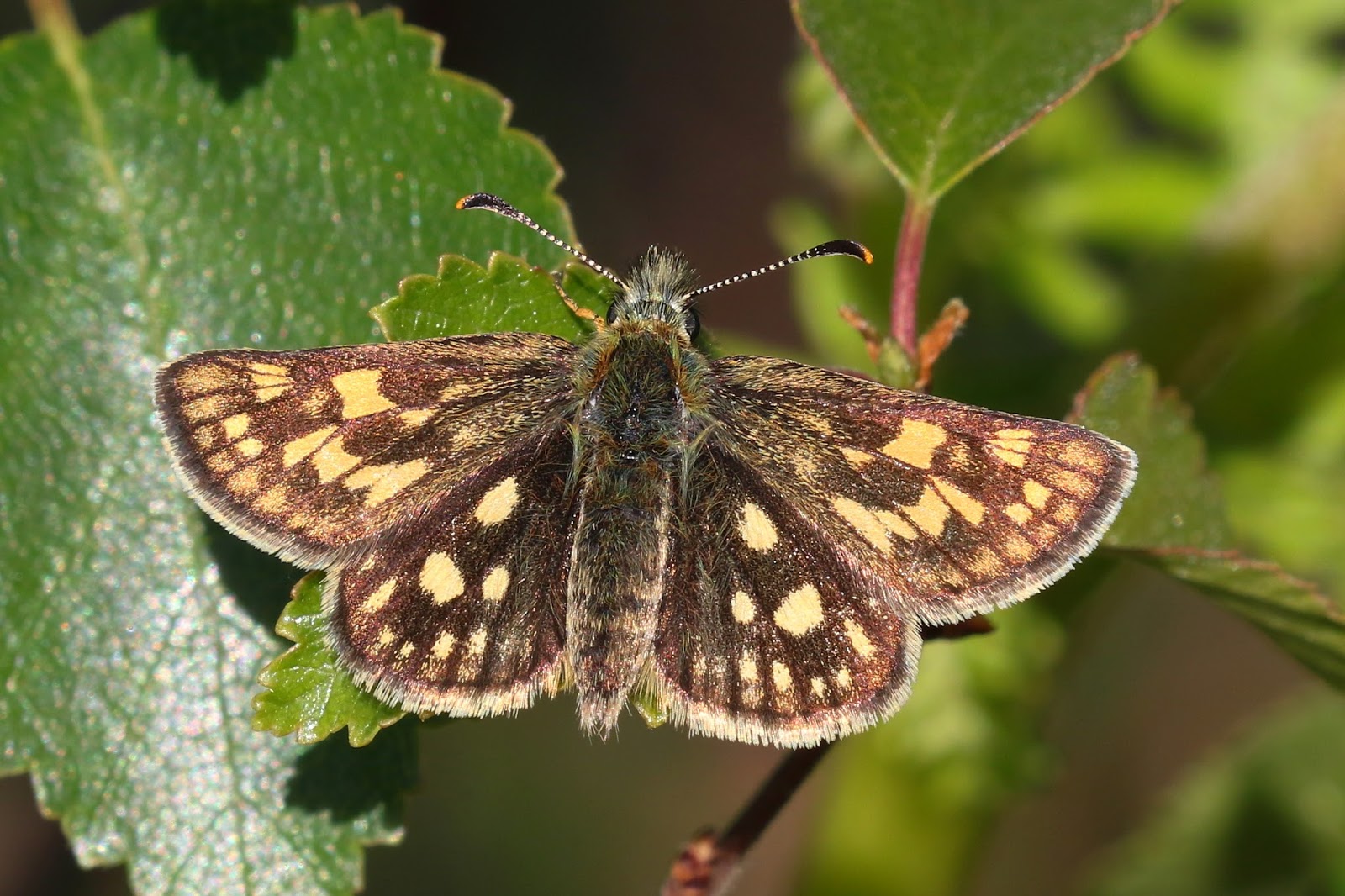
Chequered Skipper - a rarity in Britain restricted to a few sites in north west Scotland - we visited one at Allt Mhuic on the way south from a trip to the Outer Hebs
May ended with one of my most epic and enjoyable adventures of 2016 - a three day trip to the Outer Hebrides with David Bradnum and Paul Welling. We made this mammoth journey to pay homage to the unprecedented spring occurrence of a Black-billed Cuckoo from the Americas and, having done so, to appreciate the dramatic landscapes, the breeding waders and other wildlife of North Uist, South Uist and Benbecula:
Black-billed Cuckoo, North Uist: bird of the month for May
Corncrake, North Uist
Redshank, Outer Hebrides
Female Red-necked Phalarope, Outer Hebrides
One of the highlights of the year and the furthest I travelled in 2016. Fortunately it came at the start of a week off providing for a leisurely stay to appreciate the breeding birds on the Hebrides as well as the vagrant Cuckoo - I would have had neither the energy nor the inclination to just 'smash and grab' the rarity in such a memorable location. And no, Mr Trump, it would not be a good place for a golf course...

Saturday, 4 June 2016

Crexit

The Corncrake Crex crex calls its scientific name through the night from the gardens, iris beds and haymeadows of North Uist, where I spent some time at the start of the half-term holidays. We had heard several and seen one scuttling through low vegetation early on our first morning on the island, and after spending the rest of the day cruising around the island chain looking for breeding waders, scanning for eagles and searching for Twite, we headed back to the Bayhead area for another look at the Black-billed Cuckoo. We couldn't improve on our views of the previous evening, but as we leant on a wall waiting for it to show a rasping call from the other side of the wall gave away the presence of a male Corncrake declaring his intentions.

We could only just see over the neck high wall so were able to listen and take a few photos without perturbing the bird, which continued to call, despite the house owner mowing part of the lawn it was calling from. Every now and again a comedy head would appear through the vegetation and duck down quickly again, reminding me of the scene in Jurassic Park where the velociraptors do the same when hunting the appropriately named Bob Peck! The Corncrake moved up and down the garden and at one point came close enough for us to see the nictitating membrane over the eye and saliva on the mandibles, presumably required to lubricate the throat for that distinctive call, which is said to be given up to 20,000 times per night. The owner of the garden complained about the nocturnal racket but we agreed we would be quite happy to be crexed to sleep by this once commonplace but now very rare breeding bird.

The decline of the Corncrake in Britain is linked to the mechanisation of hay mowing, but a more recent recovery in the breeding population has been made possible as more grassland has been managed for corncrakes in Scotland via EU agri-environment schemes.

Tuesday, 14 May 2013

Thick and fast

In the last post I shared my angst at lagging behind with blog updates relative to the passage of time since returning from Scotland. It's a tricky balance after such an excursion: do you blurt it all out while it's still hot, or drip-feed in the hope of stringing out the content through more fallow periods which may lie ahead? I'll not be allowed out for weeks after this so should probably go for the latter. But you'll have to forgive me if the posts keep coming thick and fast for now.
Snipe at Balranald - from the car window
'Thick and fast' is a description which could equally apply to the main subject of this post, the Corncrake, which is given to running from danger despite the God-given gift of wings. The first week of May should have been good timing for seeing them on North Uist: late enough for them to be back from East Africa, but too early for their favoured habitat, the iris beds, to have fully grown up. And so it seemed as I cruised to Balranald on my first day on North Uist, pausing only to nearly crash the car in a ditch as a male Hen Harrier tonked past the windscreen: within 15 minutes I had heard a Corncrake from the car window, in an iris bed on the edge of a village.
Dunlin on Benbecula from the car window

This gave a false impression of how easy it might be to hear them, however, as on arrival at Balranald, apart from a couple of birds which had paid a brief visit the previous day, the sightings board revealed no calling birds on the reserve at all. Like so many other things this year, the cold weather had appeared to delay their spring migration.
Golden Plover on Benbecula - also taken from the car window
The next morning I returned to the area where I had heard the initial bird. The iris bed was next to a large garden, and I chose what seemed a considerate location on the road overlooking the area to avoid invading the privacy of both the Corncrake and the residents.
Lapwing on Benbecula - another car window photo
The Corncrake didn't see me and continued to call at regular intervals, but I failed in the other respect as the lady owner of the cottage saw me standing in the rain and the strong southwesterly wind, and, out of pity presumably, invited me to go into the iris bed via a gate at the bottom of her garden. I politely declined the offer to yomp through prime Corncrake habitat, explaining the sensitivity of the bird and so on, but I did accept the chance to stand in the lee of her shed which provided some shelter from the rain, and a discreet view of the iris bed over a chest high wall. 

Sanderling on Benbecula - had to get out of the car for these
Corncrake calls, I discovered, can be a bit ventriloquial in a strong wind, and it took a few more bouts of calling for me to realise that the bird was actually at the bottom of the garden, not in the iris bed! The bird continued to call from an unseen songpost but I eventually glimpsed it walking under a tamarisk at the end of the garden. Happy with my views, not wishing to outstay my welcome and now keen to get out of the atrocious weather, I was about to beat a retreat when the Corncrake walked out onto the patio behind the house, took a dump and sauntered around the corner to next door's garden. Not quite the au natural view I had imagined I might get, but I suppose defecating Corncrake must be something of a photographic rarity at least.
Corncrake doing its business on the patio
My tight itinerary involved spending the night on South Uist, so after a bit more quality time with the Balranald waders (see previous post), I headed down the west coast of Benbecula where another Corncrake was heard, Golden Plover mingled with Lapwing and Ringed Plover in the fields, a female Merlin hunted pipits, a Great Northern Diver fished offshore and more waders graced the beaches.
Moulting Great Northern Diver, Benbecula
The weather had picked up on Benbecula but deteriorated again by the time I got to South Uist. A Short-eared Owl at the end of the long causeway over Loch Ba was a good bird with which to end the day.
Short-eared Owl, South Uist
I had a room for six to myself at the excellent Howmore hostel, and was spared any embarrassment at being a 40-something in a youth hostel when it became apparent I was the youngest person there. Most of the rest were cyclists, heading north and grateful that they had chosen that direction in view of the prevailing winds which continued throughout most of my stay.
Another view of the Corncrake in a North Uist garden - heavily cropped to get the washing line out of shot!