Showing posts with label Green Hairstreak. Show all posts

Friday, 23 December 2016

May...

Donald Trump said yesterday that he thinks the USA needs to tool up with more nukes. Well, greetings of the season of peace and goodwill to you too, Mr President-elect. With 2016 being seriously discussed among historians as a candidate for 'the worst year ever', the ominous tweet seemed almost designed to underline how little there is to look forward to in 2017 for those on the lunatic fringe who think nuclear holocaust a very bad idea. A good excuse to look back, then, to a time before democracy proved it's not all it's cracked up to be - to spring, and to May in particular, whose turn it is in my review of the year, as migrant birds arrived in their millions to distract us from the grim realities of existence.

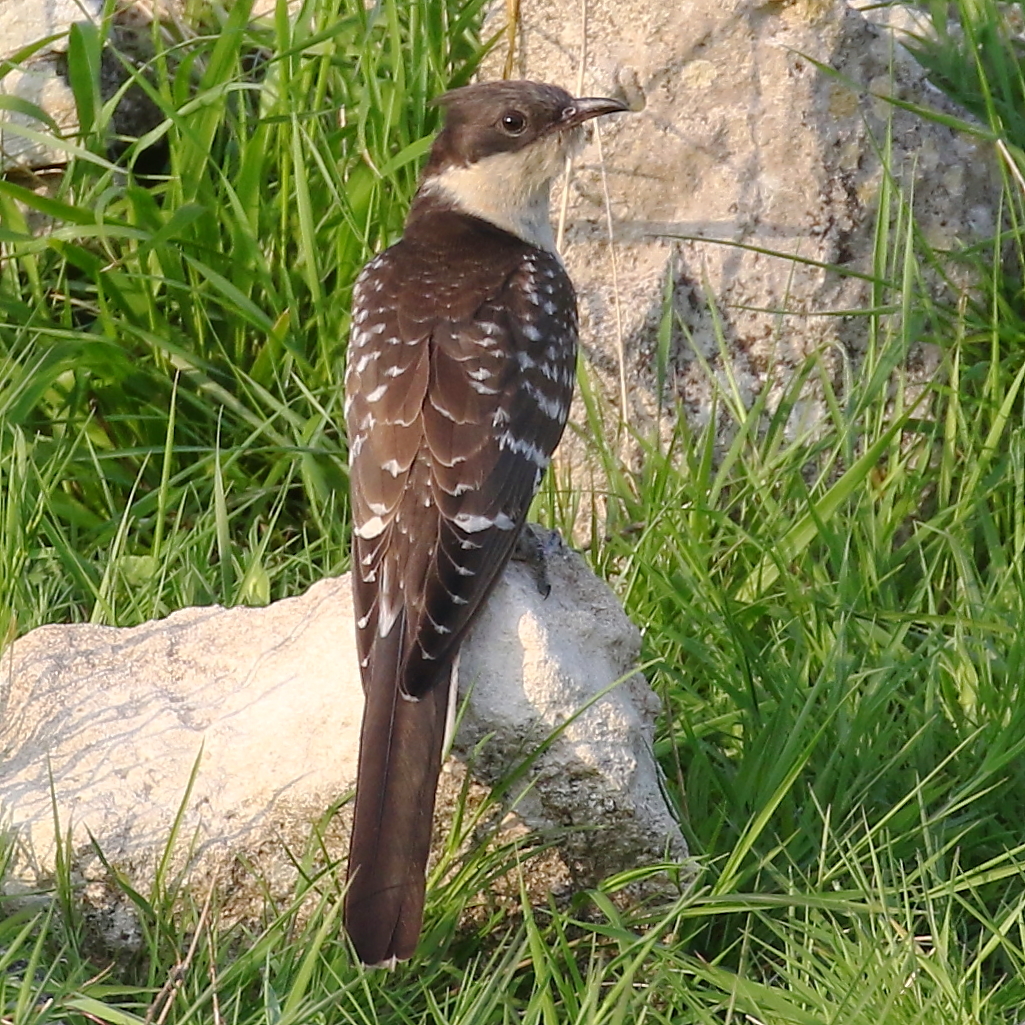
The first half of the month was enlivened by some rare and scarce visitors to my adopted home county of Dorset - Kentish Plover, Black-winged Stilt and Red-rumped Swallow were all good birds, but top billing went a to dashing female Red-footed Falcon at nearby Morden Bog and a Great Spotted Cuckoo on Portland - a Dorset tick for me and many others. It gorged on Brown-tail moth caterpillars, which can be found in huge numbers at Reap Lane, for several weeks.
Red-footed Falcon, Morden Bog: my photo of the month for May
Great Spotted Cuckoo, Portland
Red-rumped Swallow, Lodmoor
Kentish Plover, Ferrybridge
Lepidoptera loomed quite large in my life in 2016: as well as being the first spring in which I had the opportunity to put my new lens through its paces photographing these smaller subjects, I steered an Action Plan for Pollinators through to adoption at Dorset County Council - a small but important attempt to boost the prospects of our declining butterflies, moths and other pollinating insects. Later in the year, some wildflower verges we had created as part of this got a hugely positive reaction from the public - the first time in my twelve year career in local government when the compliments in my inbox have outstripped the complaints! But back to May, which saw the emergence of many sought after species around Dorset's butterfly hotspots:
Duke of Burgundy, Cerne Abbas
Green Hairstreak, Cerne Abbas
Small Blue, Portland
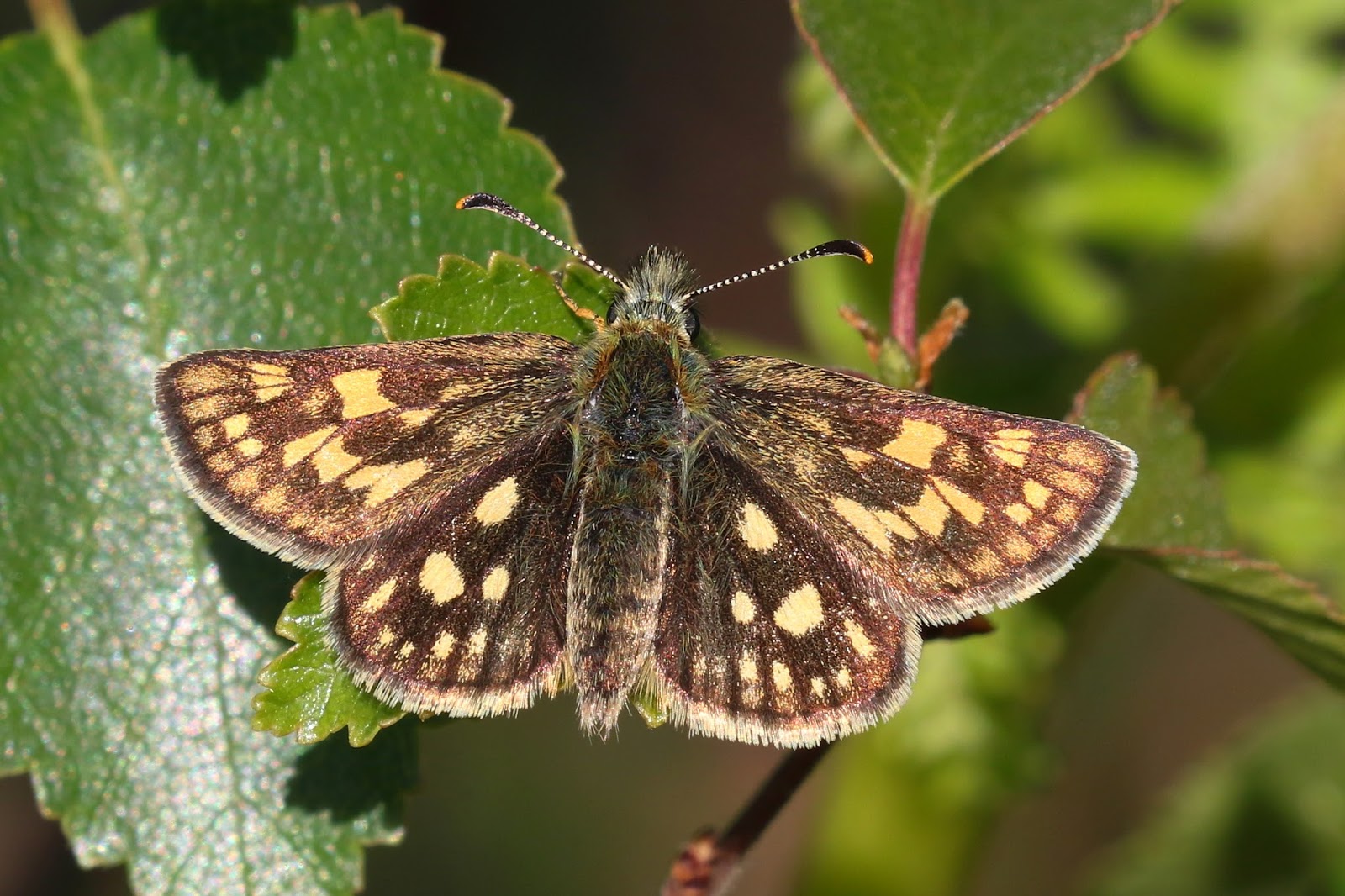
Chequered Skipper - a rarity in Britain restricted to a few sites in north west Scotland - we visited one at Allt Mhuic on the way south from a trip to the Outer Hebs
May ended with one of my most epic and enjoyable adventures of 2016 - a three day trip to the Outer Hebrides with David Bradnum and Paul Welling. We made this mammoth journey to pay homage to the unprecedented spring occurrence of a Black-billed Cuckoo from the Americas and, having done so, to appreciate the dramatic landscapes, the breeding waders and other wildlife of North Uist, South Uist and Benbecula:
Black-billed Cuckoo, North Uist: bird of the month for May
Corncrake, North Uist
Redshank, Outer Hebrides
Female Red-necked Phalarope, Outer Hebrides
One of the highlights of the year and the furthest I travelled in 2016. Fortunately it came at the start of a week off providing for a leisurely stay to appreciate the breeding birds on the Hebrides as well as the vagrant Cuckoo - I would have had neither the energy nor the inclination to just 'smash and grab' the rarity in such a memorable location. And no, Mr Trump, it would not be a good place for a golf course...

Thursday, 26 May 2016

Bewitched on the Downs

Blue butterflies weren't the only things on the wing at Ballard Down on Sunday - a few day-flying moths were also in evidence, the most numerous of which was the Mother Shipton, named after a 16th century Yorkshire prophetess whose visage is replicated in the wing pattern of the moth. She is said to have foretold, among other things, the Great Fire of London, the invention of iron ships and the defeat of the Armada, insights which saw her reputation deteriorate rapidly from 'soothsayer' to 'witch'. Seems a bit harsh. Good job she didn't claim to know about climate change, or the latter day equivalent of Donald Trump would have had her fried. Fortunately, Tudor overlords were more tolerant than modern day Presidential candidates, and, despite predicting the end of the world, she was left to die of natural causes in her 70s. Such is her legend that Mother Shipton is the only British moth to share its name with a cave-based visitor attraction in Yorkshire. Fact.
Mother Shipton - the hooked nose and protruding chin of the witch's face can be seen in the wing pattern  
Also on the wing was a smart Wood Tiger
I was surprised to find this Angle Shades roosting out in the open
And representing the micros, Pyrausta ostrinalis - related to, but a different species from, the Pyrausta purpuralis I saw on Melbury Down a few weeks ago
Had to phone a friend to identify this one: Cydia ulicetana, a common and widespread species in Britain, but not one I had photographed before
As well as blues doing the wild thing, these Dingy Skippers were also at it
Always a pleasure to see a male Orange Tip nectaring
Ditto a roosting Small Heath
It started to rain at Ballard so I retired to Wareham, picked up the family and we headed to Morden Bog for a late afternoon walk - a Green Hairstreak near Morden Park Lake was a pleasant surprise
It was perched up on Rhododendron...
...along with another of my favourite species - the Beautiful Demoiselle
This is the female of the species - perhaps not lovelier than the male, but still a stunner


Sunday, 15 May 2016

Something green, and a giant

Sunshine, warmth and opportunity combined on Saturday, encouraging me to make the trip to Cerne Abbas, one of the finest sites in Dorset for butterflies where a range of species flourish in the shadow of the celebrated giant. After a surprisingly chilly morning with patchy cloud, the afternoon warmed up enough to bring out a range of species, including a stunning Green Hairstreak.
Green Hairstreak - more often 'stumbled upon' than 'found', in my experience
This individual was rubbing its wings together in a rotating motion, revealing a glimpse of the brown upperwing
Perhaps the most sought after butterfly at Cerne Abbas is the Duke of Burgundy - a rare species for which conservation efforts are helping to halt a precipitous decline
This male perched up during an overcast period - the forelegs of the male are stunted giving it a four-legged look (compared to six visible legs on the female)
The Marsh Fritillary has been in long-term decline in its wetland habitats, but is bucking the trend on Dorset downland sites. A single individual was spotted during my visit - hopefully more will be emerging soon
Small Heath - another species which has seen a steep decline, although it remains widespread
Grizzled Skipper - a very dapper individual
Dingy Skipper outnumbered Grizzled by about 5 to 1 - the opposite ratio compared to a visit to Fontmell Down a few weeks ago
This Green-veined White served as the warm-up act on the way to the flower-rich downland at Cerne Abbas
And representing the day-flying moths, this attractive Green Carpet was disturbed from vegetation
A fine show of Orchids and Cowslips on Cerne Giant Hill
Green Hairstreak - our only green butterfly