Showing posts with label Corn Bunting. Show all posts

Thursday, 22 September 2022

July-lights

The post-before-last recounted my longest bike ride of the year to date which saw me cross the Hampshire border for the first time in 2022. A successful venture which made me feel like I had got my cycling mojo back after the frustrations of June. A few days after the Hampshire marathon my legs were still feeling it but a gentle stroll down to the patch was enough to add Yellow-legged Gull to the yearlist. Four adults were present on one of the scrapes which have been a reliable site for this species in recent late summers, and the number rose to 10 later in the week. 

Painted Lady, Tarrant Rushton 17 July

Painted Lady, Tarratn Rushton, 17th July

By the 24th of the month the legs had recovered enough to repeat another summer pilgrimage from last year: a ride to Portland to look for Balearic Shearwater - one of the rarest species in global terms to grace our shores. The journey down cycling into the wind starting at 0530 was challenging, but ultimately successful - a couple of distant 'probables' were followed by a few Balearics close enough to photograph, plus two Arctic Skua and half-a-dozen Manxies.

Corn Bunting, Tarrant Rushton, 17th July

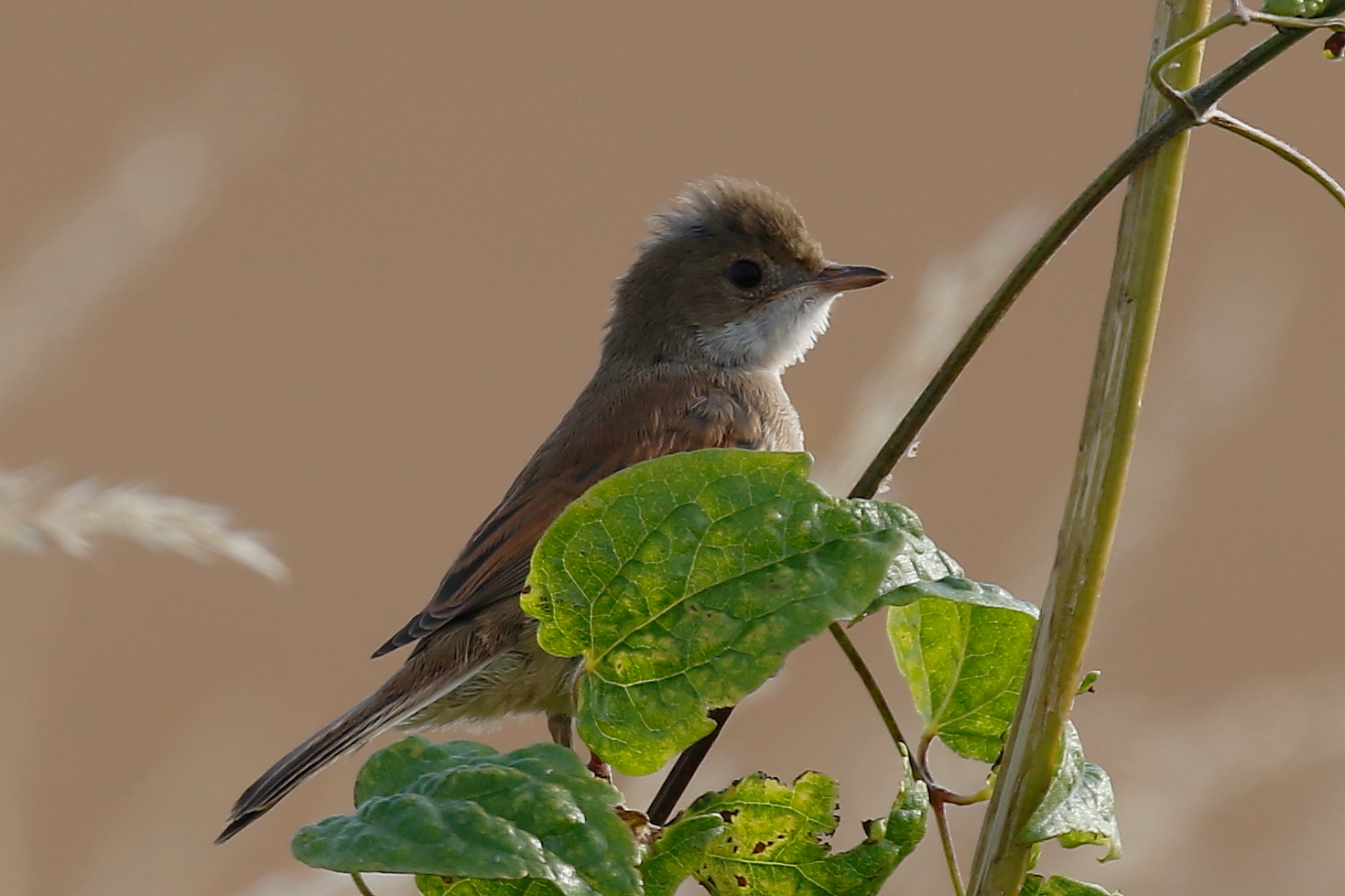
Whitethroat, Tarrant Rushton, 17th July

When I started the 2021 non-motorised yearlist I decided to include 'heard only' species but in the end managed to see everything, including the normally elusive Quail. This year I adopted the same rule which made a visit to Tarrant Rushton airfield, a reliable site for hearing if not seeing Quail, a good option. After dipping on 17th I managed to hear at least 3 calling males at the second attempt on the evening of the 29th. The month saw 6 new species added to bring the yearlist to 192 (compared to 198 at the same point in 2021). 318 miles had been cycled, my second highest total for a month in 2022 after May.
Balearic Shearwater, Portland Bill, 24th July

Balearic Shearwater, Portland Bill, 24th July

Thursday, 14 June 2018

A pinch of saltmarsh

My sons are both 'Kentish Men', born in the Garden of England west of the Medway, but since we left the county in 2007, visits back there have been a bit few and far between. The recent birthday of a former neighbour provided one such opportunity, and Sunday morning offered a chance to reacquaint myself with an old favourite, the Elmley Marshes Natural Nature Reserve on the Isle of Sheppey.
A breeding plumage Yellow Wagtail always brightens the day 

Yellow Wagtails are very leggy enabling them to stalk through the long grass of the grazing marsh
This unusually bold bird was strutting up the entrance track calling constantly
A wider angle view perched on thistle
Although it was a brief encounter, after my last few visits when breeding birds seemed a bit thin on the ground, it felt a bit like the 'old days' at the turn of the century when I first started going there: breeding waders like Lapwing and Redshank appeared to be doing well, as were the ground-nesting passerines - Yellow Wagtail, Corn Bunting, Meadow Pipit and Skylark.
Wonderful close-up views of Redshank from the car window
Juvenile Redshank
Marsh Harriers were very much in evidence...
...much to the chagrin of the breeding Lapwings
All the photographs in this post were taken using the car as a hide on the 2 mile entrance track to the reserve centre. Since the reserve management reverted from the RSPB to the private owner a few years ago, the area around the farm complex has undergone some reconfiguration, with more provision for paying guests and conversion of farm buildings. But if that's helping to pay for the conservation work, I'm certainly not complaining.
This adult male Lapwing was sporting a spectacular crest
Increased Lapwing chick productivity is one of the key management aims on the reserve: here's one they prepared earlier
Stunning iridescence on this roosting bird
My car's reflection can be seen in the eye of this Lapwing photographed at close range
I rediscovered an interest in the natural world relatively late in life, and it was a visit to Elmley back in the late 1990s which re-ignited a childhood fascination with birds which had been dormant while I was studying and working in London in my 20s. One of my earliest memories of the reserve was a Corn Bunting singing from a trackside bush - so I was touched to see another singing from the same bush on Sunday. The children haven't yet learned to share my pleasure at being on the grazing marshes and saltmarshes of Sheppey. Thankfully, for as long as good conservation management continues, there is still time.
Meadow Pipit
A flock of Stock Dove was nice to see
Skylark
Corn Bunting

Saturday, 31 December 2016

And finally...

This quick look back at December completes my series of posts reviewing 2016. Thanks for sticking with it - from the comments and texts urging me on recently, I got the impression that some of you didn't think I was going to make it. I could pretend it was all carefully planned to conclude as the sun sets for the last time on 2016, but that would be a lie. In fact, there was a point last week when I too thought I would never reach the end: it was, to borrow the sporting image of 2016, my Jonny Brownlee moment, and you, dear readers, were my Alistair, dragging me to the finishing line despite having much better things to do with your time.

2016 was of course a year of shock election results, famous folks' funerals and controversial rare birds. The evidence on climate change appeared stronger than ever but the peoples of the free world decided not to let the facts on this and several other matters of public debate get in the way of a good story, especially when it was being told by wealthy demagogues with their fingers crossed behind their backs. On those shock election results, I merely observe that just 27% of eligible Americans voted for Trump, and less than 38% of voting age Brits voted to leave the EU. Whatever you think of the results of both polls, this surely can't be taken as a sign that western democracy is in rude health. I recall fondly the ennobled billionaire tax-exile Lord Ashcroft tweeting after the US election and Brexit results that 'the elites' had lost touch with the people - how fortunate we are to have such down-to-earth meritocrats holding these damned elites to account.
Egrets: I've had a few - Dorset got in on the December Cattle Egret invasion, this bird being one of five with Little Egrets at Nottington
Corn Buntings were singing at Maiden Castle in the unseasonably warm weather of mid-December
 Corn Bunting, Maiden Castle
Much loved celebrities seemed to drop like flies in 2016 - or did they? My theory is that with a rising global population and the bar for celebrity being substantially lowered over time, there are just a larger number of them around to perish - so we'd better get used to more 'Sad death of tragic Brian off of Big Brother' type headlines in 2017. That said, there were some genuine mega-stars who left us during the year, and I had to smile at a recent suggestion on social media that Bowie had created a parallel universe and was in the process of populating it one by one with his own hand-picked choices. 
Marsh Harrier at Middlebere - from a visit early in the month

Little Egret, Middlebere: one of the few beneficiaries of our warming climate
Peregrine at Middlebere from the same visit
As for the controversial rarities, it started early in the year with the Dalmatian Pelican's tour of the south west, and ended with the Cotswolds Blue Rock Thrush. Establishing the provenance of a wide-ranging Lammergeier (not seen by me) and the wandering east coast Western Purple Swamphen (which I did see) was also potentially complicated by the influence of continental re-introduction schemes, even though neither were thought likely to be of captive stock.
A memorable December day saw me heading up to Derbyshire for a close encounter with a Dusky Thrush
Willow Tit at Carsington Water was a long overdue 'photo-tick' on the way back from the Dusky Thrush...
...as was the bonus of an Eastern Black Redstart in Tewkesbury on the way home - the first I had seen of this form and therefore my bird of the month for December
A quick attempt, then, to dish out some meaningless titles for 'whatsit of the year', an exercise fraught with danger not just due to fickle memory, but to the risk of implying that anything not mentioned wasn't fun or special - that would be nonsense, of course, but I'm afraid it's not going to stop me:
  • Bird of the Year: it has to be the Siberian Accentor - the fact that it was part of a multiple occurrence of the species in Britain 'devalued' it for some, but for me it did the opposite, illustrating a genuine natural phenomenon and adding to its authenticity in a year which had more than its share of plastic controversy.
  • Dorset Bird of the Year: Portland's Great Spotted Cuckoo was everything a rarity should be: big, beautiful and photogenic - and a county tick for me.
  • Patch Bird of the Year: a very short shortlist due to a shameful lack of effort - but a self-found autumn Great White Egret claims the title, if stumbling across the birding equivalent of a Concorde in a haystack counts as 'self-found'.
  • Twitch of the Year: it has to be the day trip with my son to St Mary's for the Cliff Swallow - though the Hebridean adventure for the Black-billed Cuckoo, the campervan sleepover for the Great Knot, the smash and grab for the Siberian Accentor and the Dusky Thrush/Eastern Black Redstart bonus ball day ran it a close second, third, fourth and fifth respectively. Not that I''m obsessed with lists, you understand.
  • Photo of the Year: had to think about this one. But I love American waders, and I love photographing rare birds up close, so it's the second one from this series taken during an intimate encounter with the Hudsonian Whimbrel in Cornwall early in the year. 
  • Dip of the year: I learnt long ago not to go too early with 'review of the year' posts and this year is no exception. I was looking forward to reporting 'no long distance dips' to speak of, when last week's Pembrokeshire trip failed to turn up the hoped for Masked Wagtail!
  • The Donald Trump Award for services to climate chaos: having raised the spectre of climate change, I should reflect for a moment on my own carbon footprint: too much driving chasing all these birds around, obviously, but I managed more lift-sharing than usual in an A-rated car, and, apart from two short hops on crop sprayers to the Isles of Scilly, I never got on a proper plane or left the country by any other means in 2016. So not too bad relatively speaking, but certainly room for improvement. Mind you, given the state of sterling, not leaving the country may be less of a choice and more of a necessity in 2017!
The news in 2016 was full of talk of 'blue on blue' conflict, as leading Conservatives knocked lumps out of each other with their Polo hammers. This image of 'blue on blue' - the Blue Rock Thrush against the perfect sky of a cold December afternoon in Stow-on-the-Wold - presents, I feel, a more restful image, and one much less likely to have my Dad shouting at the telly. My photo of the month for December.
So, thanks to the various peregrinations chronicled in these pages in 2016, the number of birds I have seen in Britain according to the official list crept up from 452 at the start of the year to 458 by the end - not including the Swamphen, the Pelican and the Blue Rock Thrush, all suspended in listing purgatory pending consideration by the British Birds Rarities Committee. In statistical terms, therefore, whether or not 2016 can go down as a good or a very good year will in part depend on what these wise folk decide about the year's most controversial birds. The Swamphen should be fine, who knows with the other two. But in the final analysis, the numbers don't much matter: the birds, the butterflies and other interesting critters I saw this year took me to some inspiring places, in the company of some great people, and sometimes with just myself for company, in a search for natural beauty, solitude and fulfilment which undoubtedly kept me sane amid the madness of the modern world.

My thanks, then, to the wildlife, for still being there despite the best efforts of humanity to eradicate much of it; to my fellow travellers, for their companionship and for subjecting themselves to my incessant witterings en route; and to my family, for joining me when it was possible, and tolerating my absence without too much overt celebration when it wasn't. And finally thanks to all of you for reading. It appears that the review of the year by instalments idea was insufficient to avert one last mammoth post for the year, so my resolution for 2017 is a simple one: I'll knock that on the head next year. Assuming the fingers of President Trump's tiny hands haven't already punched in the nuclear codes by then of course. And on that cheerful note, may I wish you a Happy New Year!


Friday, 3 June 2016

Twite of the day

Twite is a speciality of the Outer Hebrides, and we were fortunate enough to stumble across several paired up birds on our meanderings around North Uist over the Bank Holiday weekend. Like the waders, the best views were obtained kerb-crawling around the back roads of the island, often quite close to human settlements and their motley collections of rusting farm machinery. I was just commenting to my travelling companions on the shocking state of some of the dead tractors which the locals leave lying around, and wondering aloud 'why can't they all be as attractive as that rusty old plough on the verge - hang on, what's that on top of it - Twite!'. It flew before we could raise our cameras but landed again on a fence on the other side of the road for a close view and a preen to reveal the pink rump of a breeding bird.
When driving around the island, we stopped on many occasions to check fencelines for perched birds. I would estimate that about 1% of these were Corn Bunting, 1% were Twite, 1% were Stonechat, 30% were Meadow Pipits, and 67% were the chunky metal clamps used by the islanders to tension barbed wire fences. These became known as 'Clampfinch', a byword for false alarms. As the trip progressed, we also spotted the closely related Clampchat, Clamp Pipit and the much rarer Clamp Bunting (which was more inclined to perch on telegraph wires than fencelines).
Corn Bunting at Balranald
Meadow Pipit
Stonechat, stubbornly refusing to sit on a fence
Clampfinch - as you can see, easily confused with a distant Twite. This one even has a pink rump patch


Saturday, 21 March 2015

Bunting hat-trick

After twitching a Bonaparte's Gull before work on Wednesday, I ended the week with another successful local twitch on Friday night at nearby Maiden Castle, a short detour on my way home from work. A Snow Bunting had been present for a couple of days and I soon relocated it on the cycle path and later in the same field where a large flock of Golden Plover spent the winter. As well as the Snow Bunting, by Friday night these had been replaced by a few Wheatears, my first of the year. Singing Corn Buntings completed a nice evening jaunt.
Snow Bunting, Maiden Castle (#129th species photographed in 2015)
A well marked bird
It was finding plenty of seeds to eat in this field
Corn Bunting, Maiden Castle (#130)
Any why should Buntings get all the attention? Here's a Linnet at Maiden Castle...
...a Lark: Skylark, Maiden Castle...
...and finally from Maiden Castle, the first Wheatear of the year (#131)
One more for the finches: Siskin, near Wareham last weekend (#132)
OK, Buntings, have the last word: Yellowhammer, nr Wareham last weekend (#133)


Friday, 17 February 2012

Old haunts

Trips to Norfolk are a rarity today compared to when I lived in Kent, so a full day in the county was a good opportunity to revisit some old haunts. At Holkham, I was unable to locate a Rough-legged Buzzard or the wintering Shorelark, but did catch up with some distant Eurasian White-fronted and Egyptian Geese, as well as a Muntjac Deer.
Muntjac Deer - often seen in the Norfolk dusk, less often in broad daylight
Titchwell RSPB reserve was unusually quiet, and while the Coues's Arctic Redpoll present yesterday was absent today, a pair of Velvet Scoter were reasonably close offshore.
1st winter drake Velvet Scoter (centre bird) with female Velvet (right) and female Goldeneye (left) - click to enlarge
A melee of gulls on the beach at Holkham merited closer inspection, if only to find out what they were feeding on. It turned out to be a large number of washed up starfish and raozor clams - the local waders also joined in the feeding frenzy.

Melee of gulls on Holkham Beach

The gulls were attracted by a rich concentration of starfish and razor clams
There is always something worth seeing at Choseley drying barns. Unless it's 2004, you're me, and you're looking for a Pine Bunting. Two weekends running. Today it was a decent flock of Corn Bunting and Yellowhammer, plus a few mad March hares who had gone loco a month too early.

Corn Bunting, Choseley
Yellowhammer pair, Choseley
Hare, Choseley
Back at Holkham for dusk, dipping on the Rough-legged again, news broke of a Common Yellowthroat in Gwent. I should have guessed that if I wanted another 'mega' to turn up off south of Birmingham I would have to head north of it. This presented something of a dilemma: cut short the Norfolk trip, or hope it sticks around. The thought of missing the excellent breakfast at Cobblers B&B in Wells persuaded me to check the weekend forecast, wait on news and make the decision on a full stomach...
Huge numbers of Pink-footed Geese at Holkham today