Monday, 12 December 2022

November's birding by bike

October ended with my non-motorised year list on 214 species, 5 more than at the same stage last year - so inevitably I started to wonder if I could exceed my total of 224 species seen in 2021. I had a very good end to last year, adding 6 new species in November and a further 9 in December. Many of the species which turned up in December stayed into the New Year so were already on my 2022 year list, so it might be a bit harder to make up the numbers as the year approached its end. 

Dusky Warbler, Durslton

Dusky Warbler, Durlston
Still, I was determined to give it a go, and the first opportunity to do so arose early in the month with a Dusky Warbler at Durlston Country Park on the evening of 4th November. This would be a non-motorised 'lifer' as well as a year tick so was not to be missed. I would be cutting it fine though as it was a working day and the nights were drawing in, but I remember seeing Dusky Warblers on Scilly right up until darkness fell and set off as soon after finishing work. It was a race against the sunset but on arrival James Leaver and Garry Hayman were on site to point the bird out almost immediately. Fortunately it was very active and vocal, although a challenge to photograph in the last of the light. High ISO ratings and a bit of work to denoise the pictures in Topaz AI even produced some satisfactory images.
Arctic Tern, Weymouth
Early November produced some south westerly storms and a smattering of reports of Leach's Petrels, Sabine's Gulls and Arctic Terns, any of which would be good birds for the year list. Conditions the day after I saw the Dusky Warbler looked promising so I arranged to meet Phil Saunders at Chesil Cove on the Saturday afternoon. 
Sabine's Gull, Chesil Cove 
Sabine's Gull, Chesil Cove
It was 23 miles into the wind and I underestimated both the effort and time it would take to get there on the bike. The last mile or so from Ferrybridge into the storm was tough to say the least! In the end it was a disappointing seawatch with nothing more unusual than a Common Scoter. Jumping on the train to get home wasn't an option due to a strike, and to add insult to injury I got a proper soaking heading back along the Ferrybridge causeway where the high tide brought the sea almost up to the level of the road. Still, the wind was behind me for the rest of the way home which made it a bit easier.
Sabine's Gull, Chesil Cove
Black-headed, Mediterranean and Sabine's Gull, Chesil Cove
More storms over the next few days produced more reports of Leach's, Sabs and an Arctic Tern which appeared to be lingering around Weymouth marina. The problem was it was mid-week and the only chance to give myself a shot would involve a very early start and a bit of luck to see a target species and get back in time for work. By Thursday 10th November the temptation proved too great and I set off in the dark into another south westerly shortly before 0500. Arriving at Weymouth marina around 0700, I saw the Arctic Tern almost before I had got my binoculars out of the panniers, and after a few photos was on the road with the wind behind me and back at the laptop in good time. 
Snow Bunting, Studland
Red-throated Diver, Studland
A Sabine's Gull was reported at Chesil Cove whilst I was still in Weymouth but I lacked both the time and energy to press on for it. I would just have to hope that it stuck around until the weekend. If it did, I would have a decision to make as a Snow Bunting had also appeared during the week and appeared to be lingering on the beach at Studland. 
Snow Bunting, Studland
Early on the morning of Saturday 12th news came through that the Gull was indeed present, and figuring that this was less likely to stick around than the Bunting, I made the long trek to Weymouth for the third time in eight days. Again meeting up with Phil Saunders, this time our trip to Chesil Cove was more successful as the Gull showed in T-shirt weather. A celebratory bacon and egg sandwich from Quiddles cafe was called for before the wind-assisted ride home.
Snow Bunting, Studland
After these exertions Sunday 13th November should really have been a rest day. Unfortunately no-one had told the Snow Bunting. I hauled my weary ass into the saddle and bounced gingerly in the direction of Studland through Rempstone Forest. An hour or so later, I bumped into local birders David Foster and Rich Andrews in the National Trust car park at Shell Bay who confirmed the continued presence of the Snow Bunting. Within minutes I was face down in the sand photographing this confiding bird as it foraged along the strandline. Two young bird photographers joined me followed by their parents as we enjoyed our close encounter with the winter visitor. Roly Pitts then rocked up, and after more photos we wandered south down the beach to look for a Red-throated Diver which was reportedly very close in. 
Snow Bunting, Studland
After a brief but good view I decided to head back for more Bunting views whilst Roly continued down the beach - a tactical error on my part with hindsight as Roly saw and photographed 6 Long-tailed Ducks heading south shortly after - another key target for the year! Despite this it had been a good week with 3 additions to the list.
A trip to the guitar shop in Poole took us conveniently close to this bit of quality plastic: Wood Duck at Creekmoor Ponds
Wood Duck, Creekmoor
The rest of the month offered up limited opportunities to add to the year list. Several visits to the patch produced little more than the depressing realisation that avian flu was now running through the local bird population, judging by the number of dead or dying Canada Geese in the area. More positively, it took just a couple of quick visits to Lytchett Bay to catch up with a colour-ringed Water Pipit - so November ended on 219 species, 4 ahead of the total at the same point last year, with a further 230 miles on the clock. Could my 2021 record fall at the first attempt? That would all depend on what December had in stall...
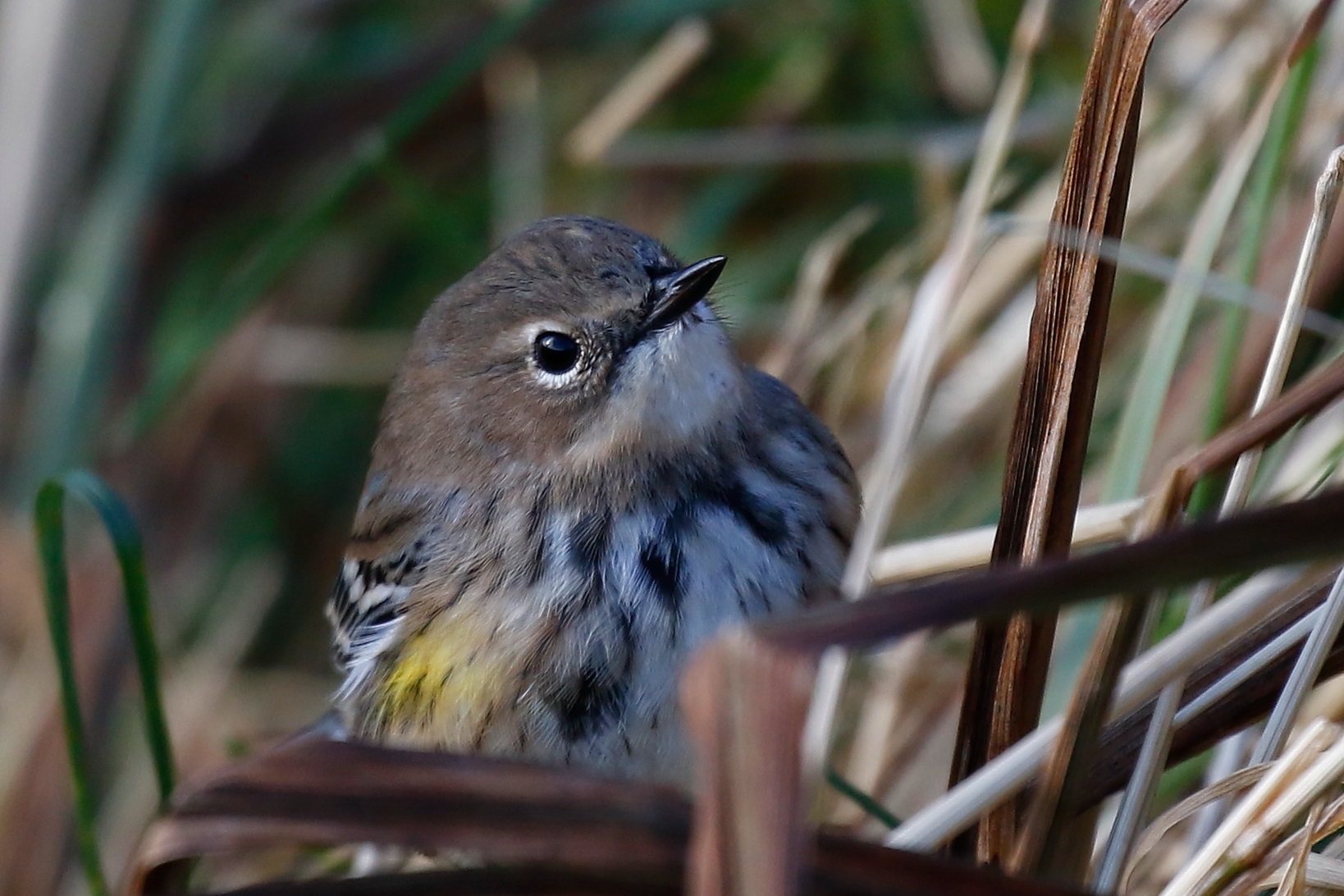
Firecrest, Swineham

Water Pipit, Lytchett Fields

Snow Bunting, Studland

Monday, 7 November 2022

An Oktoberfest of birding

October was always going to be a challenging month for the non-motorised yearlist as the first ten days of the month were earmarked for the near annual birding holiday on Shetland with Bradders Birding Tours (Proprietor: D. Bradnum; Vice-President (Finds): H. Vaughan). This year's crew was a man down on last year's as Team Sommelier Jono Lethbridge was otherwise engaged, galivanting even further afield. So it came to be that we found ourselves in smaller but classier than usual accommodation - a little croft way out west on Mainland Shetland in a place called Riskaness.

Goosander, Musselburgh, 2nd October

Redshank, Musselburgh, 2nd October

Pink-footed Goose, 2nd October

Curlew, Musselburgh, 2nd October
Howard has already chronicled the trip more extensively and poetically than I could hope to in his excellent Blue-eyed Birding blog - so my digested read is as follows. Apart from yomping through the vast iris beds of Quendale - which is every bit the 'Lord of the Rings' scene that it sounds - and sprinting down the road from Loch Spiggie to Scousburgh beach for the Least Bittern - during which time my fitness training on the bike really paid off as I left several birders for dust en route - physical exertion was limited to sitting in the back of Bradders' car and lifting my arm to add mega-tick after mega-tick to my bulging notebook.
Velvet Scoter, Musselburgh, 2nd October - we called in on the way north to Shetland to see the long-staying King Eider

Methil power station, 2nd October

Black Scoter (lower centre), Cocklawburn, Northumbs, 1st October - we stopped over nearby on the way north to look for this bird - terrible photos but a photo 'tick' for me

The bright yellow knob of the Black Scoter's bill was visible from distance - better scope views than these poor photos suggest!
It was an extraordinary trip during which I saw: 4 species new to my British list (Pechora Pipit, Lanceolated Warbler, Least Bittern and White's Thrush); 1, potentially 2, firsts for Britain (the Least Bittern and the Great Grey Shrike showing features of the race homeyeri); 2 American wood warblers (both Myrtle Warblers - almost the most numerous Warbler on Shetland this year); and a second for Shetland (Magpie). Plus they all showed pretty well except for the White's Thrush, of which I had to settle for flight views in the pouring rain of our last day.
Pechora Pipit, Hillswick, 3rd October

Pechora Pipit - the first I had seen on our first day on Shetland

Lanceolated Warbler, Wester Quarff, 4th October - found by our good friends Nick and Claire Oliver
The Lancy was my second lifer in 2 days on Shetland
We may not have achieved much in the way of finding birds - a Grey Phalarope at Melby being our most notable discovery - but we enhanced our reputation as the best fed birders on Shetland with some sumptuous home-made meals and a selection of shop-bought, pie-based luncheons.
Olive-backed Pipit, Aith, 3rd October

Possible Homeyer's Great Grey Shrike, Hillswick, 3rd October

Possible Homeyer's Great Grey Shrike, Hillswick, 3rd October

Great Spotted Woodpecker, Sullom
Whilst away from home, the only possible additions to the non-motorised year list which I missed were a couple of distant Grey Phalaropes at Charmouth and Chesil which may in any case have been out of reach, even if I'd been at home. I really needed a good workout on the bike by now but the rarities had other ideas, and news of a Blackburnian Warbler on the Isles of Scilly proved too much to resist. I returned the favour of Bradders driving me to Shetland by driving him, plus Phil Saunders and Paul Welling, to Penzance, where we boarded Scillonian III and, long story short, after a couple of bouncy boat rides were watching one of the brightest and most exquisite birds any of us had ever seen in Britain.
The Waddle - our accommodation on Shetland

Twite

Glaucous Gull, Lerwick Harbour

King Eider, Scalloway, 5th October
So by the weekend after my return, there was some serious catching up to do both in terms of my fitness and getting back to focusing on the non-motorised yearlist. I recounted in an earlier post how the Barred Warbler at West Bay provided the opportunity to do both. A patch Barnacle Goose the following day required much less effort but kept the list ticking along nicely. But with the dark nights drawing in, there were no further opportunities to get out after work mid-week so my ability to add any more to the yearlist would depend on the final weekend of the month. 

Shetland Wren, 5th October

Red Grouse, Walls, 5th October

The first Myrtle Warbler of the week on Shetland at Ellister

Myrtle Warbler, Ellister, 5th October
I had no particular plan but fortunately Phil Saunders was again on hand to provide one, locating a Pallas's Warbler at St Aldhelm's Head on the morning of Saturday 29th. I had some work to do and headed down as soon as I could and, although only 9 miles away, it was tough going into the wind, especially the last few miles up and over the Purbeck ridge. Unfortunately, on arrival I could find nothing but Chiffchaffs in the spot where Phil had seen the Pallas's and although I heard what I thought was the Pallas's call once, it wasn't enough to add it to the yearlist. 

Willow Warbler, Dale of Walls, 6th October

Red-throated Diver, Melby, 6th October

Otter, Melby, 6th October

Ruff, 6th October
On the way back to the road I passed a group of trees by the Weston Farm Coastguard building which held a tit flock, and despite catching a glimpse of what looked like a silky white underside within the flock, the owner of said underside didn't reappear for the next 15 mins. My eldest son was home from Uni for the weekend and I had promised to make dinner for him and his girlfriend, plus my other son and his girlfriend, so I reluctantly gave up and headed home to put a venison casserole in the slow cooker. 

The second Myrtle Warbler of the week - less than a mile from the first - at Bigton, 7th October 

Showing a flash of yellow rump

Both Myrtle Warblers fed at ground level

A very charming bird
As I was doing so, news came through that the Pallas's Warbler had been relocated - with a tit flock very close to the spot where I thought I might have seen it! Going back would have been unreasonable, especially as it was even wetter and windier by now than it had been in the morning. But the relationship between my birding by bike decisions and reason is tenuous at the best of times, so back I went, despite a warning from Phil that, although he had seen the bird again, it was a brief and difficult view as it was now in and out of gardens opposite the Coastguard where lines of sight were obscured.

My 'in the field' view of Britain's first Least Bittern - about 20 ft away but hidden in marram grass, it was hunkered down but facing me. The yellow around the eye can just be seen

We were close by when news broke and among the first dozen or so people to see the Least Bittern which was picked up and taken into care shortly afterwards

A tragic sight to see this tiny heron which had just crossed the Atlantic too weak to resist when picked up to be taken into care

It looked a bit feisty when first picked up but didn't survive the night
It seemed like a long shot for such a tricky bird and in deteriorating weather, but I knew Jol Mitchell was on the way there and we agreed that if I dipped I could at least sling the bike of the back of his car for a lift home. Arriving shortly before 1600 in rapidly fading light, I joined Jol sheltering from the rain by the Coastguard building. 
Magpie at Sandness - a Shetland mega, only the second record - 8th October
 
Goldcrest, 8th October

Fulmar, 8th October

Grey Phalarope - shamefully, our best team find of the week on Shetland!
Eventually I walked around to the other side of the building, and no sooner had I done so than the Pallas's Warbler dropped down in front of my face calling! I shouted to Jol but he didn't hear me, and despite the bird heading his way he didn't see it either. Bad news for both of us in that he had dipped and I would now have to reject the offer of a lift and complete the journey home by bike to add the bird to the yearlist!
The Pallas's Warbler was too quick to photograph - so here are some of the Blackburnian Warbler on Bryher, 15th October

Blackburnian Warbler

Blackburnian Warbler

Blackburnian Warbler
Fortunately the strong wind was now behind me so it was no great hardship. Topping 32mph down the precipitous Kingston Hill, after two trips to the coast and 36 miles cycled in total, I was still home with plenty of time to complete dinner for the lovebirds and reflect on the tally for October. 152 miles were cycled in total and 3 new birds were added during what was left of the month after the Shetland trip, bringing the non-motorised yearlist to 214, compared to 209 at the end of October last year. 10 more species would see me match last year's total of 224 - but time is running out!

Blackburnian Warbler

Blackburnian Warbler

Blackburnian Warbler

Blackburnian Warbler

Blackburnian Warbler