I was poised to go on news this morning if yesterday's Terek Sandpiper was still at Rye Harbour but unfortunately it had decided to boldy go somewhere else. A shame as this could have been my second British tick in consecutive weekends. I was so confident it would be there that, as you can see, I even had a blog post title ready prepared for my all-conquering return. It seemed a shame to waste it.
 |
| Hobby |
 |
| Kestrel |
 |
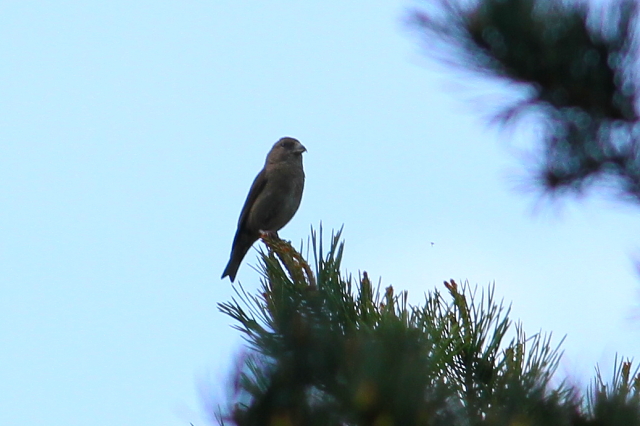
| Crossbill |
This misplaced confidence may have been extra wishful thinking as twitching would have been a useful displacement activity to avoid knuckling down to a dissertation which I have to complete soon as part of a work-related qualification. I was up early anyway so made a half-hearted start on this. But then Steve Smith, who had offered me the putative lift to Rye, suggested a trip to nearby Morden Bog instead to search for
odonata, which sounded like more fun than homework.
 |
| Male Downy Emerald |
 |
| Downy Emerald - I think this is a female - the abdomen sides being more parallel and less club shaped than the male |
 |
| Short, curved anal appendages help tell male Downy from Brilliant and Northern Emerald. But they don't occur in Dorset anyway. So the anal appendage close-up is just, well, gratuitous. |
Downy Emerald was the main target and despite the efforts of three Hobbies to wolf them all down we managed to find a few. A couple of patrolling individuals on one of the main paths were difficult to pin down at first but eventually we did so - on a rhododendron bush to which they repeatedly returned to rest. The same area also proved attractive to damselflies and a few butterflies - Brimstone, Holly Blue and Green Hairstreak.
 |
| Brimstone |
 |
| Common Heath |
 |
| Common Heath underside |
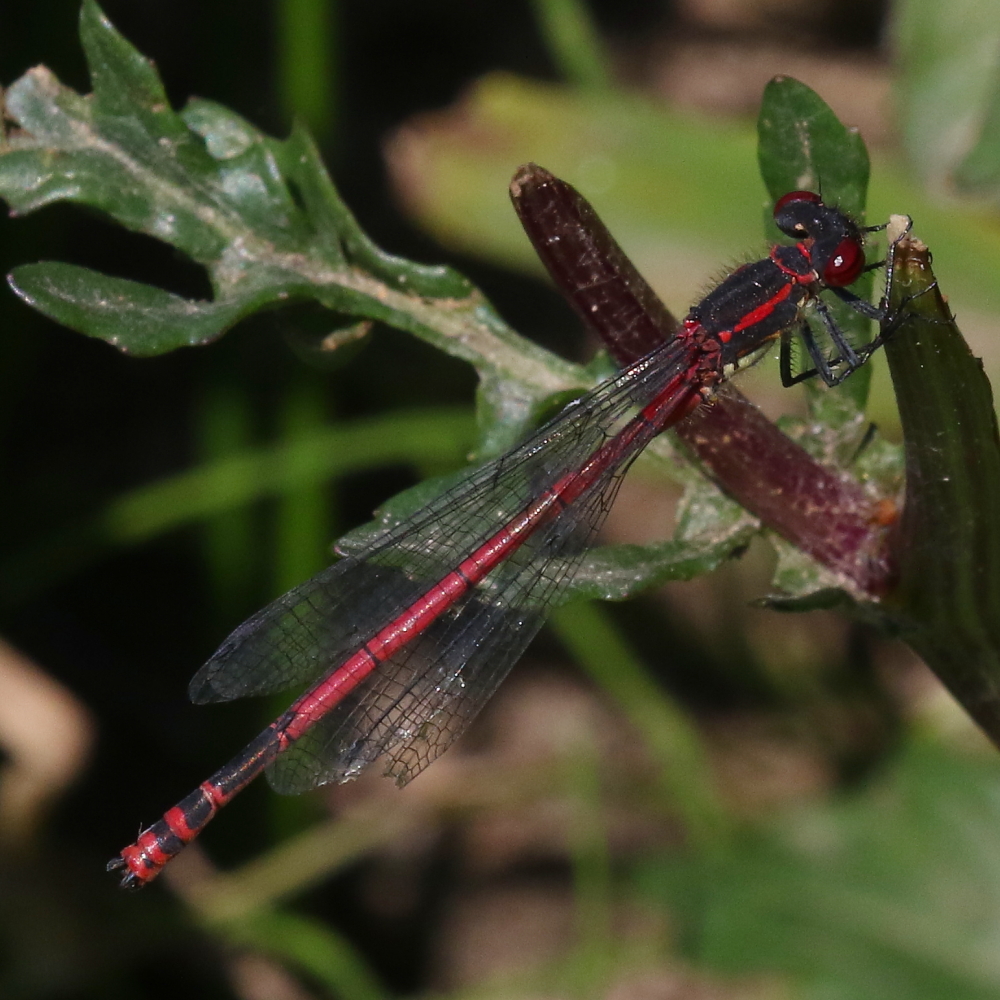
Four-spotted and Broad-bodied Chasers were also on the wing, along with Large Red and Azure Damselflies.
 |
| Four-spotted Chaser |
 |
| Broad-bodied Chaser |
 |
| Green Tiger Beetle, I'm reliably informed |
When I got home the laptop on which I am supposed to be typing my dissertation looked up at me accusingly. I ignored it and went for a nap. When I woke up it was still there, glowering impatiently. So I mowed the lawn. Now it's sighing despairingly while I type blog posts instead of critiquing academic theories of project management. Maybe tomorrow.
 |
| Large Red Damselfly |
 |
| Large Red Damselfly |
 |
| Azure Damselfly (male) |