Showing posts with label Adder. Show all posts

Wednesday, 1 January 2020

2019: also good for...

After a few posts celebrating the birding highlights of 2019 it's important to say my eyes remained open to non-avian subjects too. The search for exotic butterflies, dragonflies and reptiles normally has to wait until the spring but a period of unseasonably warm weather in February made 2019 slightly different. Reports of multiple Large Tortoiseshell butterflies on Portland saw me head down there to see my first. Subsequently some doubt has been cast on their provenance, but the one I saw in Tout Quarry was still spectacular. The warm weather early in the year also brought the local Adder population out of hibernation and afforded the rare opportunity to witness the 'dance' of rival males.
Male Adders at Swineham
The first time I had witnessed this behaviour
The Adder dance was an impressive spectacle
A Grass Snake kept company with the Adders
Large Tortoiseshell, Tout Quarry, Portland, 27th February
A Hummingbird Hawkmoth also enjoyed the warmth of Tout Quarry at the end of February
I still have a handful of British dragonflies and damselflies left to see in Britain so made the effort in the summer to see one of the more spectacular, Brilliant Emerald, at one of its known sites in neighbouring Hampshire. This proved tougher than expected, with one individual showing briefly early morning before being seemingly displaced by the similar but more numerous Downy Emerald. My only other dragonfly 'tick' of 2019 came in the form of a female Vagrant Emperor, which I jammed in on Portland thanks to a kindly gent who stood watch over its roost site in the long grass next to the Obs quarry.
Brilliant Emerald in Hampshire
The green brilliance of the Brilliant Emerald became obvious in profile...
…compare with the darker-bodied Downy Emerald
A few years ago, Red-veined Darter would have been a major rarity in Dorset - it's now commonplace at Longham Lakes
Similarly, Southern Migrant Hawker was first recorded in Dorset last year but bred this year in Poole Harbour
Female Vagrant Emperor on Portland, 27th October
A few new moths visited by garden trap in Wareham, my favourite being the common but still stunning Burnished Brass. But the most impressive new moths of 2019 were both day fliers and required me to travel a little further afield. Not too far in the case of my first Broad-bordered Bee Hawkmoth which graced the pollinator garden at nearby RSPB Arne, but to the other end of the kingdom for my most spectacular moth of 2019: the Kentish Glory which I saw whilst on a family holiday in Speyside at Easter. The assistance of my excellent ex-colleague Tom Prescott was essential in this regard. Several other successful twilight trips were completed with James Lowen as part of his 'moth year', the book of which is now awaited with great anticipation.
Kentish Glory at Granish
This is a male
It never landed so I had to 'spray and pray' for sharp flight shots
A spectacular moth
Dingy Mocha was one of the highlights of a mass trapping session in Wareham Forest with James Lowen, Phil Saunders and the folks at Footprint Ecology
Burnished Brass graced the trap in my Wareham garden
A very dark Broad-bordered Bee Hawkmoth at Arne
Whilst in Speyside I also had high hopes of photographing Mountain Hare. Sadly the first one I saw was dead on the road - still warm from a recent hit and run. Happily, the ones son George and I watched bounding up the slopes of Cairngorm on an early morning trek a few days later were very much alive - the undoubted mammal highlight of 2019.
This Mountain Hare met a sad end on the road to Speyside
Mountain Hare, Cairngorm
A careful approach was needed to avoid them bolting up the steep incline
A wonderful habitat in which to see these animals
We made sure we were first up the mountain on the morning I took these pictures
Another first - George came with me up Cairngorm!
Adders at Swineham

Tuesday, 20 March 2018

Serpent-time

Between 'beasts' there were a couple of sunny days which encouraged me to head out with the camera in search of early spring reptiles. Not far from home, a south facing bank is favoured by basking Adders which, with a long lens, can be photographed from the road without risking disturbance. Half a dozen had braved the low temperatures to catch some rays. Amazing to see them flattening their bodies to get maximum warmth from the sun. 
The first Adder of the year is always a thrill
On closer inspection, my first Adder of 2018 turned out to be two Adders 
A recent visit to Portland in search of migrant birds also provided an opportunity to look for the Wall Lizard which has become established on the island. Finding this species was quite straightforward as they bask on the rocks and around the chalets of Church Ope Cove. Photographing them was another matter - the first and last sign of one was often a scuttling noise as it vanished under a beach hut! Unfortunately this non-native species appears to prosper at the expense of native lizards. They tend to return to the scene of past crimes so despite the frequent disappearing acts, a few photographs were possible with patience.
Wall Lizard, Portland
A Common Lizard later in the day was my third reptile of the year but unfortunately it too was vanishing - down the throat of a Kestrel. This bird was one of a number which gave remarkably close views during my meanderings around the quarries, cliffs and coves of Portland:
Kestrel: reptile-lovers look away now
Scanning for prey intently from a fencepost, the Kestrel was unperturbed by passing dog-walkers and joggers
Finishing off the Lizard
An attractive male Kestrel
This Raven was another approachable subject on Portland
A long robust, bill with extensive feathering - compare to...
Carrion Crow on the West Cliffs
Rock Pipit from the car window at Ferrybridge

Monday, 10 April 2017

Basking time

It's several weeks since winter was confidently declared over in this neglected corner of the internet. Sufficiently long ago in fact to make this pronouncement that spring has arrived an overdue statement of the obvious. Nowhere has it been more so than at Swineham, where the Adders and several of the early spring butterflies have been out for a while now thanks to an ongoing warm spell. A visit last weekend also produced my first 'proper' migrant birds of the year there in the form of not just one but four Little Ringed Plover on the floods which are still referred to grippingly as 'the Stilt pools'. While unsympathetic habitat management continues to take the shine out of visiting Swineham of late, some photos to prove that at least the sun hasn't deserted the old place completely:
Adder enjoying the early spring sunshine
Check out those eyes
Brimstone is uncommon at Swineham
Comma is more typical of the site
Of the butterflies that over-winter as adults, the Peacock seems to be doing particularly well this year 
Speckled Wood at Swineham: once known as the Wood Argus, this butterfly may over-winter as either larvae or pupa
Chiffchaffs can be seen all year round at Swineham but they are now singing almost constantly
Little Ringed Plover at Swineham

Monday, 18 July 2016

Not so far and wide

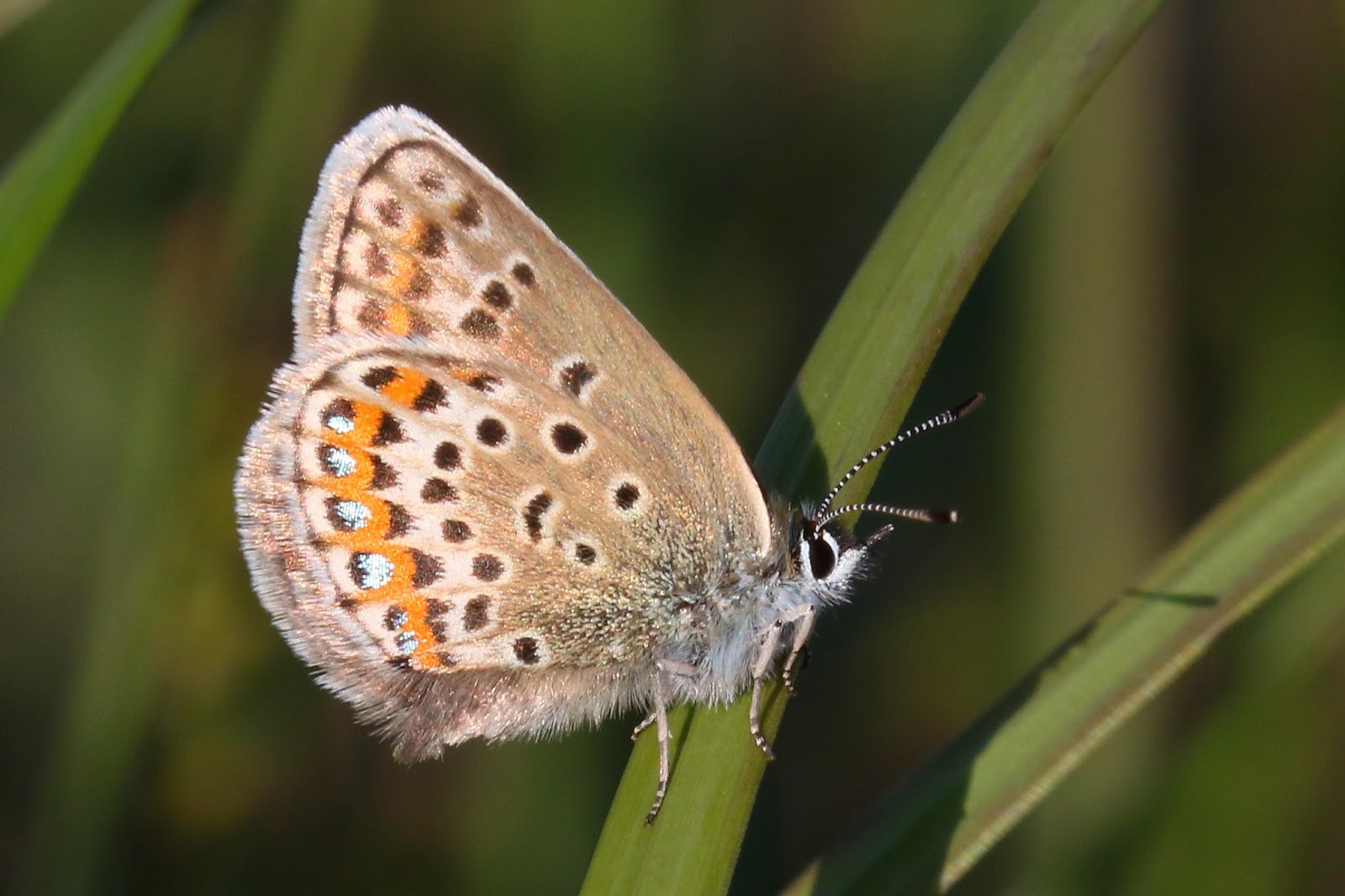
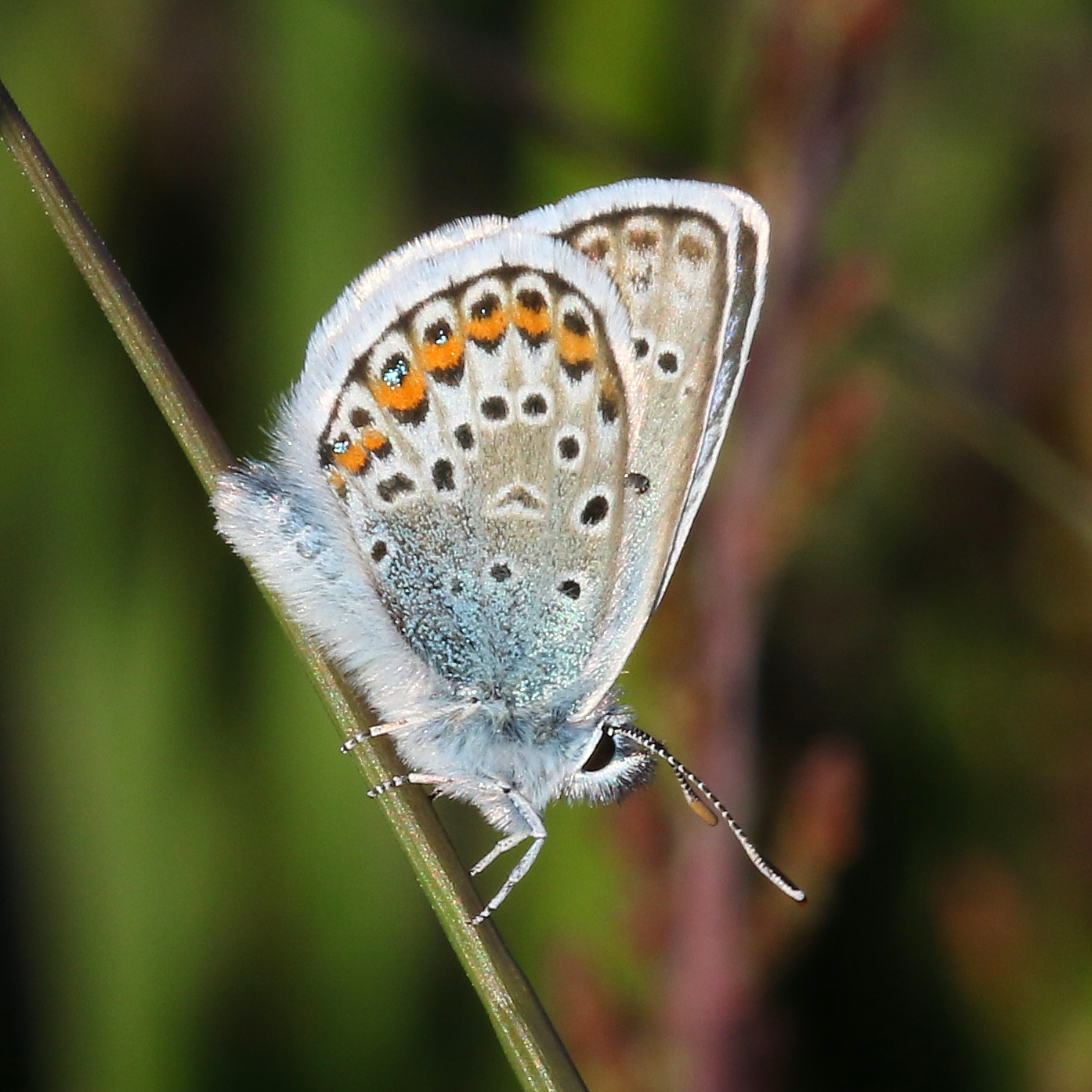
After a bit of dashing around the country chronicled in my last post, staying closer to home has also been quite rewarding recently on the wildlife photography front. A Privet Hawkmoth in the moth trap in our small urban garden was a first - even my hard-to-impress sons had to admit it was pretty showbiz. Slightly further afield, Silver-studded Blue Butterflies have been out on the Dorset heaths for several weeks - in large numbers at Stoborough judging by a short visit after work one sunny evening last week. And a few miles further still, but still in Purbeck, Small Pearl-bordered Fritillaries have been on the wing at one of the few sites in Dorset where they can still be found. First up though, a local celebrity in the form of a Nightjar which has been spending the day roosting at Arne RSPB, boosting the chances of many visitors of catching up with this species in daylight as well as the coffers of the café in whose grounds it has taken up residence.
Nightjar, Arne
Backyard beast: Privet Hawkmoth in our Wareham garden

Adder near Wareham


Underwings don't come much pearlier than this: Small Pearl-bordered Fritillary
Small Pearl-bordered Fritillary: sadly now a rarity in Dorset
Common Lizard on the Purbeck Heaths
Silver-studded Blue, Stoborough Heath
The silver studs are just visible on this roosting male
This is a female Silver-studded Blue
The silver studs are more prominent on this female
Beautiful colours catching the late evening sun
Another fresh male
Silver-studded Blue