Showing posts with label Gatekeeper. Show all posts

Tuesday, 2 August 2016

Better late than never

The long, hot summer weekends have provided quite a few opportunities to take photos but not so much time to post or write anything about them. So here's a few sans the usual drivel from recent weeks by way of a catch up.
Kestrel at Kimmeridge
This bird was one of a family party hovering over the cliff edge
Clavell Tower at Kimmeridge - the famous folly was moved back brick by brick from the cliff edge a few years ago
Kimmeridge looking towards St Aldhelm's Head
A fresh Essex Skipper was on the cliff top in front of the Clavell Tower
Essex Skipper shows black undersides to the tips of the antenna (orange in the very similar Small Skipper)
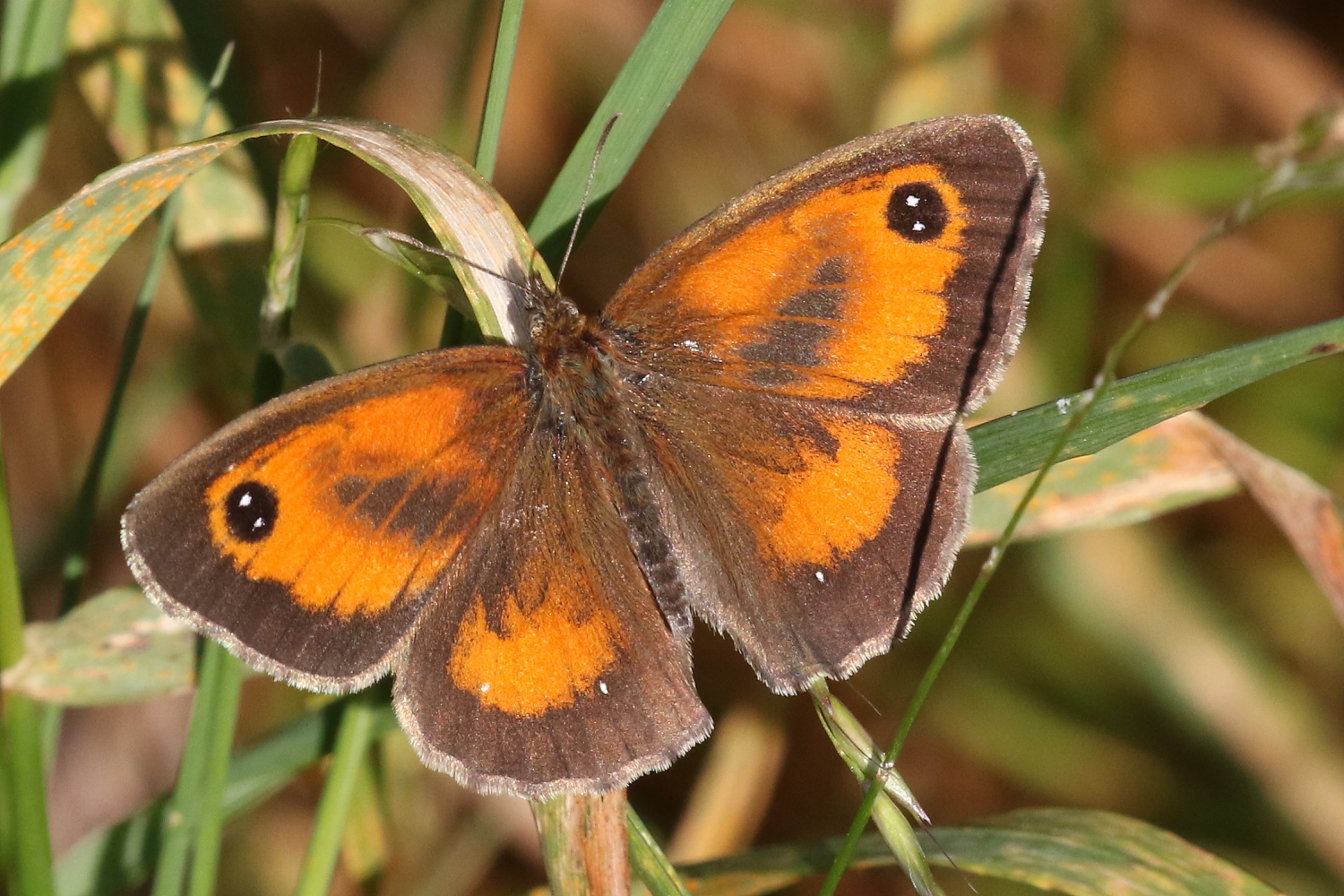
Gatekeeper
The Arne #cafenightjar also stuck around until last weekend
Stirring only occasionally at the sound of the café till ringing up another frothy coffee and slice of tiffin
Takings at the Arne RSPB restaurant represented 68% of GDP in the Purbeck economy during July

Thursday, 23 July 2015

A dull boy

If you're thinking 'it's been so long since he posted anything that he must be working like a dog between jet-setting off to glamorous holiday locations', well, you'd be half right. The first half, specifically. The photo year list, around which this blog has been themed in 2015, ground to a shuddering halt on 202 following a Father's Day Terek Sandpiper. After bursting through the 200 barrier in style, with 3 lifers among my last 4 additions, I have had neither the time nor the energy to add to it, with some eminently achievable target species remaining unsnapped.
Silver-washed Fritillary (male)
Gatekeeper - male
Meadow Brown
The closest I have come to escaping the thraldom of wage slavery was a trip last weekend to see my parents in North Devon. Mainly bumbling around busy beaches and arcades, so not a lot of time for wildlife watching, but a walk from Lynmouth up the river to Watersmeet produced a family of Grey Wagtail every 100 yards or so, a couple of Dipper and a hyper-active Shrew - I think a Common Shrew, but how does one tell for sure? Star of the walk though was a stunning male Silver-washed Fritillary.
Dipper on the River Lyn
One of many young Grey Wagtails on the same
And who doesn't love a newly fledged Robin?

Still, August is fast approaching and with some holidays booked, including a few pelagic trips out of the Isles of Scilly, I aspire to resuming a better balance of work and play very soon, making this Jack a slightly less dull boy, I hope. Stand by for an upsurge in average photos, tawdry narratives and cheesy puns in this space. I know they have been missed.
Shrewd move. And he's back!
My book says Pygmy Shrew's tail is hairy, and this looks pretty bald. However, it also says Pygmy's tail is 70% of head and body length, Common Shrew's just 50%. But this tail looks nearly 100% of body length. Perhaps they only measure them once they've been run over. Anyway, that confused me.
Common Shrew has 3 toned fur - brown on top, paler on sides, paler still underneath. Pygmy 2 toned - brown on top, paler under. While this looks 3 toned in the photo, it's a tough call to make on a tiny mammal which bombs around at 100mph in the dark.
Anyway, a charming beast, snuffling it's way along a woodland path.


Sunday, 21 July 2013

Summer meets autumn coming back

High summer means butterflies and there has been a wide selection on view at Butterfly Conservation's Alners Gorse reserve in North Dorset recently. The smartest of these was undoubtedly:
Silver-washed Fritillary - female of the rare form valezina
Valezina underside
About 15% of females are said to be of this form. Compare to...
...a regular female Silver-washed Fritillary...
..and a male of the same species...

...males being identified by the parallel black bars on the forewing 

Silver-washed Fritillary underwing

Silver-washed Fritillary with Meadow Brown for size comparison

Purple Hairstreak - these can be seen flying around the tops of oaks usually, but occasionally they will come down to a lower perch.

Another Purple Hairstreak - this one on the favoured oak

The rarer Hairstreak - White-letter - wouldn't play ball on a morning visit on Saturday - this shot of one high in the canopy was taken on a late evening visit earlier in the week.
White Admiral - there were a few around but this one was the only one to land, and then only briefly.

Ringlet - one of the most attractive of the 'brown' family.

Commoner species included: Comma...


...Gatekeeper - this one a female...
...Gatekeeper - a male...

...and Meadow Brown.
Also on the wing at Alners Gorse was the Beautiful Demoiselle

The same individual but with the light behind me this time.

High summer also means the start of return wader passage - the rarest so far in Dorset has been a White-rumped Sandpiper which spent a few days at Lodmoor in Weymouth last week and stayed until Saturday:
White-rumped Sandpiper (left) sadly not quite as in focus as the Dunlin

An adult bird


Another imperfect flight shot - this time into the light, but clearly showing the white rump
Another comparison with Dunlin