Tuesday, 4 March 2014

Gull of Kintyre

By last weekend I had pretty much given up hope of adding a long-staying American Coot, which turned up in Scotland in January, to my British list. My network of birding chums is not extensive and those within it had either been already or could not be persuaded to go. Fortunately, I get to benefit vicariously from my friend Steve Smith's excellent network, and was able to plug into it when he tipped me off that there might be space in a car going from Bristol, targeting an American Herring Gull on the Mull of Kintyre (to give precise co-ordinates, that's at the bottom left hand corner of Scotland) en route to the American Coot at Loch Flemington (not far off the top right).
American Coot, Loch Flemington: differentiated from our own Coot by the deep red spot at the top of the shield, the dark band near the tip of the bill, and white edges to the undertail coverts which are just visible in this shot.
Fluid plans eventually solidified during the week so that the team for the weekend was: entomologist Dave Gibbs, water industry executive Andy Mears, and audio equipment entrepreneur Chris Gooddie, known to the more well-read among you as author of the Pitta-pursuit chronicle, The Jewel Hunter. With me the local government officer from the planning department in tow, if anyone had been minded to commission an Environmental Impact Assessment of constructing a new main sewer on invertebrate life, and put it on an audio-book to be listened to in glorious surround sound, the perfect team to do it would have been right there in that car.
We stayed in the car at Loch Flemington hoping the American Coot would come closer but it remained quite wary. Many twitchers adopted a 'must I?' approach to seeing this bird. Well I thought it was under-rated by the reluctant listers who turned their noses up but ticked it anyway. I certainly wouldn't complain if I found one at Swineham!
I saw an American Herring Gull on Lewis in 2004, but was keen to see another, and it was a new bird for the other three. American Coot was also a tick for Andy, and the others were happy to go and see it despite the long distance between the two birds.
The American Coot enjoys a fat cigar. I was tempted to join it after such a successful twitch.
So the plan for the weekend formed thusly: leave Friday night, arrive at Campbeltown at first light, tick the American Herring Gull early doors, head off to Inverness later that morning, and have the other rare Yank in the bag by mid afternoon. Then bed down somewhere comfortable and see a few Scottish specialities before heading south on Sunday lunchtime. An ambitious plan requiring a fair bit of luck, but that's almost exactly how it panned out, the only departure from it being a bonus excursion on Saturday evening to admire seaduck and divers as the sun set on Burghead Bay.
The local Moorhens snaffled up the offerings of food so rudely spurned by the American Coot. 
The first step in the plan - arriving for first light - almost fell foul of my ancient Satnav as it doesn't recognise roadworks or new junctions. But having survived its attempts to get us to U-turn on the M8 and ditch us in the Clyde, we still arrived just before sunrise. We picked up the distinctive Gull in the twilight of Campbeltown Harbour, and enjoyed a fly-around before it headed off to roost in fields where we later caught up with it for more leisurely study, albeit at some distance.
The American Herring Gull is on the right of this trio. Bulkier than the neighbouring Herring Gull, with a cleaner white head, strongly patterned underparts and two-tone black and pink bill. We enjoyed closer views of these and other key features in Campeltown Harbour but it was too dark for photographs unfortunately. 
The Coot was simpler to find and identify, revealing itself from loch-side vegetation soon after our arrival. While coy at first, it eventually moved out into the open but the leftovers of breakfast which we made available out of the car window were not enough to tempt it to come really close. A great shame as Chris was desperate to put out the news as 'American Coot still present and coming to croissants'.
A White morph and an intermediate Snow Goose were associating with Greenland White-fronts as we headed back up the Mull of Kintyre.
Apart from the great birding, the Scottish weather was extraordinarily clement, the journey trouble-free but for some torrential English wetness on the way back down, and the company was excellent. Non-avian highlights included nodding off in the back seat near Loch Ness to dream I was in the middle of a blazing row about the existence of its eponymous monster, only to wake and find it wasn't a dream. Lowlights included a fruitless search for, well, fruit, in a Scottish motorway service area on the way home to fend off the scurvy which threatened after two days of living off delicious but unhealthy snacks. Green wine gums were the only thing we could find containing vitamin C.
While not at its stunning winter best, this male Long-tailed Duck in Burghead Harbour was still an attractive species to see.
All told, then, an excellent trip, and I was grateful to the other guys for letting a neurotic itinerant stranger into their twitching circle for the duration. I should also at this point publicly record my gratitude to my long-suffering wife for releasing me from paternal duties for the weekend. These, I have been informed since, included standing on a windy, rain-lashed touchline in Poole to witness an 8-2 victory for Wareham Rangers U-11s over Lilliput U-11s (a giant-killing, surely?).
Coal Tits are pretty tame at Loch Garten
As if that wasn't enough, I was unable to join the rest of the family at that pinnacle of cultural sophistication, the Purbeck Potato Festival. It is difficult to quantify the level of regret I feel about missing that. So if things go quiet in this space over the coming weeks it's probably because I have enacted a drastic Brownie Point Jar Deficit Reduction Plan. Swingeing cuts in my twitching exploits are sure to follow.
Bored with obviously staged photos of Bluetails and Great Spotted Woodpeckers on sickeningly mossy branches on Birdguides? Then here's the antedote. To get this shot I placed a carefully selected bit of chicken wire next to the bogs at Loch Garten and covered it in Pritt-stick.

Saturday, 22 February 2014

Doing subtlety at Swineham

For any non-birders reading this, you've probably heard the Common Chiffchaff, Phylloscopus collybita, singing its name on warm spring-like days like today. But you are probably blissfully unaware of the fierce debate which rages in the world of birding about the identification of the subtly different sub-species Siberian Chiffchaff, Phylloscopus collybita tristis. For the full story you'll have to read chapter 16 of the Sound Approach's Catching the Bug, or get several back issues of British Birds. But in case that's too much trouble to go to, here's a Guardian-style 'Digested Read':

Expert 1: 'Grey-brown Chiffchaffs wintering in Britain are most likely to be Siberian'
Expert 2: 'But they might be another kind of Common'
Expert 1: 'Unlikely and anyway the distinctive call is diagnostic'
Expert 2: 'Oh no it isn't'
Expert 1: 'Oh yes it is'
Expert 3: 'More knowledge of this species complex is needed. Can I have a research grant?'

So that's the heated debate dealt with: but what does this mean for the humble patch birder's chances of stumbling across a Siberian Chiffchaff? I didn't have to worry too much as Swineham's birdfinder-general Marcus Lawson did the hard work, locating three tristis recently around the gravel pits. These looked and sounded the part and responded to recordings of tristis. He also managed some photos - see here - so not to be outdone I had a go myself today. Results below, and comments welcome:
Pic 1: the first Chiffchaff I came across, this bird was frustratingly silent so the fact that calls and song might be the best way to clinch it wasn't much help! But the grey-brown upperparts and pale underparts with little hint of yellow look good for tristis.
Pic 2: taken a few seconds later from the same spot at almost exactly the same angle so a meaningful comparison in terms of colouration, this is a 'normal' Chiffchaff collybita which was associating with the bird in Pic 1. I have sharpened up both pics 1 and 2 but not changed the levels otherwise.
Pic 3: same bird as Pic 1: the eye-ring in tristis is said to be less prominent than in collybita, and lacking or merging with the longer and more obvious supercilium above the eye. The bill is also said to be smaller and blacker with an almost straight culmen giving an upturned look (Van Duivendijk). All a bit subtle to judge in the field!
Pic 4: same bird as pics 1 and 3. This shot shows very pale underparts well with hardly any hint of colour. Again, image sharpened but otherwise not altered, and taken from same spot and similar angle to pics 1-3. 
Pic 5: this very grey and white looking bird was near where Marcus had seen his, and the same place where I heard a tristis call the previous evening from a bird which didn't show very well. This one gave a better view but kept schtum!
Pic 6: same bird as pic 5 - some yellow/olive tones can be seen in the closed wing
Pic 7: Common Chiffchaff taken at the same time from the same spot and almost exactly the same angle as pics 5 and 6 so again a meaningful comparison.
Pic 8: not entirely sure about this one: in the field it looked like collybita but on the screen looks quite brown with not much in the way of olive or yellow tones. But underparts do look more sullied at least along the flanks and breast side, the super is certainly not as long or strong as birds in pics 1 and 5, and bill looks a bit stronger too. Feet and base of bill also much lighter than those of birds in pics 1 and 5. So probably collybita. Again, it uttered not a word to help with my dilemma.
Pic 9: my head hurts, so I've given up de-constructing Chiffchaffs now. I just like this picture.
That's more like it, nice and simple: white blaze on the face, big round head and clown's shoe of a bill = female Scaup. One of three on the gravel pits at Swineham.
And this even simpler: Pied Wagtail in a Wareham Churchyard. On the gravestone of the first birder who tried to sort out Chiffchaff taxonomy only to die trying.


Friday, 21 February 2014

Just a minutus

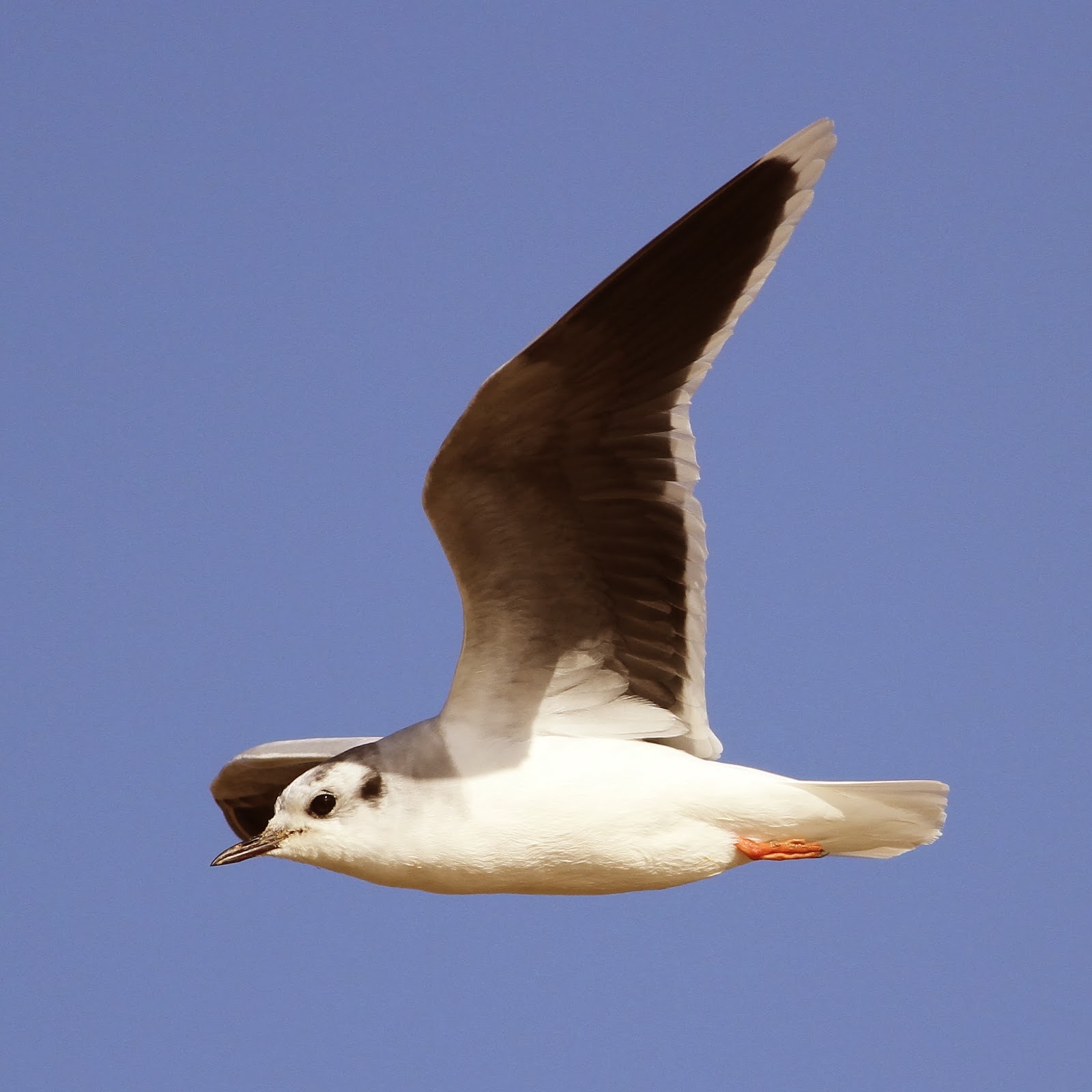
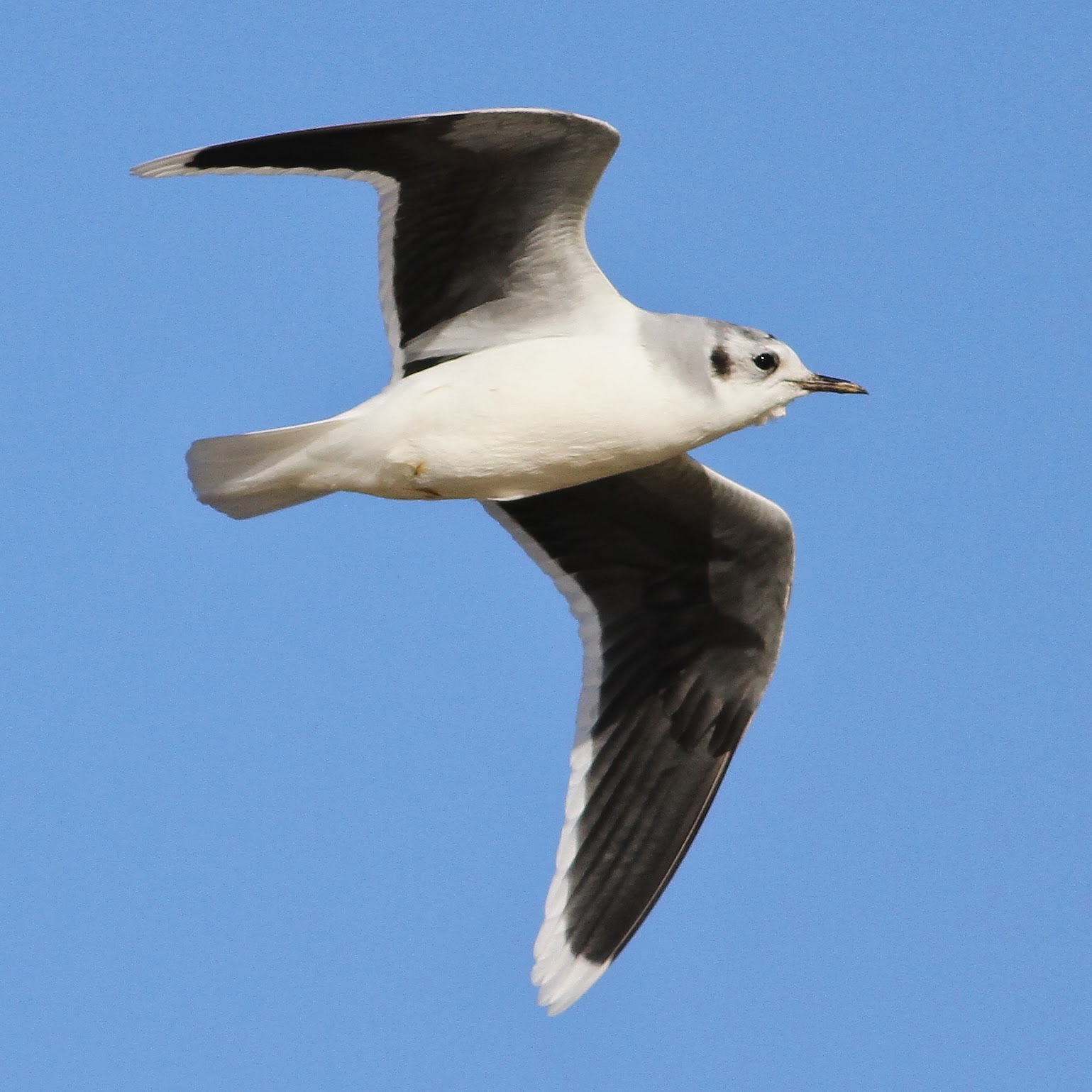
A flock of Little Gulls has been feeding in clifftop fields at Cogden for a about a week now - in the same field, in fact, that an obliging Sabine's Gull put on a show last October. I made it down there yesterday morning, without hesitation or deviation, though given the number of photos taken you'll just have to forgive any repetition:
Little Gull
Plucking worms from the surface of the field
8 or 9 birds were present when I was there but the flock has been as large as 16 birds
2nd winter birds have paler underwings compared to adults
Like last year's Sabine's Gull, not easy to get the exposure right for pale birds against the darker fields
Against the sky was a bit easier though
The Little Gulls were flying right overhead
None landed as close as the Sabine's Gull unfortunately
But they were close enough to see the short red legs - clearly visible at times...
...at other times the legs just look like an orange smudge on the belly
Exquisite birds - and very photogenic
 

Thursday, 20 February 2014

Gullable

It's been a busy few days with a visit to Kent (to see friends not Pond Herons) returning to Dorset via various south coast sites. Yesterday, after staying with extended family in Hampshire, the children and their mum wanted to go to Paulton's Park. I was given the choice of joining them, or going birding before picking them up at the end of the day. Hmm, a tricky one. A whole day birding versus a whole day at a theme park. Just give me a minute to think about that...In the end I forsook the log flume and thought I would see if I could see 10 species of Gull in 24 hours. The results:
Glaucous Gull, Littlehampton. A 2nd winter bird - a striking plumage. This bird dwarfed everything around it and even when distant among hundreds of other large gulls on the breakwater by the River Arun could be picked out by its gleaming rear end.
Kumlien's Gull, Littlehampton - generally regarded as a sub-species of Iceland Gull, this bird has been present for a couple of weeks. Infamously variable in juvenile plumage, the wing-tips could look very dusky when at rest but came into their own as the bird took flight.

Herring Gull was easy enough, as were Black-headed, Greater and Lesser Black-backed Gull.
Common Gull - also easy enough, this one was at Walpole Park, Gosport, also the home of...
...the long-staying Ring-billed Gull, which was looking good. Or perhaps Gosport just made it look good.
Med Gull - quite a few of these at various south coast sites
Well I managed 9 species on Wednesday, but first thing this morning this Little Gull at Cogden made it 10 - technically still within 24 hrs of my gull quest starting yesterday morning.
Kittiwake at Cogden was a bonus 11th species for my 24 hours. I ran out of time to get back to Middlebere for Yellow-legged Gull and a round dozen!
With plenty of other white-winged gulls around, a Bonaparte's in Devon and a Laughing Gull in Cornwall, I reckon it would have been possible to see 14 species of Gull in a day on the south coast this week - 15 if you were fortunate enough to come up with a Caspian. There have also been 5 more species in Britain and Ireland since the turn of the year (Ivory, Franklin's, Ross's, Slaty-backed and American Herring) so for big listers with a Tardis it's theoretically possible to have seen 20 gull species in 2014 alone. Fancy that.

Saturday, 15 February 2014

Anatomy of a twitch

It's been a long day and it's a long post. So make yourself a cup of tea, take a deep breath and put your feet up before starting.

Thursday 21:00hrs: I get to bed early in preparation for the long drive to Co Durham in the hope of seeing a Myrtle Warbler, a rare North American visitor to British shores. There was an offer of a lift with Bradders and James on Saturday, but family plans forming for the weekend mean that I have to go Friday or not at all. Other potential lift-sharers are either busy or not interested, so looks like I'm going alone. I need to get there early and head back before the next southern storm does too much damage. The alarm is set for 02:00.
Myrtle Warbler - showing the yellow rump which explains it's more prosaic name: Yellow-rumped Warbler
Thursday 22:00 Sleep proves elusive. Is this a bad idea? Are my creaking bones and fragile brain ready for a long distance twitch? Will the bird be there? Even if it is, will I live to tell the tale? The forecast is OK in Durham but it looks pretty bad for the way home...

Friday 01:30 I wake, as I often do on these occasions, before the alarm, convinced I have overslept. I haven't, but there'll be no more sleep tonight. Might as well get on the road.

01:45 I write a Valentine card and leave chocolates on the kitchen worktop before leaving, an offering to the domestic goddess who has expressed her doubts about the wisdom of me driving to Durham while still not 100% mended since that business with the scooter.

02:00 I load my gear into the car. There is an eerie calm over Wareham. Difficult to believe that another big storm is coming later. I'm really not sure about heading off with this forecast. I resolve to try not to think about it. Yes, denial, that's always good...

03:00 With a long drive ahead, I am grateful for the BBC World Service, always something weirdly interesting on there, like the man who was late for a meeting at the World Trade Centre on 9/11 just before the planes hit, lost his fiancée in the Bali bombings and then got caught up in the Boxing Day tsunami. Hope he's not twitching the Myrtle Warbler today, his luck sounds worse than mine. The main headline is about Syria, which at least knocks the weather off the top. I'm still trying not to think about it.

05:58 The trilling of the Waxwing is the subject of Radio 4's 'Tweet of the day'. There have been some near the Myrtle Warbler, and I wonder if I'll see them later. I mourn the loss of the Radio 4 theme which used to pep me up at about this time of the morning when heading off on a twitch: few pleasures can match that of belting out 'Danny Boy' to my audience of empty passenger seats on the way to see a rare bird.

06:00 The 'Today' programme begins. Top story is about the storm brewing down in the south west, about how it will paralyse the nation's transport networks by lunchtime, and how only an idiot would think about going out in weather like this. I change channels.

06:30 Still channel hopping, and on Radio 1 Fearne Cotton is doing her best to sound commoner than she really is. Nick Grimshaw doesn't even need to try. I check out some local stations. BBC Radios Sheffield and Leeds are covering stories of flooding in southern England with what can only be described as barely concealed glee.

Coconut shy: this was about the clearest view I managed. The bird seemed fairly nervous and was often chased off by the local Robins and Dunnocks.

07:30 Hazy red sunshine breaks through to the east. I thought I might be there for first light. Have I left it too late? I notice frost on the road verges: will the Warbler have perished overnight? I've been pretty calm up to now, but the tension is building.

07:46 The pager bleeps: 'MYRTLE WARBLER still present...showing well'. My initial reaction - thank God for that - is soon replaced by galloping anxiety about what might happen in the 15 minutes before I am due to arrive on site. I remember last year's trips to the North East: Rock Thrush, Bridled Tern, Great Snipe, all dipped. Not again, surely? Only the local Sparrowhawks now stand between me and a tick.

08:00 I arrive on site, and, as suggested by the pager people, park sensibly, and respect the privacy of residents. Easily done, the latter, as I'm not remotely interested in what's going on behind the net curtains of High Shincliffe. But I am very interested in whether the Myrtle Warbler is still present. I enquire of the small group of assembled twitchers. A local says 'a cat just took it'. He almost had me, but then his friend apologises and points it out on one of the feeders erected in a hedgerow to persuade the Warbler out of the private gardens in which it was first discovered. My feelings at this point are, well, complex. There's some exhilaration in there, for sure. And relief - definitely relief. Not much elation, if I'm honest. And some vindication probably.  'Coldly satisfied' perhaps best sums it up.

09:00 The Warbler has been back and forth several times from the feeders, giving excellent scope views, despite being partially obscured by vegetation. It perches on a higher branch only once, almost completely invisible from my angle but for a glimpse of the vent and tail. I almost don't bother with the camera - but rattle off a few record shots for posterity. I'm happy just to see the bird for once, and start thinking about a cut off point for heading home before the storm set in. They should christen it 'Hurricane Myrtle'.

09:30 It seems by now that neither the views nor the weather are going to get much better so I stick to my original plan: smash, grab, and get home before the storm does too much damage.

14:00 After a couple of hours trouble-free motoring on auto-pilot, I'm back with Radio 4. But not for long as The Archers theme tune strikes up. I really don't like The Archers, or radio drama generally. I heard a programme once about the sound effects and they have a woman who puts her hands in wellies and stamps them in a tray of gravel to make the sound of farmers walking up their drives.  And that was it for me, the magic was gone. I try Radio 2. Steve Wright In The Afternoon. It's been around for so long they should call this show Steve Wright Still In The Afternoon.

Note the wingbars, thick streaking on the back, plus a hint of yellow on the breast side.
14:10 Well over half-way home now and I pass the vast flooded meadows of Oxfordshire and feel a pang of guilt that my twitching emissions over the last 15 years have not exactly helped stabilise the climate which is playing such havoc with our weather. I console myself with the thought that my self-imposed flying ban of 10 years remains intact. That said, £50 for a return flight to Inverness, where a long-staying American Coot can be found, has been testing my resolve recently...

14:20 I suddenly feel slightly nauseous. As I'm well fed and hydrated, I conclude it must be the Valentine messages being read out by Steve Wright, Still Going On In The Afternoon.

14:30 Tiredness overtakes the nausea. Then a Red Kite rises from a field by the A34, defying conditions which are not exactly Kite-friendly in search of food. A real tonic, and after a pit stop I feel refreshed and ready for the final leg of the journey. This is no time to become a Road Traffic Accident statistic.
 
15:00 I consider parting company with Steve Wright In The Afternoon after he subjects me to a stompy 'ballad' from Enrique Iglesias and the Bee Gees' 'More than a Woman'. Which, if you think about it, insults half the human race in the process of paying a compliment to one member of it. But I persevere and he redeems himself with Van Morrison and 'Have I told you lately.' I think of the goddess, and how lucky I am to have married such a tolerant one. Will she forgive me for spending Valentine's Day with this Myrtle?

15:15 The probing fingers of Hurricane Myrtle's gale force winds poke the car around as I make my way through the exposed parts of the New Forest. Not far now, though the news says Dorset has had the worst of today's rain.

15:30 Local radio welcomes me home to Dorset with reports of multiple traffic jams. The A35 is shut in several places, and I plough through ominous puddles on the A31, the only other main route through the county. It's still raining heavily, and probably going to get worse later, so I feel vindicated in leaving Durham when I did. I deploy local knowledge to avoid the worst blackspots, but can't avoid the last one just outside Wareham. The last 2 miles to home take 15 minutes - the worst traffic I encounter all day. Otherwise the trip has been mercifully trouble free. Perhaps people are finally getting the message that they should avoid unnecessary journeys in these conditions, leaving Britain's crumbling transport infrastructure free for those of us who need to see Myrtle Warblers and attend other emergencies.

16:00 I park up and switch off the engine. That feeling of cold satisfaction I described earlier has warmed considerably. The rest of the family are at the cinema, so I crawl into bed, not as exhausted as I should be, but tired enough to sleep, and dream of Myrtle.

Monday, 10 February 2014

North versus South

The weekend presented the possibility, at least in theory, of an extreme distance twitch to the frozen north for an American Coot. In the end I decided my shoulder wasn't up to the long drive so I stayed in waterlogged Dorset. North 0: South 1 on that score at least. Having thus 'saved' 24 hours travelling time, I reasoned with the impeccable logic of a frustrated twitcher, there was plenty of time to check out both the developed northern shore and the undeveloped southern edge of Poole Harbour this weekend. Check out below who won the North v South Poole Harbour derby:
GOAL: Cetti's Warbler often talks a good game at Bestwall but isn't often seen. 1:0 to the South.

GOAL: Spoonbill and Yellow-legged Gull at Middlebere - 2 more good birds makes it 3:0 to the South within 15 minutes. It's just like being at Anfield.
GOAL: Hen Harrier at Swineham on Friday night. Not a great shot, but they all count. 4:0 to the South. It really is like Anfield.
GOAL: the North's fightback begins. A bit of a goal-hanger, this Scaup has been in Poole Park for a while now. Getting smarter though with each moulting feather. 4:1.
GOAL DISALLOWED: no-one's quite sure what this Poole Park resident is. Bahama Pintail has been mooted but not a pure one, possibly that or something else having done something shameful with a Red-crested Pochard? Anyway, whatever it is, it's clearly offside.
GOAL: Pale-bellied Brent Goose in among 300 of its Dark-bellied cousins on Baiter Park. South 4, North 2.
GOAL: Slavonian Grebe just off Baiter Park. A good bird anywhere but especially here.
EQUALISER: a first winter Little Gull did a quick tour of Baiter before flying right over the car. Four all.
FINAL WHISTLE: the Little Gull appeared towards the end of the day but as we made for home I relocated it among the fishing boats off Poole Quay. Score draw a fair result I reckon

By the way, if you fancy driving me to Inverness via Durham next weekend while I sleep in your passenger seat, occasionally stirring to hand you petrol money and regale you with anecdotes you've already read on here, drop me a line.