Monday, 12 December 2016

Eastern promise

December is not known for being the best month for rare birds in Britain, but after an autumn dominated by easterly airflows which brought the Siberian Accentor invasion, a sprinkling of Eastern Black Redstarts and the odd rare Thrush, good birds are still turning up. The most recent mega-rarity, a Dusky Thrush, spent last week in the unlikely location of land-locked Derbyshire. I saw one of this species a few years ago in Kent, but it was a slightly frustrating experience as the bird remained largely obscured in a tree during a brief visit which had to be curtailed in the interests of marital harmony. A second chance at photographing this species therefore appealed, so with time off for good behaviour having entertained parents on Friday and nephews on Saturday, I resolved to go on Sunday.
Dusky Thrush - it may sound like an STD, but is in fact an attractive and very rare visitor from central Siberia
The long-staying Derbyshire bird follows a brief occurrence of this species on the Isles of Scilly earlier in the year
I had planned to leave relatively late on Sunday morning, but on waking in the small hours and realising I was unlikely to get back to sleep, I changed my plans and headed off at about 0330. Fortunately I had Test Match Special to keep me company on the journey north, and if England's performance wasn't exactly anything to cheer about, it was a good way to pass the time. Oxford, Birmingham and Derby came and went and before long I was leaving the motorway and making my way to Beeley, an attractive village on the edge of the Peak District National Park, some of which was just about visible as I arrived shortly after dawn.
Apples on the orchard floor drew the Dusky Thrush back to the orchard repeatedly
It was pretty dark in there, a slightly grainy ISO 2000 was often needed to avoid camera shake

The Dusky Thrush was present in a favoured orchard on my arrival, but it took a while to see as it was deep in cover. It took several more hours of patient waiting to get a half-decent photograph, as when present it tended to remain obscured in trees or obscured in the long grass of the orchard floor. At first light the crowd was three or four deep at the wall overlooking the orchard, but when the Thrush flew to neighbouring fields, as it regularly did, it thinned out and I was able to stake out a space with room to swing a moderately long lens. As the Thrush reappeared I was able to kneel down by the wall, providing a firm base to hold the lens steady in the low light of the shaded orchard as well ensuring I wasn't obscuring the view for those behind me.
A better view of the breast pattern
Rufous panel in the wing can just about be seen here
By now Beeley was fully awake and witnessing another day of potential mayhem. When twitchers descend on rural English villages, they seem to react in one of two ways. The first is to reject the whole thing like a body rejects a heart transplant - something to do with the fact that twitches bring the one thing which Daily Mail reading hamlets fear more than illegal immigration and child abduction: inconsiderate parking. The other reaction is to embrace it, take pride in the presence of a celebrated avian visitor and recognise the opportunity to raise a few quid.
A rare, clear view - bit it wouldn't look back over its shoulder!
A wider crop of the first photo above
Twitter was abuzz with tales of the hospitality of the burghers of Beeley, so I was keen to check this out for myself. It was all true: the village's reaction to potential parking chaos was not to call the police, but to lay on a free park-and-ride shuttle bus from a nearby car park. Having elbowed my way to a good viewing spot on the orchard wall, I though I was going to miss out on the bacon rolls being sold to birders by the tray-load for fear of losing my spot, but the Christmas spirit had infected the birders too and a saintly one behind me grabbed one on my behalf. Hot drinks and other snacks were available and I hope and expect that visiting birders spent and gave generously, and that local businesses and charities made a small killing over the course of the weekend. Top stuff, Beeley, let's hope others follow your example.
Eastern Black Redstart - a very attractive male
Lack of light was a bit of an issue again - this taken at ISO 3200 handheld
Before setting off for Derbyshire, I had considered whether it would be possible to combine the Dusky Thrush with a trip to Cleveland to see a long-staying and highly photogenic Eastern Black Redstart, a sub-species of Black Redstart I have coveted seeing since dipping a much celebrated bird in Kent a few years ago. I concluded that as reports of the Dusky Thrush seemed more frequent in the mornings, to see that first and then head even further north would have made for too gruelling a journey. Miraculously, however, as I was preparing to leave Derbyshire, news broke of a male Eastern Black Redstart which had just been found at Tewkesbury Abbey in my native county of Gloucestershire - possibly the bird seen in neighbouring Worcestershire a couple of weeks back.
A striking bird in a striking location
A rear view of the EBR
Tewkesbury is just off the M5, and with the westerly route home to Dorset via Bristol being not much further than the more direct route via Oxford, a couple of hours later I was pulling into a car park near the Abbey and joining a small crowd to look for the EBR. We scanned the parapets and rooftops of the Abbey without success for a few minutes and then, incredibly, a chap standing next to me picked up the bird in a tree in front of us, much closer than the Abbey. It flitted briefly between the lichen-covered branches of this and a neighbouring tree for a few seconds before dropping to the ground, then sallying over our heads for a spot of fly-catching before heading back up to the Abbey rooftops. Two excellent eastern rarities in the same day, the last one being a complete bonus which also broke up the long journey south.
Sunset on the grounds of Tewkesbury Abbey
Tewkesbury Abbey

Wednesday, 7 December 2016

February...

The second monthly instalment in my look back at 2016 comes, logically enough, from February. The most fruitful part of the month for wildlife photography was a few days half-term break in Cornwall. Our cottage near Marazion was only a short drive from the undoubted birding highlight of the month, a close encounter with a 1st winter Hudsonian Whimbrel near Perranruthroe. This bird, which first arrived the previous autumn on the Isles of Scilly in first winter plumage, made its way to the mainland and was still being reported within the last few days. Running a close second for photographic highlights was a very entertaining Pallas's Warbler, another long stayer, which spent some time near the Dorset village of Portesham. Six of the best photos from February:
This picture of the Hudsonian Whimbrel at Boat Cove in Cornwall was selected as Birdguides 'Picture of the Week' 
I think this is my favourite photo of it though, for the rocks and the background as much as the bird: my photo of the month and bird of the month for February
This Glaucous Gull in Newlyn Harbour was another highlight of February half-term in Cornwall
Back at home in Poole Harbour, Water Pipits in Lytchett Bay brightened up a few dull February mornings 
Running the Hudsonian Whimbrel a close second for bird of the month was this long-staying Pallas's Warbler
The Goldeneye in Poole Park were very photogenic in February - this the male...
...and this the female

Thursday, 1 December 2016

January....

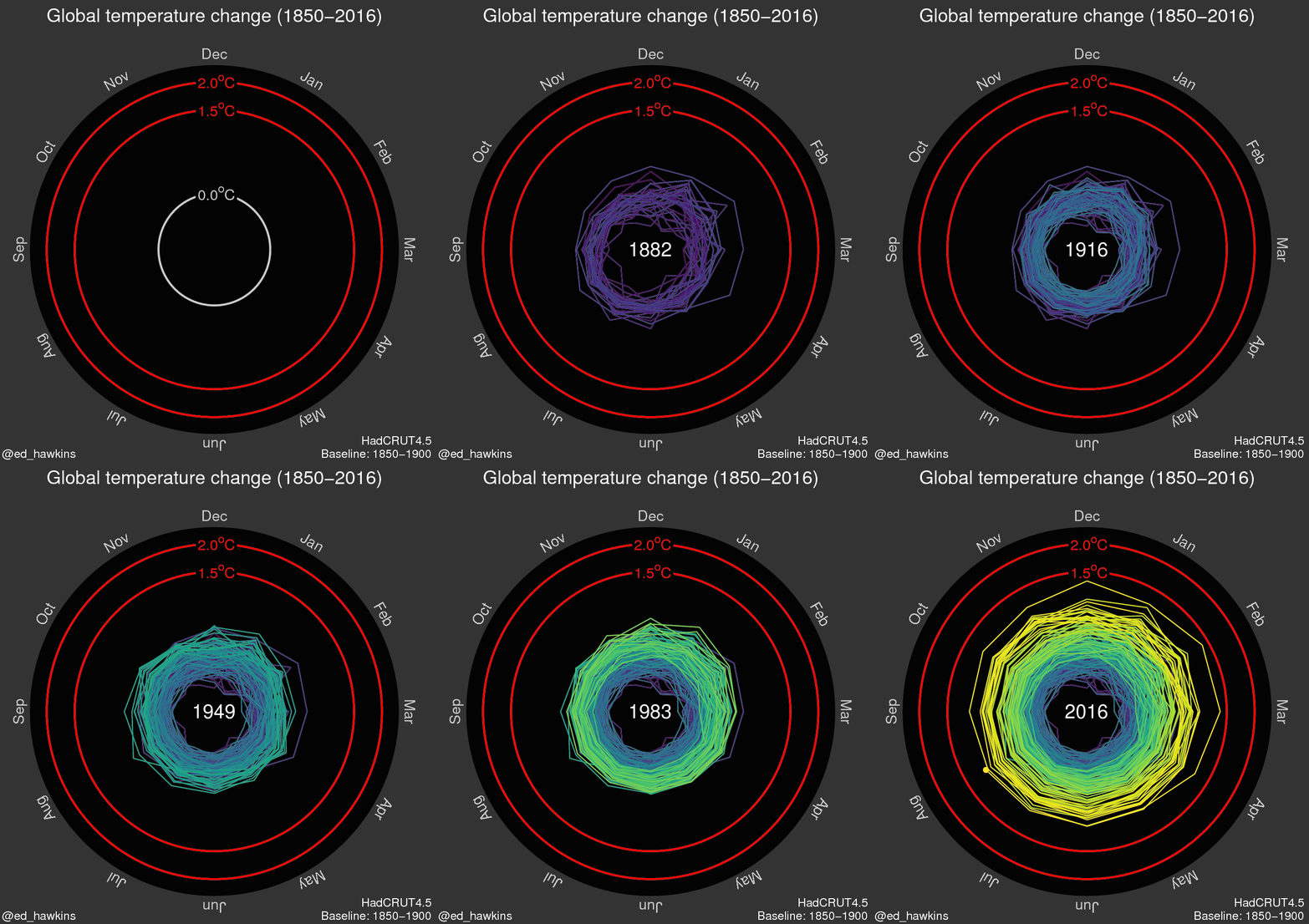
Good news readers, I've decided to spare you the usual epic 'review of the year' post in favour of reflecting on 2016 via twelve month-by-month instalments during December. So a bit like a crappy advent calendar without the chocolates. Starting, then, with January which was warmer than usual - something to do with this, no doubt: one of the scariest info-graphics of 2016. Anyway, enough of sobering but educational scientific diversions - this was the year, after all, that the free world decided it'd had enough of experts, facts and truth in general. As well as mild, January was also, as I recall, unremittingly grey, so wildlife photography was a bit of a challenge. A few willing subjects presented themselves though, most memorably:
Black Redstart - this handsome male brightened up a grey day at Chesil Cove. My January 'photo of the month' - and bird of the month
Female Black Redstart also at Chesil Cove
This Great Northern Diver spent the New Year just yards offshore at Baiter Park in Poole
Russian Dark-bellied Brents were on the playing fields at Baiter
Purple Sandpiper on the stone steps at Sandbanks
Marsh Tits were coming to feeders at Corfe Castle in January
Blackbird in a rare front at Swineham

Monday, 28 November 2016

The shock of the new

It's been a long time since I added a bird to my Swineham patch list - mainly because it's been a long time since I've been there - but with a bit of wetter, colder weather recently I made the effort yesterday. To my great surprise I was rewarded with a flock of 22 Barnacle Geese which, unbeknown to me at the time, had been seen earlier in the day flying west past Hengistbury Head and through Poole Bay before pitching down on the gravel pit. The origins of such birds is inevitably moot - there are feral flocks elsewhere in Britain and on the near continent, as well as the wild populations from Greenland, Svalbard and high-arctic Russia. While one of the former seems the more likely explanation, I'm ticking them anyway!
A flock of Barnacle Geese pitch up at Swineham
A small, attractive goose, much smaller than the local Canada Geese
Male Stonechat at Swineham


Tuesday, 22 November 2016

A day out with Messrs Cook and Forster

Whilst travelling back from a short-range twitch to Devon on Saturday, news broke of a Forster's Tern in Essex. I have a bit of history with this species, as having only started chasing rare birds in the late 1990s, and dipped a couple of times on a long-staying bird at Tollesbury Wick in the same county, there hasn't been another readily accessible British occurrence since. Speaking of history, J R Forster, after whom the Tern is named, was an 18th century clergyman naturalist from Danzig who accompanied James Cook on his second voyage around the world in 1772-73. During this, according to Beolens and Watkins, he gained a reputation as a 'constant complainer and troublemaker'. A man after my own heart then.
Forster's Terns can be long-stayers when they do turn up, so while my initial thoughts were 'wait and see if it sticks around until next weekend', realising that next weekend I was unlikely to be able to leave Dorset, I decided to go for it on Sunday, if family circumstances allowed. Fortunately family circumstances were unusually accomodating and I found myself free to go. 
Most local birders had seen the Dorset Forster's Tern found by Brett Spencer in the winter of 1995-96, so it looked like I would be travelling alone. No matter as, like Forster, I had a Cook to keep me company: Alastair, the England cricket captain, and the rest of the team on Test Match Special. Although they were all in India for the 2nd test, they were beamed into my cabin by the miracle of the DAB wireless and made for excellent company on the long journey to Essex.
Storm Angus risked putting a dampener on my plans so I resolved to leave Dorset after it had blown through, hoping to arrive at Mistley Quay, where the Tern was last seen, around breakfast time. The plan went pretty smoothly, until, as I got within half an hour of the Stour Estuary, the pager bore the dreaded 'no sign' message. Bother. I pressed on regardless, figuring that there was still plenty of time for it to be found, especially as it was midday before it was discovered the previous day, suggesting that the state of the tide might have something to do with its appearance.
On arrival, the view from Mistley Quay was dominated by the mud of the Stour Estuary at low tide. A large group of twitchers was looking out forlornly onto this scene but it didn't look very tern-friendly so I quickly resolved to head east up the Estuary to check out areas with a bit more water. My first stop, an exposed spot just north of Wrabness, saw me beat a hasty retreat in the face of strong winds and lashing rain. My second was more sheltered but equally unsuccessful. I pressed on as far as Harwich, figuring that harbour mouths can be as good a place as any to look for terns, but as I peered over the harbour wall, where I was joined by a couple of carloads of birders doing likewise, the Tern was reported as having been seen further back up the Estuary, a couple of miles east of Mistley. So I had the right idea but had overshot by a few miles!
To cut a long story short, 30 minutes later I was watching the Forster's Tern, identifiable even at distance by its comma-shaped black ear patch, feeding distantly out over the storm-lashed water. With the tide rising, it was only a matter of time before the Tern reappeared at Mistley Quay, where the main river channel is much closer to the shore, so I headed back there hoping for a closer view. Sure enough, the rare visitor from North America eventually treated us to a couple of reasonably close fly-pasts - it did so in horrible light, but I was happy to get a few record shots of possibly my last new British bird of 2016.

Monday, 21 November 2016

Desert Storm

Motivation and opportunity to get out with the camera have both been a bit lacking recently. With autumn migration largely over and done with, the allure of Swineham in mid-November is pretty limited, being, as it generally is, mild, wet and devoid of interesting bird life. I was discussing this problem with fellow Swineham regular Trevor on the train on the way home from work mid-week, and by the end of the conversation we had talked each other into twitching the long-staying Desert Wheatear in neighbouring Devon if it remained until the weekend. A patch-neglect pact, if you will.
Trevor doesn't generally twitch but had never seen Desert Wheatear in the UK, and I had never seen a male, incentive enough for us both to make the effort. After an exhausting week at work neither of us fancied an early start, so a leisurely departure time of 0800 was agreed and not long after the good news came through that the Desert Wheatear was still present. This made the journey a breeze, and despite signs diverting us off the A35 due to an accident (if being dumped on the outskirts of Axminster with literally no signage can be called a 'diversion') we followed our noses westwards arriving at Thurlestone around mid-morning.
The forecast had been sufficiently good for the morning to support, we thought, our decision not to head down too early but we stepped out of the car into the what appeared to be an early appetiser for Storm Angus. A fierce squall soon had us running for cover behind a raised bank at the back of Leasefoot Beach before we had even raised our bins to look for the bird. The squall had also caused other birders to flee the beach but as we stood there wiping our spectacles, wondering if it had also caused the Wheatear to beat a retreat, a passer-by who had seen it earlier pointed it out in a favoured spot on the beach.
With the squall passed we were soon crawling around in the sand trying to get close enough for a few photos. The Wheatear was reasonably confiding but also very active, flying regularly to the end of the small beach to preen on rocks and the low cliff face before heading back to the strand line to feed. Unfortunately the weather had taken its toll and the bird was looking a bit bedraggled, its breast feathers looking particularly waterlogged. Any concerns that this might have done any lasting damage were fortunately allayed by photos from the following day which showed it looking all fluffy and handsome again. A charming bird, and an enjoyable excursion.

Tuesday, 1 November 2016

Harry Potter and the Chamber of Commerce

Half-term already seems a long time ago, and in case recent posts have given the impression that I spent none of the school holidays with my beloved children, be assured, dear reader, that this was not the case. Despite thrashing the patch and hustling up and down to Portland at every opportunity, I managed to sleep in the same house as them every night, and on Thursday the whole clan even made it to Abbotsbury for a 'Family Fright Night' at the Sub-tropical Gardens. I can't say that queueing for 30 minutes for a 30 second ghost train ride was the highlight of my week, but then I did drive for 12 hours to get a 12 minute view of a Dunnock a few weekends back, so I am perhaps not the best judge of what a good time looks like. Seeing the gardens lit up at night though was, by common consent, pretty cool.
Black Redstart on Portland
A confiding bird in the Bill car park
The following day saw us continuing the supernatural theme, this time on a proper train, heading to London for a self-guided Harry Potter themed walking tour. This took in the Millennium Bridge, Leadenhall Market, Old Scotland Yard, Downing Street, the Houses of Parliament and various other sights, all of which the serious Potterarati would recognise from one or other of the juvenile occultist movie franchise.
Grey Plover, Ferrybridge
A lone and flighty individual
The tour reached its crescendo at Kings Cross station, where, in an uncharacteristic break from their corporate missions of imposing misery on the travelling public, and expecting them to pay inflation-busting fare increases for the privilege, the various enterprises formerly knows as British Rail have thoughtfully created a fake Platform 9¾ to keep visiting fans of the bespectacled YTS-warlock out of the way of busy commuters.
A stunning bird in summer plumage but still attractive in winter
The black armpit is diagnostic
Even more thoughtfully they have opened a Platform 9¾ retail emporium, which, by some sorcery I have yet to fathom, relieved us of several higher denomination banknotes in exchange for a couple of plastic wands and some confectionery. Bargain. Mind you, I speak as someone who spent more than that in September flying to the Isles of Scilly to see a Swallow, so I am perhaps not the best judge of what represents good value for money. Besides, the children are delighted with their wands, especially the little one, whose new toy is sufficiently high tech that it actually changes the channels on the TV, much to his amusement, and to everyone else's annoyance. The wand of the elder son (which I guess I should call 'the elder wand' as an in-joke for the Potter fans?) is more substantially made but, disappointingly given the product, performs no such magic. 
Little Egret, Ferrybridge
A common bird now in Dorset but still a pleasure to see and photograph
After a brief return to an altogether more sensible lifestyle choice of rising in the small hours of Saturday morning for a day trip to the Isles of Scilly to see nothing in particular (more on that in a later post), Sunday saw me back on the touchline cheering on Wareham Rangers U-14s and son George to their first point of the season in a thrilling 1-1 draw with Merley Common Falcons. So, a slightly disappointing half-term week on the birding front by the end of it, but a very rewarding one from a family perspective. And that, I am reliably informed by the sort of people you won't find on Bubo, is all that should matter.
Portland sunrise
Sunrise at the Bill
A bit of black magic to end with, in keeping with the theme of the post