Showing posts with label Black Redstart. Show all posts

Wednesday, 22 August 2018

Alpine birding

Alpine birding is a case of quality over quantity at the best of times, but even more so on our recent family holiday. We made quite of bit of effort to get into the high mountains, but, with hindsight, probably not high enough to connect with some of the more sought after species like Wallcreeper, Alpine Accentor and Snowfinch. We still managed memorable encounters with some special birds of the area though - in addition to the raptors in my last post, some other highlights are below.
You have to get up high to see an Alpine Chough - but when you do they can be very confiding
Son George and I hiked up from the Col de la Colombiere at 1600m to a high ridge at 2300m to see these
First sign of an Alpine Chough is the distinctive call - even more high pitched and wheezy than its red-billed cousin which we get in the UK
Characterful birds
A pair were scavenging scraps from picnickers on the ridge
On the way up to the ridge we passed through the feeding area for the local Crag Martin colony
A difficult bird to photograph
Eventually captured on film after a close fly-past
A robust bird, bigger than the local House Martins
Black Redstart appeared to be the commonest bird in the Alpine pastures...
...followed closely by Water Pipit
Female Black Redstart
Unable to photograph a couple of Citril Finch which flew past at Col de la Colombiere, I had more success with this male Linnet
Despite gaining considerable height, this was as close as I got to a Griffon Vulture (Col de la Colombiere)
Alpine Chough gather in large flocks on the Alpine Peaks
Yomping up another slope above Col du Petit Saint Bernard on the French-Italian border (more on which in a later post), a Marmot's alarm call gave away the presence of an immature Golden Eagle - the second Eagle of the trip

Monday, 16 April 2018

Channel hopping

Just back from an Easter break in Brittany with the family, where two themes dominated: first, the almost unrelenting greyness of the skies, which made photography a bit of a challenge; and, second, the presence of a number of species which appear quite catholic in their habitat tastes on the near continent, but ridiculously fussy, or absent altogether, here in the UK.
Male Cirl Bunting in the last of the light at Quiberon
A range restricted species in the UK, but more widespread on the other side of the Channel
If you can imagine Sandbanks and the top bit of Studland put together with a lot less dogs, you would not be far off the Quiberon peninsular - but can you imagine Cirl Buntings breeding at Sandbanks?
For some of these species the English Channel appears an insurmountable obstacle to establishing (or re-establishing) a breeding presence; for others, the slight difference in climate has the same effect; and for others still, the reasons for their relative success over the water are a bit of a mystery. One such is the Cirl Bunting - restricted to a few specially managed coastal slopes in the south west of the UK, but apparently much less of a fusspot across the Channel.
Female Cirl Buntings were not as showy as the males - this one was skulking in the car park at Pointe du Grouin
The song of the Black Redstart echoed around the citadel at Mont St Michel
Difficult to photograph the dark plumage against the insipid sky
We saw a pair of Cirl Bunting at our first stop on disembarking the overnight ferry at St Malo, on the rocky headland of Pointe du Grouin, and another pair on the sandy peninsular at Quiberon on Brittany's south coast, near where we spent the rest of the week. I also bumped into them on some non-descript farmland away from the coast confirming the impression of them being fairly widespread across the French countryside.
High in the Abbey grounds of Mont St Michel, a lone Lesser Black-backed Gull had staked out a small lawn within the cloisters 
Mont St Michel from the mainland
The bridge linking Mont St Michel to the mainland. Not sure Cornish planners would permit this at St Michael's Mount - and a good job too!
Before heading for the south coast of Brittany, we thought we should visit Mont St Michel - a worthwhile detour which, as well as the spectacular setting and fascinating history of the Abbey, had the added bonus of singing Black Redstart on the ramparts and rooftops.
Serin in Carnac-Plage - another species which is common on the near continent but rare in the UK 
Short-toed Treecreeper: ditto. Very similar to our Common Treecreeper but my eyes and ears tuned in to the subtle differences eventually.
Sunset at Quiberon

Saturday, 17 March 2018

Dropping in for a chat

I joined the ranks of the unemployed this week for the first time in 27 years. In case you were worried there, don't be, I wasn't fired from my job at the council in disgrace: fortunately, unlike many of my colleagues in cash-strapped local government, I was able to leave at a time of my own choosing, and I shall return to full-time employment as early as next week. But more on that later, the week between jobs provided an opportunity yesterday to get out and about with the camera.
Northern Wheatear at Maiden Castle yesterday
The morning light was better at the Bill earlier in the day, but the Wheatears more distant

A female was with the male on a dung-heap at Maiden Castle
A second, less well marked bird at Portland Bill
It being mid-March, as the first summer migrant birds had been trickling in all week, there was one species in particular on my mind: Wheatear. Rising early I negotiated the road works onto Portland and hit the Bill slopes just as they were being kissed by the rising sun. The immediate reward was two male Wheatears. Seeing these long distance migrants from Africa catching the morning light was a tonic and appeared as proof that spring was winning the battle with winter, despite the forecast for weekend snow. Skylarks singing overhead seemed to prove the point. An obliging male Stonechat on the slopes and a Black Redstart in the Bill quarries completed an attractive trio of chats for the morning.
Female Black Redstart
A presumed migrant in the Bill quarries
Male Stonechat - often obliging around the Pulpit Inn
Skylark at Portland Bill
A brisk southerly saw rough seas crashing around the obelisk at the Bill's southern tip, so much so that the Purple Sandpipers which are often directly below had been pushed up to almost eye level, providing unusually good photo-opportunities. They were rather more successful at dodging the spray than I. I headed up to the more sheltered Church Ope Cove to dry off and look for Wall Lizards - more on them in a later post - and was treated to my first photographable butterfly of the year: a Peacock which basked briefly on a warm rock.
Purple Sandpiper
Purple Sandpiper
The Bill was taking a bit of a pounding on Friday
Peacock at Church Ope Cove
On the subject of butterflies, the return to gainful employment mentioned above starts very shortly in the form of probably my dream job at Butterfly Conservation, the UK charity dedicated to saving butterflies and moths, which is based here in Dorset. If you're not a member already, you obviously should be: they do great work for our hard-pressed Lepidoptera. And now there is the extra incentive that by joining you will be keeping me too busy to clutter up the internet with so-so photos :-). Speaking of which, here are a few more chats to end with - and why not!


Sunday, 15 January 2017

Man about town

Urban birding has become something of a habit lately, and we are fortunate in Dorset to have a number of good options in this regard. Last weekend saw me pottering around a few more of the county's birding hotspots between Portland and Dorchester. First stop was Fortuneswell and Chesil Cove at the southern end of Chesil Beach, where a pair of Black Redstarts were flitting on the rocks - same time, same place as a pair last year. A trio of Eider Duck were the highlight of a quick scan of Portland Harbour before lunch with the ducks and gulls at Radipole Lake in Weymouth. There was just time to twitch a first winter male Rose-Coloured Starling on the rooftops of suburban Dorchester before heading back to Purbeck to see about 10,000 of its more familiar cousin, the Common Starling, come in to a spectacular roost at Studland's South Haven.
Male Black Redstart, Chesil Cove
Black Redstart, Chesil Cove
Female Black Redstart, Chesil Cove
Rock Pipit, Chesil Cove
Meadow Pipit, Ferrybridge
Eiders in Portland Harbour
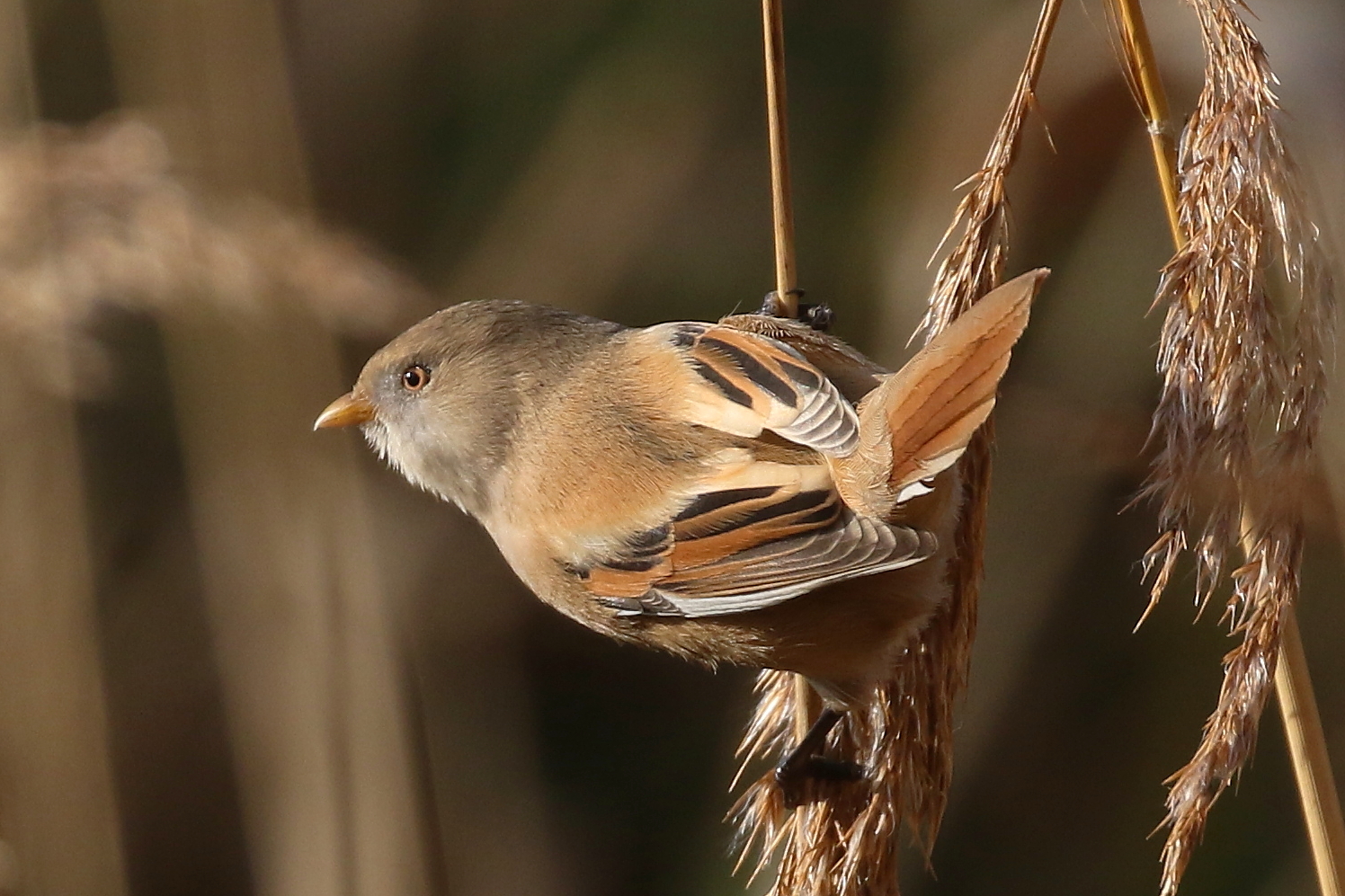
Bearded Tit, Radipole Lake
Blackbird, Radipole Lake
Carrion Crow, Chesil Cove
Dunnock, Radipole Lake
Shelduck, Radipole Lake
Black-headed Gull, Radipole Lake
Common Gull, Radipole Lake
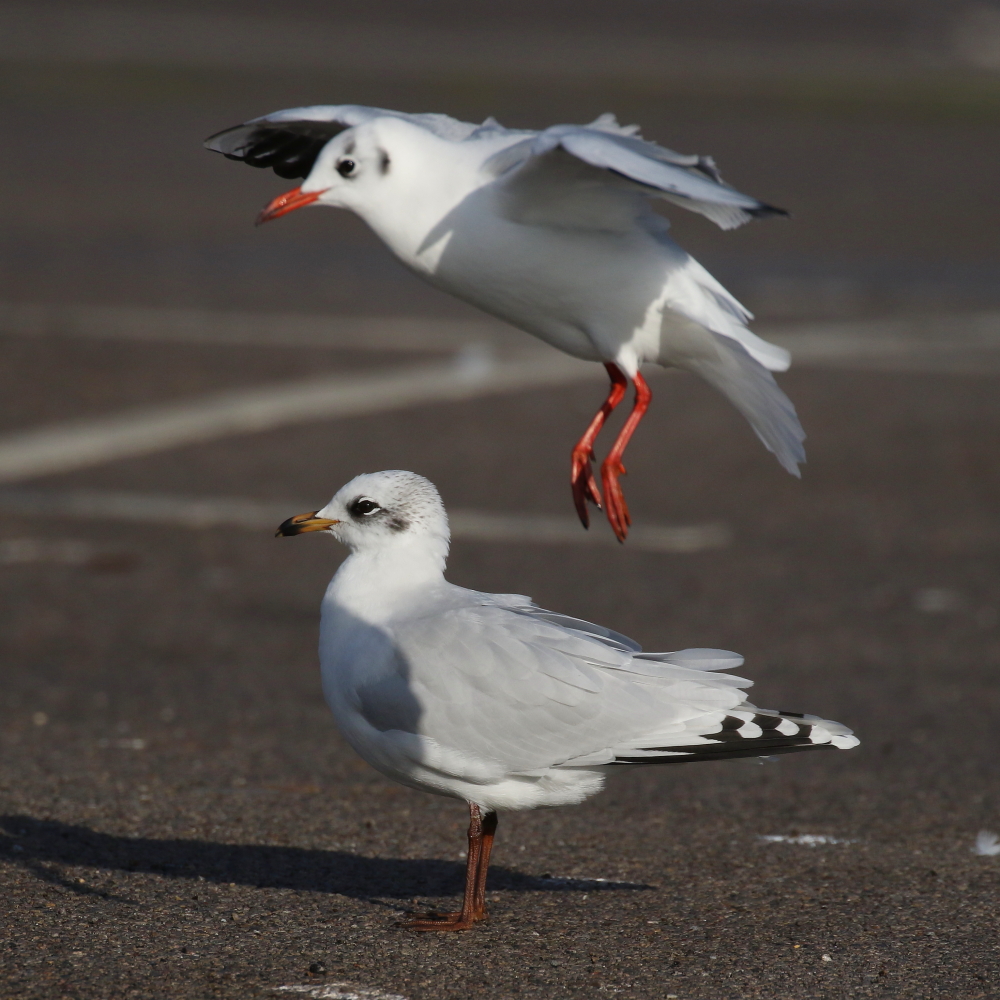
Mediterranean Gull, Radipole Lake
Med Gull with Black-headed Gull above
The drake Hooded Merganser still displaying at Radipole
Always a show-off

Male Marsh Harrier at Radipole
Moorhen, Radipole Lake
Feral Pigeon, Radiploe Lake
Rose-coloured Starling, Dorchester
Not looking so good after a bath
Starling murmuration at Studland