Showing posts with label Balearic Shearwater. Show all posts

Thursday, 22 September 2022

July-lights

The post-before-last recounted my longest bike ride of the year to date which saw me cross the Hampshire border for the first time in 2022. A successful venture which made me feel like I had got my cycling mojo back after the frustrations of June. A few days after the Hampshire marathon my legs were still feeling it but a gentle stroll down to the patch was enough to add Yellow-legged Gull to the yearlist. Four adults were present on one of the scrapes which have been a reliable site for this species in recent late summers, and the number rose to 10 later in the week. 

Painted Lady, Tarrant Rushton 17 July

Painted Lady, Tarratn Rushton, 17th July

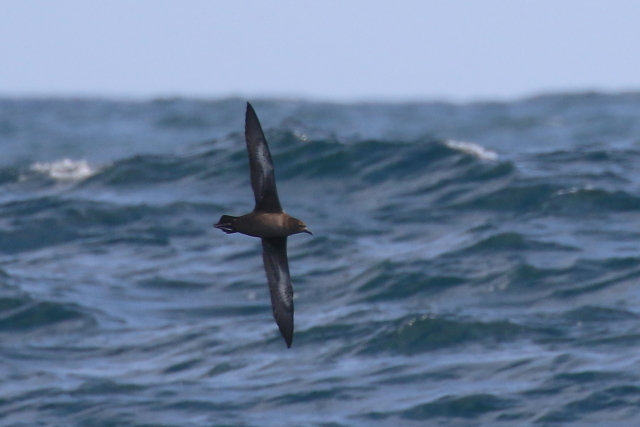
By the 24th of the month the legs had recovered enough to repeat another summer pilgrimage from last year: a ride to Portland to look for Balearic Shearwater - one of the rarest species in global terms to grace our shores. The journey down cycling into the wind starting at 0530 was challenging, but ultimately successful - a couple of distant 'probables' were followed by a few Balearics close enough to photograph, plus two Arctic Skua and half-a-dozen Manxies.

Corn Bunting, Tarrant Rushton, 17th July

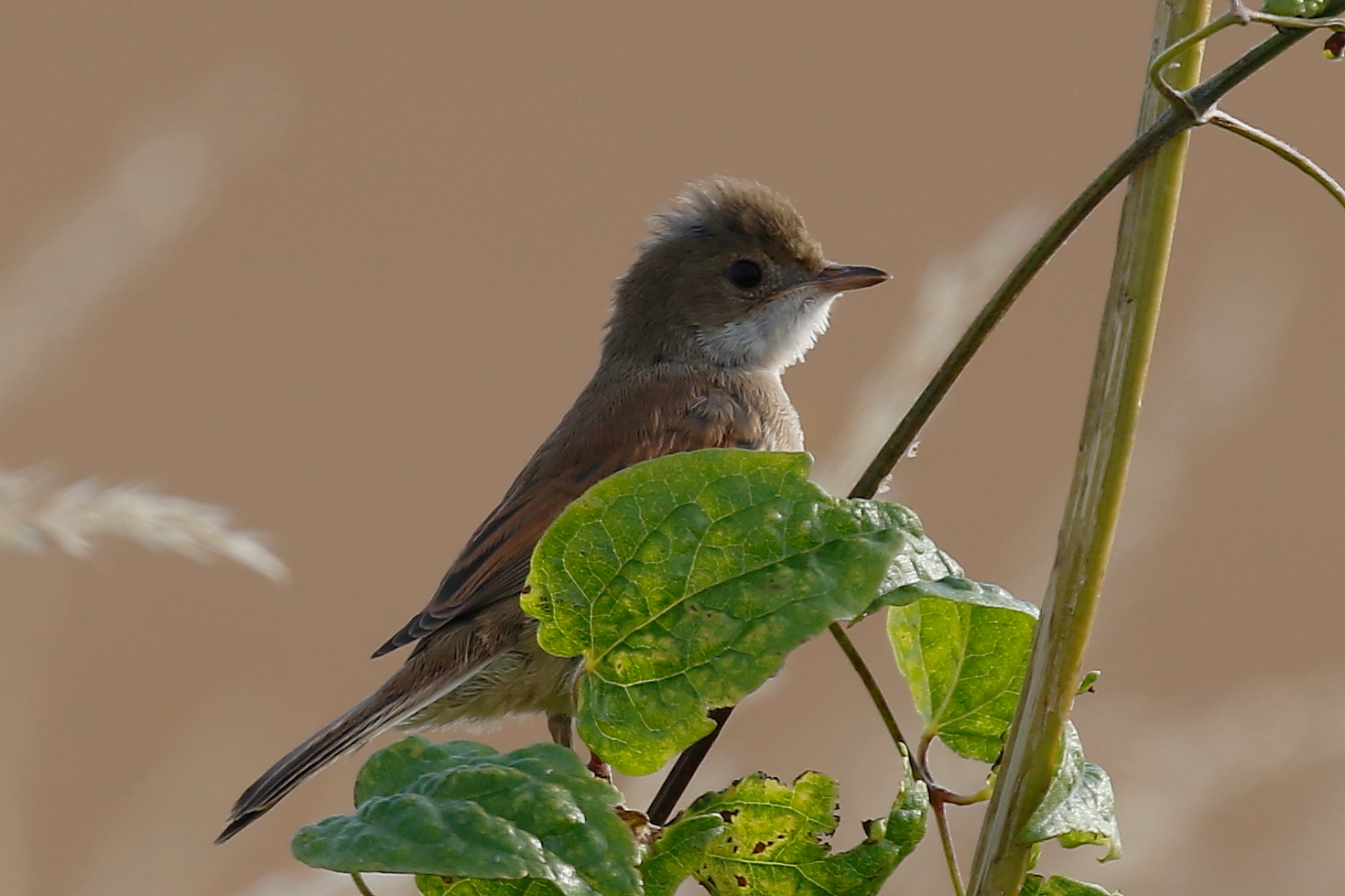
Whitethroat, Tarrant Rushton, 17th July

When I started the 2021 non-motorised yearlist I decided to include 'heard only' species but in the end managed to see everything, including the normally elusive Quail. This year I adopted the same rule which made a visit to Tarrant Rushton airfield, a reliable site for hearing if not seeing Quail, a good option. After dipping on 17th I managed to hear at least 3 calling males at the second attempt on the evening of the 29th. The month saw 6 new species added to bring the yearlist to 192 (compared to 198 at the same point in 2021). 318 miles had been cycled, my second highest total for a month in 2022 after May.
Balearic Shearwater, Portland Bill, 24th July

Balearic Shearwater, Portland Bill, 24th July

Sunday, 13 August 2017

Pelagic poetry

Of all the birds seen regularly in Britain, Balearic Shearwater is one of the rarest in global terms, being regarded as critically endangered by the IUCN. Tourist industry development near its breeding colonies and introduced mammals such as cats and rats are largely responsible for the perilous position of the species. Despite their small population, however, we are fortunate to see them annually off Portland Bill, but pelagic trips, such as the ones I enjoyed last weekend on the Isles of Scilly, generally provide better opportunities to see the species up close. On my first trip of three this year, an evening excursion, one flew alongside the Sapphire long enough for a few pictures. It was outnumbered by Sooty and Great Shearwaters, which we saw on all three days, and Manx Shearwaters, which have been present in the waters around Scilly in their thousands over recent weeks. All four species seem to move so effortlessly over the open sea - poetry in motion and a joy to watch.
Balearic Shearwater off Scilly, 4th August
A view showing the plain upperwings and toes protruding beyond the tail
Note the unclean white underparts and pot-bellied appearance...
...compared to the more clearly contrasting black and white Manx Shearwater
The black upperparts of Manx Shearwater can be invisible against a dark sea but its' presence is revealed when it banks to reveal gleaming white underparts
Manx Shearwater overtaking the Sapphire
A very elegant bird in flight
We disturbed several small rafts of Manx Shearwater as we headed out of St Mary's
Sooty Shearwater were seen frequently
Note darker belly and longer wings compared to Balearic Shearwater
Like the Great Shearwater, this is another long distance wanderer from the southern oceans
An effortlessly flier which overtook us with ease
Sooty Shearwater
Sooty Shearwater shows a silvery underwing and flesh coloured feet
A bit close to fit the whole bird in the frame
This bird was with a small raft of Manx Shearwater
Sooty Shearwater - all the key features on view here

Monday, 24 August 2015

An improbability...

...of Shearwaters. That's the collective noun New Zealanders apparently give to this family (I can't find an English equivalent despite, ooh, 30 seconds of extensive research). We call it a raft, of course, when groups of them are sitting on the water, but that doesn't quite capture the way these birds are best enjoyed: shearing, as the name suggests, low over the sea. Four pelagics out of St Mary's in mid-August provided ample opportunity for me to practice. Best efforts below.

First up, the Great Shearwater, which, having bred on islands in the South Atlantic, winters during our summer off the coast of North America, passing through our waters on its southward migration. We saw this species on every trip, and they often followed the boat.
Next up, the Sooty Shearwater, another southern hemisphere breeder which spends its winter (our summer) north of the equator. Again, its southward migration brings it to our coastal waters. Several of these were seen over the long weekend, some coming in to investigate what we were leaving in our wake.
Next up, the Balearic Shearwater, which breeds much closer to home as the name suggests, but is much rarer globally than the other two - in fact, one of the rarest birds globally to regularly grace this country. Good numbers have been seen passing seawatching hotspots this year so hopefully that's a good sign. This one came in behind the boat and stuck with us for a while, risking attacks from gulls to dive for food just off our stern.
And finally, our very own Manx Shearwater, most of whose breeding population can be found in Britain and Ireland, including some on Scilly. 2014 saw Manxies successfully fledge young on the archipelago for the first time in a long time following a rat eradication programme.
Marvellous birds, every one, which with the Fea's, Wilson's and Storm Petrel, brought the photo year list up to #212.

Tuesday, 3 September 2013

YouTubenose

Millions of Egyptians concluded recently that democracy is not all it's cracked up to be. After the low turnout in my recent poll, it's tempting to agree with them. But then who am I to resist the will of the people who voted in their drove (singular) for more tales of seasickness and seabirds from my recent Scilly Pelagics out of St Mary's. So at the risk of subjecting the rest of you to the tyranny of the majority, here goes. Other posts to follow as promised.

Species of the trip has to be the Wilson's Petrel seen on Sunday 11th August. Bird of the trip though was probably this Great Shearwater which flew around the boat in good light and allowed a close approach thanks to some careful skippering by Joe Pender.
Difficult to get a sharp flight shot from a moving boat despite plenty of opportunity
This shot shows how the wing does actually shear the water
Shearwaters are meant to be seen in flight, but it was still good to get close to one sat on the sea
Note the pink legs which can be seen under the water
A close up of the elegant tubenose: shearwaters drink saltwater and therefore need to excrete excess salt, doing this via a salt gland which produces a saline solution that drips out of the nostrils, sometimes giving them a 'snotty-nosed' look. Not this one though, he'd just wiped.
I spent about 25 hours in total at sea on Sapphire, but it wasn't all snapping close-ups of Great Shearwaters. Long periods were spent steaming to likely locations or drifting and chumming while not much happened. As the boat sloshed around in the swell and the sun bore down I had a barely suppressible urge to start singing Farewell and Adieu to you Fair Spanish Ladies as per Robert Shaw in 'Jaws'...Next in the photo round-up, the three other species of Shearwater which were also seen.
Manx Shearwater - by far the commonest Shearwater encountered...
...Sooty Shearwaters were seen in small numbers, this one banking to reveal the silvery underwing...
...and Balearic Shearwater, taking off to reveal the typical pot-bellied profile
During one lengthy period of inactivity, I thought I must have imbibed too much seawater myself as I was sure I could hear the theme tune to 'Pirates of the Carribean' coming from the bows. Then someone punctured to hallucination: 'Phone's ringing, Joe'.
This Balearic was with a raft of Manxies just off St Mary's one evening
Balearic Shearwater
A Manx taking off from the same raft
And a Sooty in amongst the Manxies
Speaking of pirates, piratical is a word often used to describe members of the Skua family, two species of which were seen - Great and Pomarine. Only one Pom, but Greats often turned up when there were large flocks of Gulls to be harassed.
Great Skuas - a.k.a. 'Bonxies' - were seen fairly regularly
A bulky presence
Unfortunately this much rarer Pomarine Skua was almost past us before I got the camera on it - the 'spoon' on the tail can just be seen though
All told I thoroughly enjoyed the pelagics, and more than I thought I would. I'm an impatient seawatcher, but there's not much else to do when you're out there, so I was a captive audience for once.
Gannets often followed the Sapphire, especially when we dragged a bag of fish guts along behind
They would typically announce their arrival with a raucous call before stalling and plunge diving into the wake
Gannets of all ages and plumages were seen
We didn't see everything we had hoped to see - Cory's Shearwater being the main gap in the trip list - but we saw everything else very well and at least I have a good excuse to go again some time. The family also enjoyed being on St Mary's with all the shops, cafes and bars open - it's all got a bit 'ghost town' during our normal half-term holiday in October.
Fulmar - another tubenose, this one sporting the snot-nosed look to good effect
Fulmars were often alongside or following the boat
As these pictures suggests, we enjoyed a variety of light conditions, and I found a slightly flatter light better for many of the birds with contrasting dark and white plumages which might otherwise have been over-exposed by my sloppy technical abilities with the camera.
Great Black-backed Gulls were usually present among the larger flocks, although...
Lesser Black-backed Gulls were the commonest gull following the boat
Kittiwakes often followed the boat, most showing signs of moult and not at their usual smart best
I should close with a big thank you to tour leaders Bob Flood and Ashley Fisher, skipper Joe Pender, Higgo and other regulars whose names I didn't know but who helped out with chumming, bird-finding and all round general entertainment. These trips may not be for the faint hearted, but still come highly recommended.
Storm Petrels are closely related to Shearwaters...
..but much harder to photograph due to their small size and rapid, bat-like flight.