Showing posts with label Marsh Fritillary. Show all posts

Thursday, 19 July 2018

Out for the Count

Well it's Big Butterfly Count time of year again, and unlike in previous years when the obligation on me to promote it via this neglected corner of the internet was purely moral, happily I am now professionally obliged to big it up. Not that it needs much help from me of course: it is already the world's biggest butterfly survey and the data gathered represents one of our finest examples of  'citizen science'.  Spending 15 minutes in a sunny spot - and there have been plenty of those around lately - is all it takes, and it's good for you too, so there's no excuse not to join in really. Even if you don't see much, it's still important to record it. So, off you trot. And if that's not encouragement enough, here are a few pictures to whet your appetite, highlights from many happy moments photographing butterflies over the last few months.
Painted Lady: this pristine migrant brightened up the weekend on the Purbeck coast
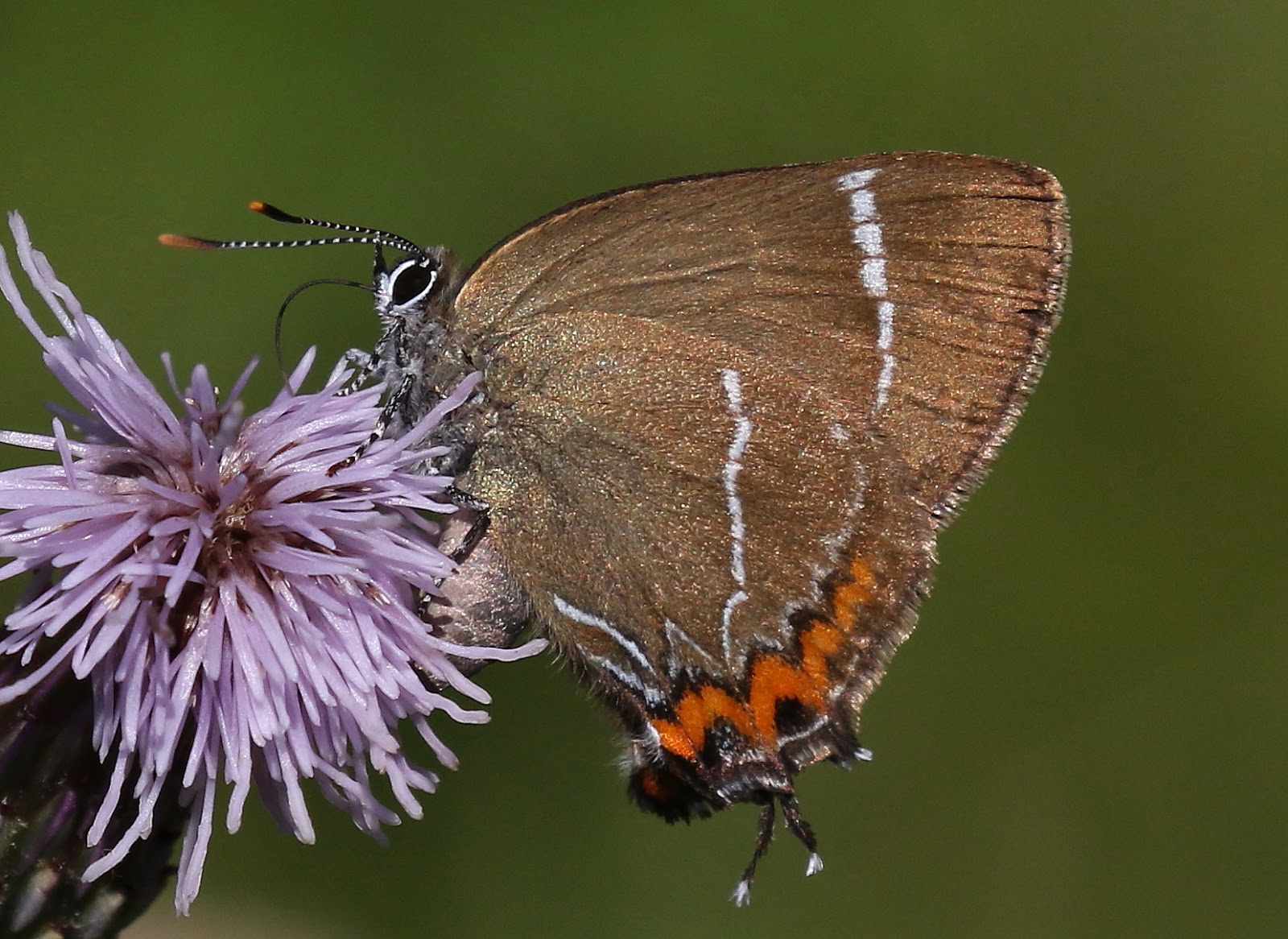
This White-letter Hairstreak was also in good condition - my first in Purbeck (14 July) 
The underwing of this Silver-washed Fritillary reminds me of  the iridescent lining of a mollusc's shell (Purbeck, 14 July)
An Essex Skipper in my tiny town centre garden was a surprise
The antennae tips look dipped in ink with black undersides
Attracted into the garden by our fine display of drought-resistant lavender
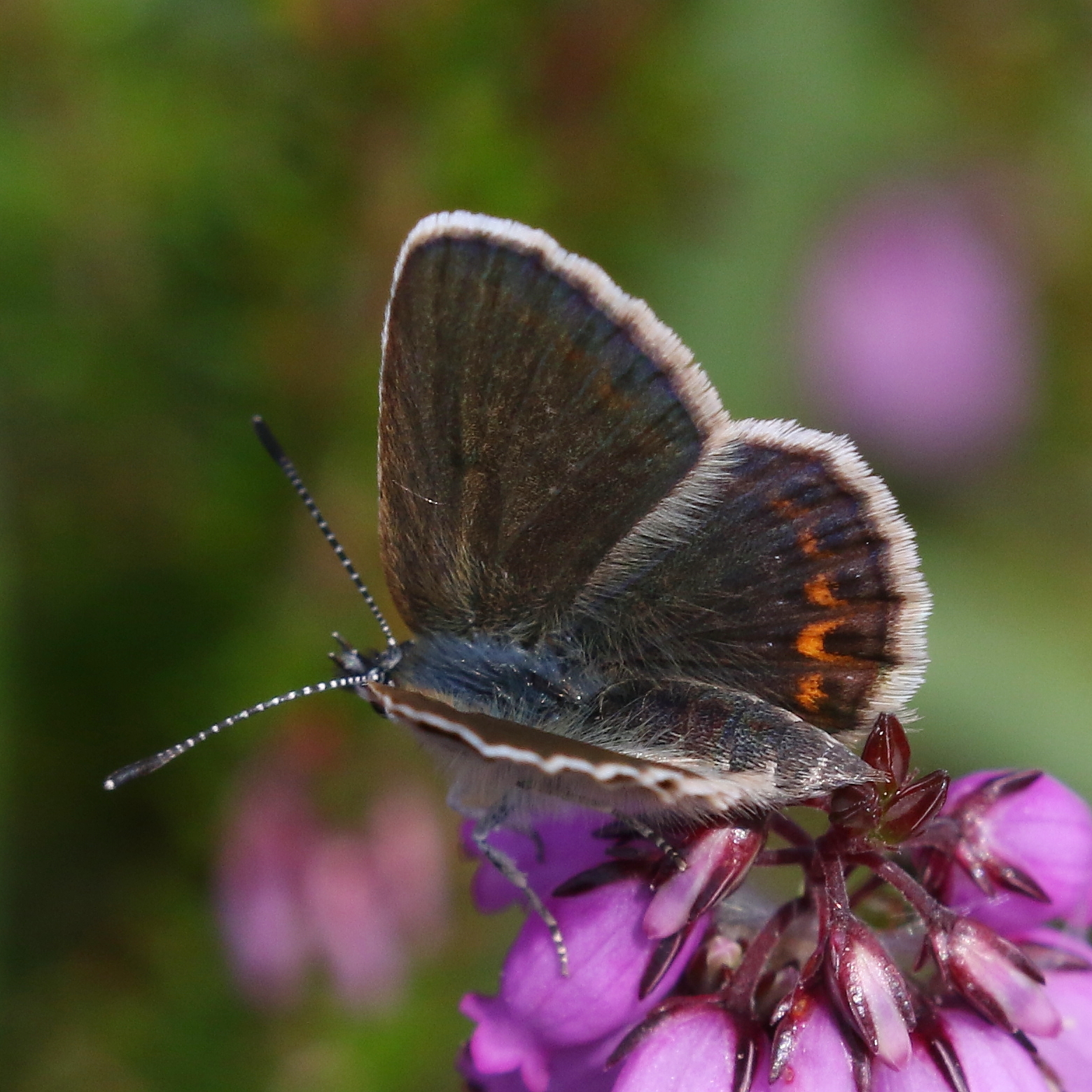
Silver-studded Blues emerged in good numbers on the Dorset heaths this year - this a male...
...and this a female (Studland, 24th June)
Silver-studded Blues have also been dispersing to non-traditional sites, presumably a function of the heatwave
Note the silver studs on the hind-wing of this female
White Admiral also appears to have had a good summer - this one was at Queen's Copse near Wmborne (23 June)
I visited there shortly after the White Admirals had emerged
'Who doesn't love a White Admiral underwing' I asked on Twitter. 114 kind souls agreed!
A business trip to Northern Ireland provided my first opportunity to see the Cryptic Wood White - having seen all the other regularly occurring species in the UK, this was a highlight of the year for me
There was a good colony at Craigavon Lakes, a grassland site well managed for the butterfly by Craigavon Borough Council (8 June)
We even saw a Cryptic Wood White egg-laying - I don't carry a macro lens so this photograph came out surprisingly well
An evening visit to the extraordinarily beautiful Murlough NNR enabled us to catch up with the Irish form of Marsh Fritillary (7 June) - this an iPhone photo
Adonis Blue at Dancing Ledge on 1 June - a species which doesn't cope well with drought conditions
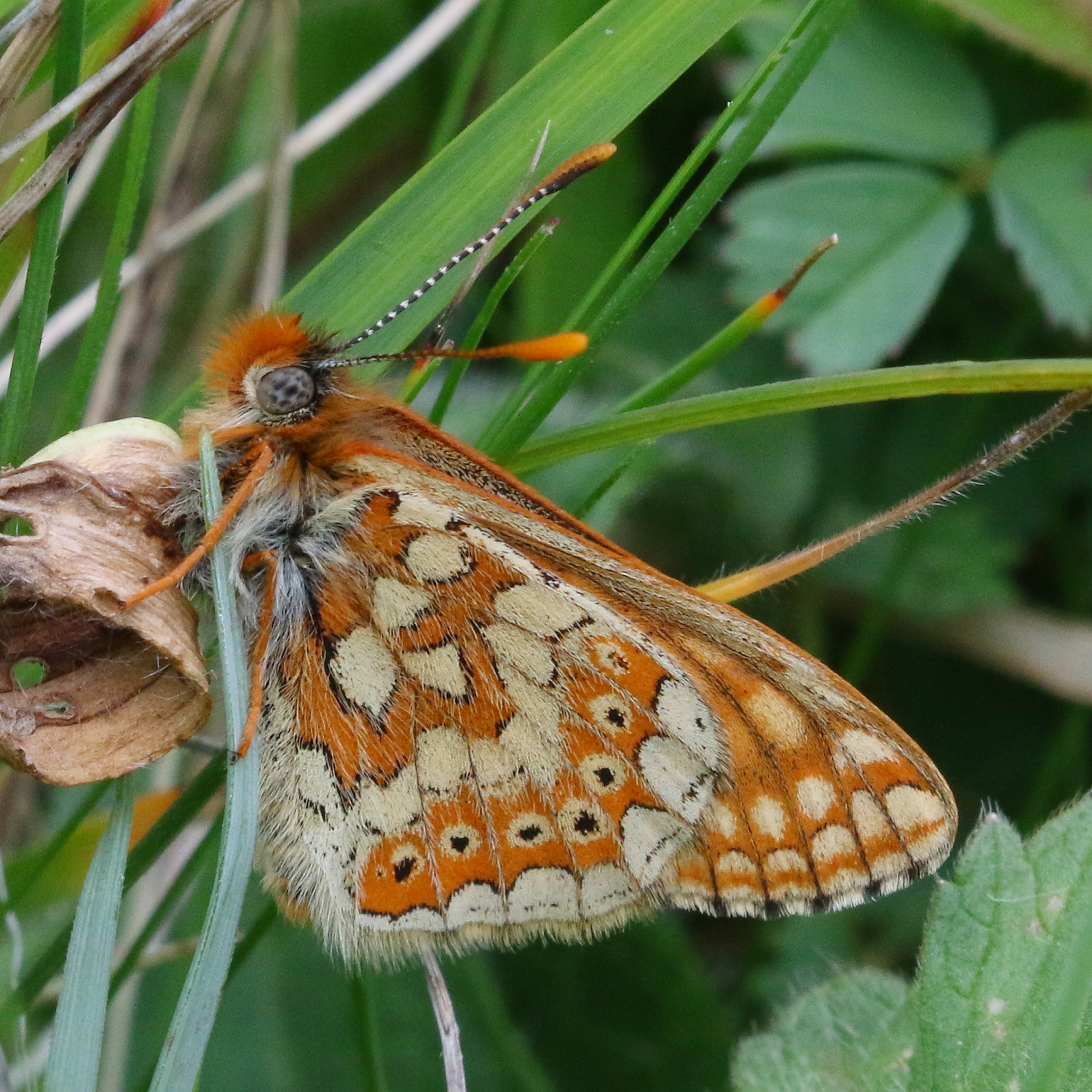
And here's the English form of Marsh Fritillary (Cerne Abbas, 26 May)
Possibly my favourite fritillary underwing - Marsh Fritillary at Cerne Abbas on 26 May
Marsh Fritillary, Cerne Abbas
A fresh Brown Argus at Cerne Abbas (19 May)
Duke of Burgundy, Cerne Abbas (19 May)
The Duke is another species for which there is concern that the foodplant may be suffering in the drought, causing problems for the caterpillars
Small Blue was doing well this spring on the Weymouth Relief Road verges - more good local authority management by my former employer Dorset County Council
The Small Blue colony is thought to be one of the largest in England - and there were none there at all in 2011 (photo taken 18 May)
So the warm weather has certainly been kind to some species - but there are growing concerns about the impact of drought on the next generation: all the more reason to submit your records for the Count.

Tuesday, 23 May 2017

Far From the Madding Crowd

After a slightly fraught day on Friday involving, well, let's just say some caravans, a car park and the Dorset constabulary, the eminent Dr Sterling and I felt the need to seek out some tranquillity, so we left the bustling metropolis of Casterbridge and treated ourselves to a post-work field trip to Cerne Giant Hill. A bit of a flying visit before Phil caught his finger badly on some barbed wire and had to be virtually airlifted back home to Weymouth, but we caught up with two of the site's star attractions before his blood runneth over: the Duke of Burgundy and the Marsh Fritillary. The less celebrated and more modestly named Grizzled and Dingy Skipper were also on the wing. Despite being one of the best butterfly sites in Wessex, we had the place to ourselves for the time we were there. Lacerated digits aside, it was just what the Doctor ordered.
Marsh Fritillary
Marsh Fritillary
Duke of Burgundy
Duke of Burgundy
Duke of Burgundy
Duke of Burgundy
Duke of Burgundy
Dingy Skipper
Grizzled Skipper


Sunday, 25 December 2016

June...

A bit odd to be talking about June on Christmas Day, I know, but with stomachs and the dishwasher groaning under the weight of the day's gluttony, it seems like as good a time as any to chalk off another month in my review of the year. And the temperature outside is about the same too. Oh, a very merry Christmas by the way, and thanks for reading - I know it's been hard going lately with all this reminiscing.

Speaking of which, back to June and early in the month I combined a quick trip to Cornwall to see the long-staying Dalmatian Pelican of unknown origin with a return via Branscombe in Devon to search for Wood White butterflies - a rare species in these parts which were quite easy to find on the crumbling undercliff. A memorable day, not least as the car broke down, as if chiding me for twitching the Pelican.
Dalmatian Pelican, Drift Reservoir
A spectacular bird, though whether it will make Category A of the British list is another matter
Wood White at Branscombe - my photo of the month for June 2016
Some other rare butterflies featured prominently on my travels in June. A visit to Kent on business provided the opportunity to catch up with Heath Fritillaries in the Blean Woods, while Small Pearl-bordered and Marsh Fritillaries were on the wing closer to home in Dorset. A beautiful but fussy family with particular habitat requirements, all facing long-term decline, though the Marsh Fritillaries are at least doing well on the chalk in Dorset. A bit of moth-trapping in our Wareham garden also made for some family fun, a monster Privet Hawk being the highlight.
Small Pearl-Bordered Fritillary, Purbeck
Marsh Fritillary, Cerne Abbas
Heath Fritillary, Blean Woods
Mid-month  saw the whole family heading to Norfolk in a campervan for the weekend, and an opportunity to add Great Knot to my British list followed by a fry-up in the van - twitching in style! It was good to be able to combine some birding with some family time, though getting them up in the morning proved a challenge - the Great Knot was only seen thanks to an early morning lift from Dave Bradnum while they were all still in bed. Cheers Dave.
Great Knot, Titchwell Beach, Norfolk: bird of the month for June
Red-backed Shrike - a smart male snapped whilst in Kent
Privet Hawkmoth in our Wareham garden

Thursday, 9 June 2016

Every cloud...

I have been so impressed with the macro-like capabilities of what I really must stop calling my 'new' lens (it's so old I have almost paid off the interest free credit loan) that it has been getting plenty of use for insect photography. My last visit to Cerne Abbas produced just a single Marsh Fritillary so I had been planning another visit closer to their peak emergence as soon as the opportunity presented itself.
I confess to having a bit of a thing for the underwing pattern of the Marsh Fritillary - surely one of the most attractive, even with the stiff competition offered by other members of that family. But photographing Fritillary underwings is not easy as on the sunny days when they are flying they tend not to reveal the undersides in their full glory for too long. To make matters worse, getting the whole beast in focus requires a high f-stop, which in turn reduces the shutter speed - not great if the butterfly is moving.
Some of the best success I have had in the past is on overcast days, when the butterflies are a bit harder to find but more likely to be encountered with wings snapped shut. So a bit of a 'meh' forecast was enough to get me back to Cerne Abbas last weekend. Fortunately, Marsh Fritillaries had emerged at this site in such numbers that finding roosting individuals next to the paths under the cloudy skies wasn't too difficult. A thoroughly enjoyable spectacle and a credit to the management of this site, by both the landowner and the local Butterfly Conservation volunteers who clear the scrub in winter, where Marsh Fritillaries are bucking the trend of long-term decline elsewhere.