Showing posts with label Duke of Burgundy. Show all posts

Thursday, 19 July 2018

Out for the Count

Well it's Big Butterfly Count time of year again, and unlike in previous years when the obligation on me to promote it via this neglected corner of the internet was purely moral, happily I am now professionally obliged to big it up. Not that it needs much help from me of course: it is already the world's biggest butterfly survey and the data gathered represents one of our finest examples of  'citizen science'.  Spending 15 minutes in a sunny spot - and there have been plenty of those around lately - is all it takes, and it's good for you too, so there's no excuse not to join in really. Even if you don't see much, it's still important to record it. So, off you trot. And if that's not encouragement enough, here are a few pictures to whet your appetite, highlights from many happy moments photographing butterflies over the last few months.
Painted Lady: this pristine migrant brightened up the weekend on the Purbeck coast
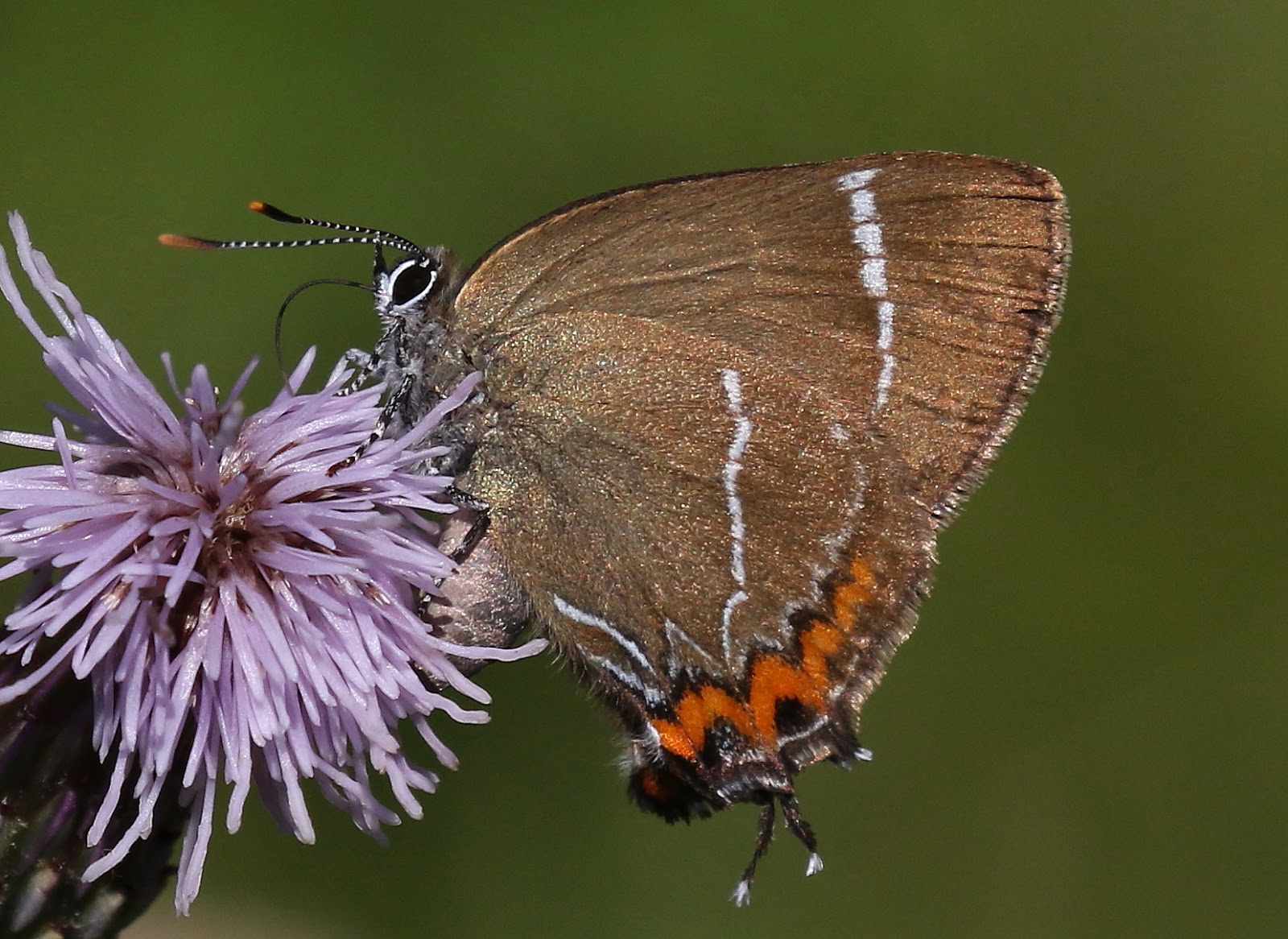
This White-letter Hairstreak was also in good condition - my first in Purbeck (14 July) 
The underwing of this Silver-washed Fritillary reminds me of  the iridescent lining of a mollusc's shell (Purbeck, 14 July)
An Essex Skipper in my tiny town centre garden was a surprise
The antennae tips look dipped in ink with black undersides
Attracted into the garden by our fine display of drought-resistant lavender
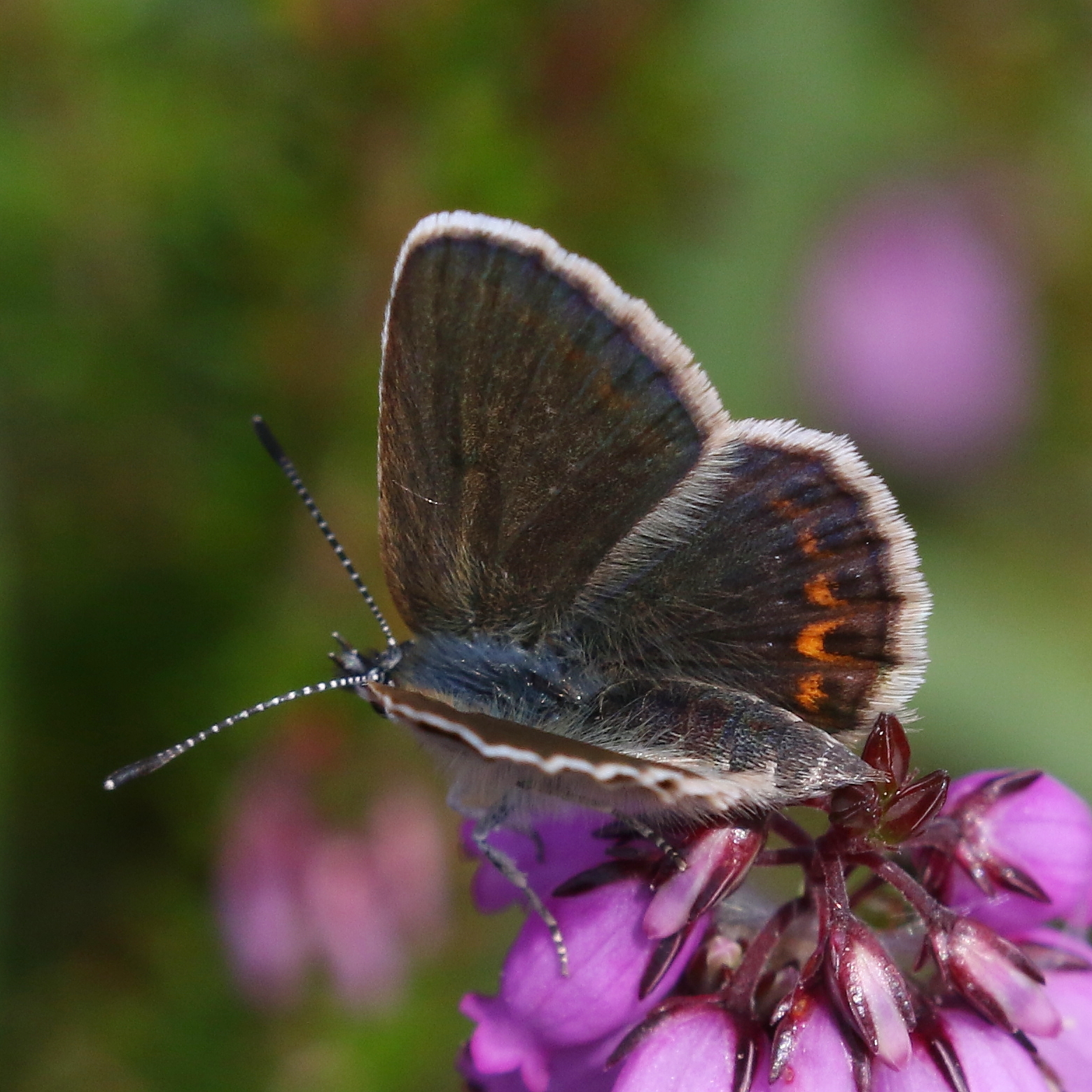
Silver-studded Blues emerged in good numbers on the Dorset heaths this year - this a male...
...and this a female (Studland, 24th June)
Silver-studded Blues have also been dispersing to non-traditional sites, presumably a function of the heatwave
Note the silver studs on the hind-wing of this female
White Admiral also appears to have had a good summer - this one was at Queen's Copse near Wmborne (23 June)
I visited there shortly after the White Admirals had emerged
'Who doesn't love a White Admiral underwing' I asked on Twitter. 114 kind souls agreed!
A business trip to Northern Ireland provided my first opportunity to see the Cryptic Wood White - having seen all the other regularly occurring species in the UK, this was a highlight of the year for me
There was a good colony at Craigavon Lakes, a grassland site well managed for the butterfly by Craigavon Borough Council (8 June)
We even saw a Cryptic Wood White egg-laying - I don't carry a macro lens so this photograph came out surprisingly well
An evening visit to the extraordinarily beautiful Murlough NNR enabled us to catch up with the Irish form of Marsh Fritillary (7 June) - this an iPhone photo
Adonis Blue at Dancing Ledge on 1 June - a species which doesn't cope well with drought conditions
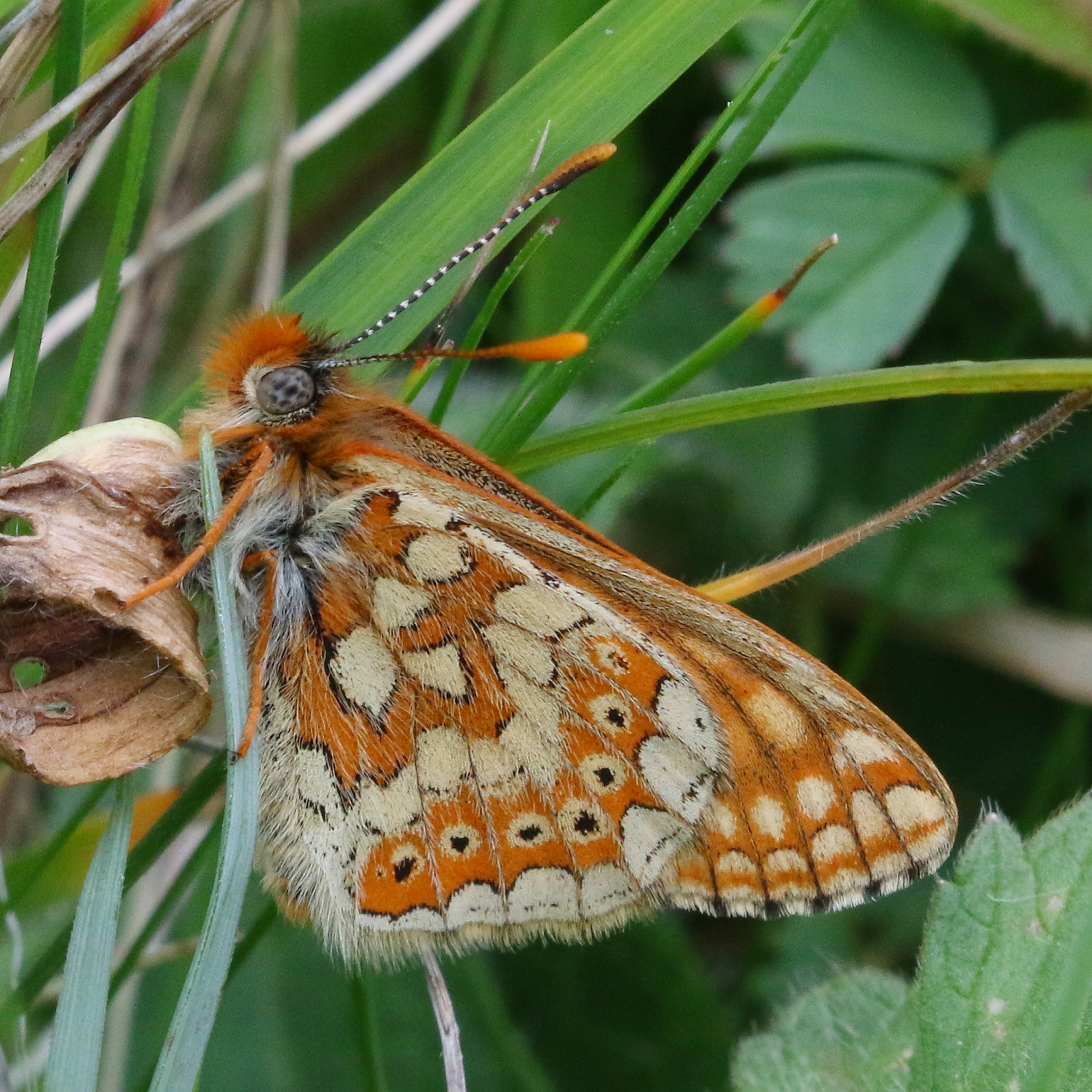
And here's the English form of Marsh Fritillary (Cerne Abbas, 26 May)
Possibly my favourite fritillary underwing - Marsh Fritillary at Cerne Abbas on 26 May
Marsh Fritillary, Cerne Abbas
A fresh Brown Argus at Cerne Abbas (19 May)
Duke of Burgundy, Cerne Abbas (19 May)
The Duke is another species for which there is concern that the foodplant may be suffering in the drought, causing problems for the caterpillars
Small Blue was doing well this spring on the Weymouth Relief Road verges - more good local authority management by my former employer Dorset County Council
The Small Blue colony is thought to be one of the largest in England - and there were none there at all in 2011 (photo taken 18 May)
So the warm weather has certainly been kind to some species - but there are growing concerns about the impact of drought on the next generation: all the more reason to submit your records for the Count.

Tuesday, 23 May 2017

Far From the Madding Crowd

After a slightly fraught day on Friday involving, well, let's just say some caravans, a car park and the Dorset constabulary, the eminent Dr Sterling and I felt the need to seek out some tranquillity, so we left the bustling metropolis of Casterbridge and treated ourselves to a post-work field trip to Cerne Giant Hill. A bit of a flying visit before Phil caught his finger badly on some barbed wire and had to be virtually airlifted back home to Weymouth, but we caught up with two of the site's star attractions before his blood runneth over: the Duke of Burgundy and the Marsh Fritillary. The less celebrated and more modestly named Grizzled and Dingy Skipper were also on the wing. Despite being one of the best butterfly sites in Wessex, we had the place to ourselves for the time we were there. Lacerated digits aside, it was just what the Doctor ordered.
Marsh Fritillary
Marsh Fritillary
Duke of Burgundy
Duke of Burgundy
Duke of Burgundy
Duke of Burgundy
Duke of Burgundy
Dingy Skipper
Grizzled Skipper


Friday, 23 December 2016

May...

Donald Trump said yesterday that he thinks the USA needs to tool up with more nukes. Well, greetings of the season of peace and goodwill to you too, Mr President-elect. With 2016 being seriously discussed among historians as a candidate for 'the worst year ever', the ominous tweet seemed almost designed to underline how little there is to look forward to in 2017 for those on the lunatic fringe who think nuclear holocaust a very bad idea. A good excuse to look back, then, to a time before democracy proved it's not all it's cracked up to be - to spring, and to May in particular, whose turn it is in my review of the year, as migrant birds arrived in their millions to distract us from the grim realities of existence.

The first half of the month was enlivened by some rare and scarce visitors to my adopted home county of Dorset - Kentish Plover, Black-winged Stilt and Red-rumped Swallow were all good birds, but top billing went a to dashing female Red-footed Falcon at nearby Morden Bog and a Great Spotted Cuckoo on Portland - a Dorset tick for me and many others. It gorged on Brown-tail moth caterpillars, which can be found in huge numbers at Reap Lane, for several weeks.
Red-footed Falcon, Morden Bog: my photo of the month for May
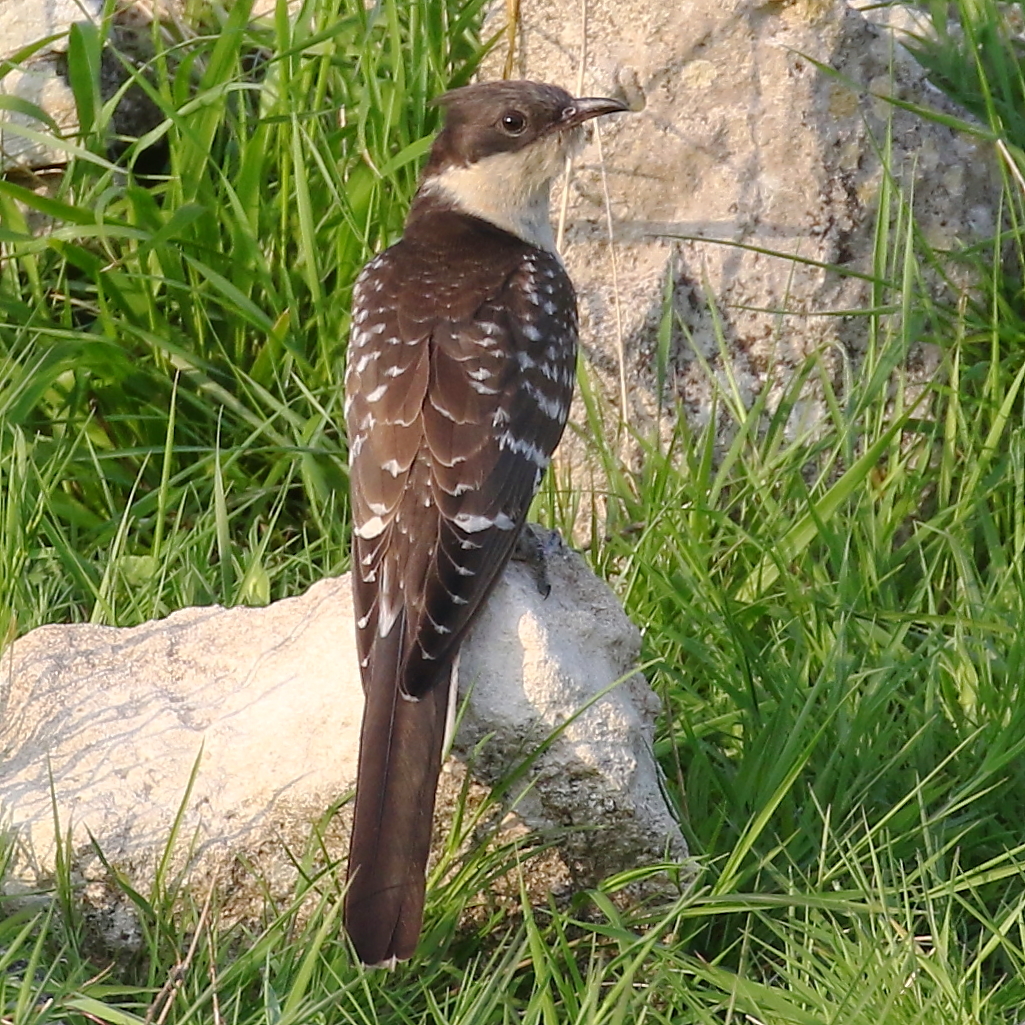
Great Spotted Cuckoo, Portland
Red-rumped Swallow, Lodmoor
Kentish Plover, Ferrybridge
Lepidoptera loomed quite large in my life in 2016: as well as being the first spring in which I had the opportunity to put my new lens through its paces photographing these smaller subjects, I steered an Action Plan for Pollinators through to adoption at Dorset County Council - a small but important attempt to boost the prospects of our declining butterflies, moths and other pollinating insects. Later in the year, some wildflower verges we had created as part of this got a hugely positive reaction from the public - the first time in my twelve year career in local government when the compliments in my inbox have outstripped the complaints! But back to May, which saw the emergence of many sought after species around Dorset's butterfly hotspots:
Duke of Burgundy, Cerne Abbas
Green Hairstreak, Cerne Abbas
Small Blue, Portland
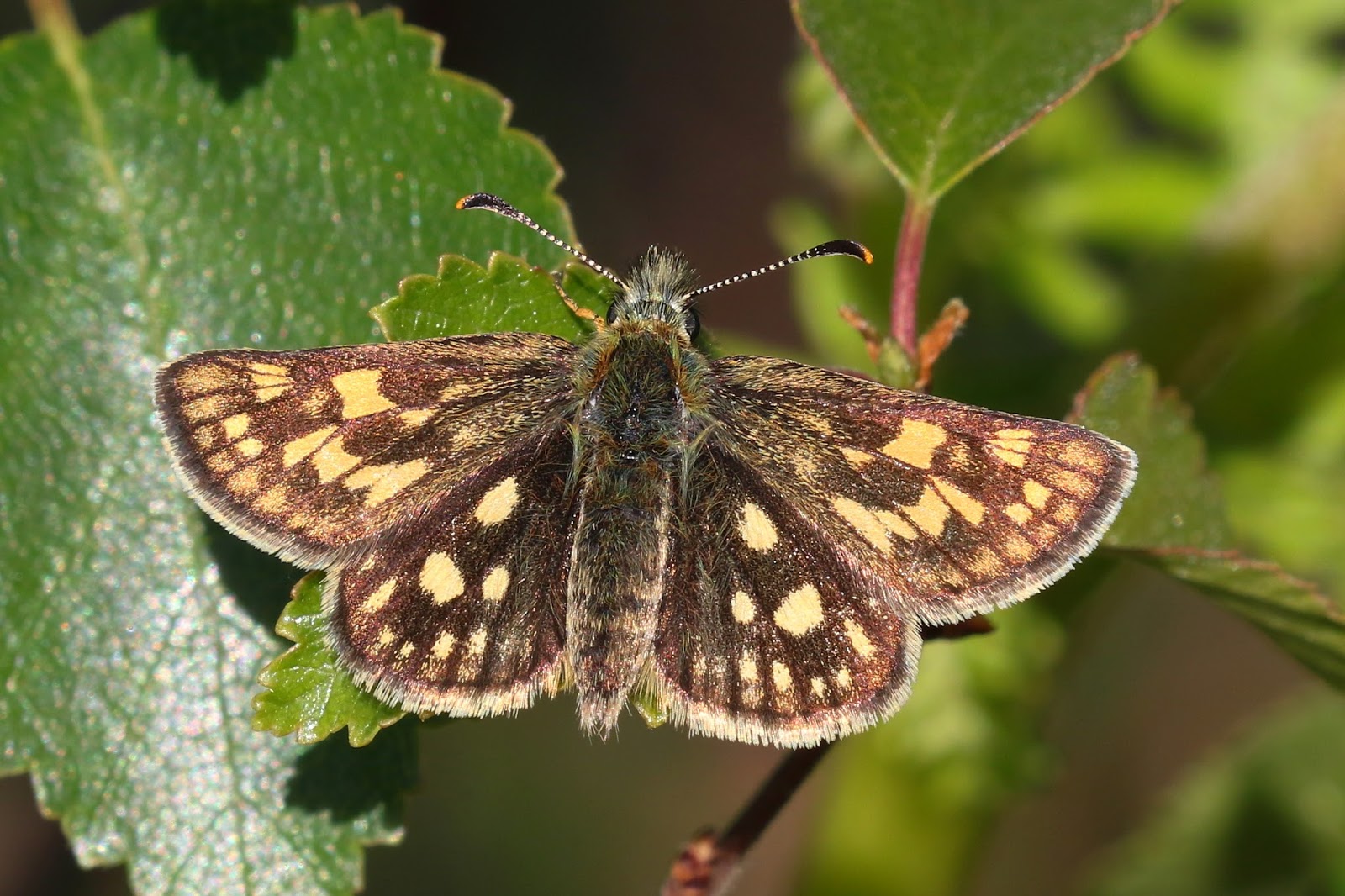
Chequered Skipper - a rarity in Britain restricted to a few sites in north west Scotland - we visited one at Allt Mhuic on the way south from a trip to the Outer Hebs
May ended with one of my most epic and enjoyable adventures of 2016 - a three day trip to the Outer Hebrides with David Bradnum and Paul Welling. We made this mammoth journey to pay homage to the unprecedented spring occurrence of a Black-billed Cuckoo from the Americas and, having done so, to appreciate the dramatic landscapes, the breeding waders and other wildlife of North Uist, South Uist and Benbecula:
Black-billed Cuckoo, North Uist: bird of the month for May
Corncrake, North Uist
Redshank, Outer Hebrides
Female Red-necked Phalarope, Outer Hebrides
One of the highlights of the year and the furthest I travelled in 2016. Fortunately it came at the start of a week off providing for a leisurely stay to appreciate the breeding birds on the Hebrides as well as the vagrant Cuckoo - I would have had neither the energy nor the inclination to just 'smash and grab' the rarity in such a memorable location. And no, Mr Trump, it would not be a good place for a golf course...

Sunday, 15 May 2016

Something green, and a giant

Sunshine, warmth and opportunity combined on Saturday, encouraging me to make the trip to Cerne Abbas, one of the finest sites in Dorset for butterflies where a range of species flourish in the shadow of the celebrated giant. After a surprisingly chilly morning with patchy cloud, the afternoon warmed up enough to bring out a range of species, including a stunning Green Hairstreak.
Green Hairstreak - more often 'stumbled upon' than 'found', in my experience
This individual was rubbing its wings together in a rotating motion, revealing a glimpse of the brown upperwing
Perhaps the most sought after butterfly at Cerne Abbas is the Duke of Burgundy - a rare species for which conservation efforts are helping to halt a precipitous decline
This male perched up during an overcast period - the forelegs of the male are stunted giving it a four-legged look (compared to six visible legs on the female)
The Marsh Fritillary has been in long-term decline in its wetland habitats, but is bucking the trend on Dorset downland sites. A single individual was spotted during my visit - hopefully more will be emerging soon
Small Heath - another species which has seen a steep decline, although it remains widespread
Grizzled Skipper - a very dapper individual
Dingy Skipper outnumbered Grizzled by about 5 to 1 - the opposite ratio compared to a visit to Fontmell Down a few weeks ago
This Green-veined White served as the warm-up act on the way to the flower-rich downland at Cerne Abbas
And representing the day-flying moths, this attractive Green Carpet was disturbed from vegetation
A fine show of Orchids and Cowslips on Cerne Giant Hill
Green Hairstreak - our only green butterfly