Showing posts with label Red-necked Phalarope. Show all posts

Sunday, 24 September 2017

Wessex waderfest

Dorset's extraordinary run of American waders continued into its fourth weekend with a Lesser Yellowlegs at Christchurch Harbour the most recent arrival yesterday. It all started with a Baird's Sandpiper on Brownsea Island which I managed to see back on 2nd September. After a gap of about a week, Stilt and Least Sandpipers were then discovered on the same day at the same site in Weymouth. During their extended stay a Buff-breasted Sandpiper arrived on Portland, then within the last few days a Spotted Sandpiper was found among the Common Sandpipers at Abbotsbury Swannery.
Spotted Sandpiper, Abbotsbury Swannery
A tricky bird to separate from Common Sandpiper - call was one of the factors which made Steve Groves think Spotted...
...yellowish legs, short tail and plain tertial fringes appeared to confirm it
This drake Scaup was also at Abbotsbury
Not quite yet in its smartest winter plumage
What was presumably the same Baird's was relocated on the Fleet last week, and what was presumably the same Stilt Sandpiper spent a few hours at Lytchett Bay, giving a few patch listers as well as county listers something to celebrate. Trying to photograph them all involved a fair amount of dashing around after work and at weekends and I never even got as far as looking for the Buff-breasted or the Yellowlegs.
I went back to Lodmoor to try to improve on my photos of the Stilt and Least Sandpipers
The Stilt Sand was much closer but the light was not great
A hint of the rufous cheek patch can be seen here
On a different evening, in contrast to the Stilt Sandpiper, the Least was in nice light - but much further away!
Not sure if these were an improvement on my original pictures
However, it was a first for Dorset, so good views took priority over good photos
Three visits to the Fleet hoping to improve on my appalling record shot of the Baird's Sandpiper also ended in failure. More successful was a late Saturday afternoon visit to the Swannery, where we had only just been shown to Helen's Hide by finder Steve Groves when the Spotted Sandpiper flew in and perched briefly on the shore under our noses.
Couldn't find the Baird's on the Fleet but enjoyed close views of a couple of Bar-tailed Godwit
These birds were feeding in Tidmoor Cove
Bar-tailed Godwit
Bar-tailed Godwits
Even Swineham got in on the wader action with a cracking species pair of Grey and Red-necked Phalarope spending the weekend on the same pool on Arne Moors. Getting them on the patch list required scaling a small oak tree and balancing the telescope on a tripod shaped bough to view over the Frome's riverside reeds! Of course, the provenance of the Phalaropes is more open to question, though with so many congeners from the Americas in the area, it is not totally out of the question that they too might have originated on the other side of the Atlantic. Had a Wilson's Phalarope joined them that might have provided supporting evidence for the theory - but alas it wasn't to be. Still, autumn is still young...
The juvenile Red-necked Phalarope was a new bird for me in Dorset as well as Swineham
The Grey (left) and Red-necked Phalarope often fed together on Arne Moors
Quite amazing that they settled on the same small pool especially as the Grey Phalarope had been present for about a week before its smaller cousin arrived
Red-necked Phalarope


Friday, 23 December 2016

May...

Donald Trump said yesterday that he thinks the USA needs to tool up with more nukes. Well, greetings of the season of peace and goodwill to you too, Mr President-elect. With 2016 being seriously discussed among historians as a candidate for 'the worst year ever', the ominous tweet seemed almost designed to underline how little there is to look forward to in 2017 for those on the lunatic fringe who think nuclear holocaust a very bad idea. A good excuse to look back, then, to a time before democracy proved it's not all it's cracked up to be - to spring, and to May in particular, whose turn it is in my review of the year, as migrant birds arrived in their millions to distract us from the grim realities of existence.

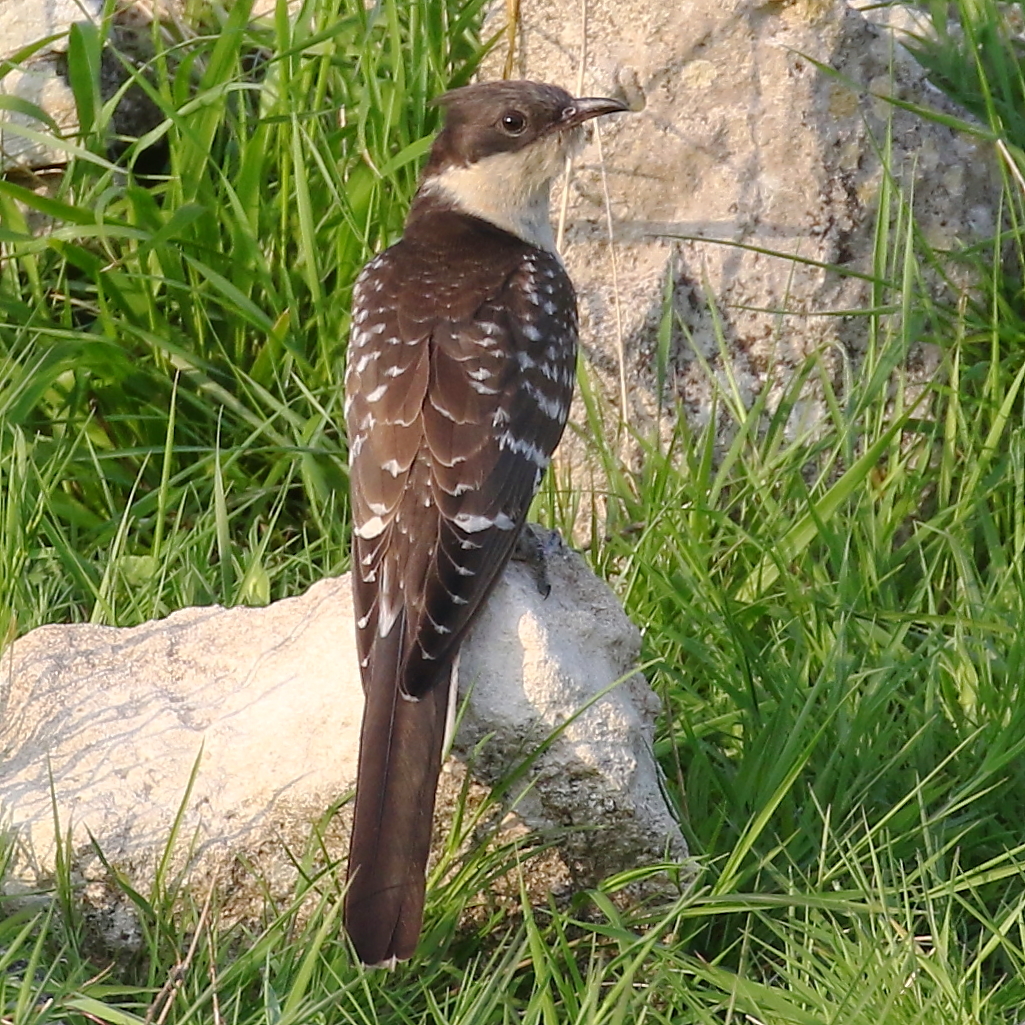
The first half of the month was enlivened by some rare and scarce visitors to my adopted home county of Dorset - Kentish Plover, Black-winged Stilt and Red-rumped Swallow were all good birds, but top billing went a to dashing female Red-footed Falcon at nearby Morden Bog and a Great Spotted Cuckoo on Portland - a Dorset tick for me and many others. It gorged on Brown-tail moth caterpillars, which can be found in huge numbers at Reap Lane, for several weeks.
Red-footed Falcon, Morden Bog: my photo of the month for May
Great Spotted Cuckoo, Portland
Red-rumped Swallow, Lodmoor
Kentish Plover, Ferrybridge
Lepidoptera loomed quite large in my life in 2016: as well as being the first spring in which I had the opportunity to put my new lens through its paces photographing these smaller subjects, I steered an Action Plan for Pollinators through to adoption at Dorset County Council - a small but important attempt to boost the prospects of our declining butterflies, moths and other pollinating insects. Later in the year, some wildflower verges we had created as part of this got a hugely positive reaction from the public - the first time in my twelve year career in local government when the compliments in my inbox have outstripped the complaints! But back to May, which saw the emergence of many sought after species around Dorset's butterfly hotspots:
Duke of Burgundy, Cerne Abbas
Green Hairstreak, Cerne Abbas
Small Blue, Portland
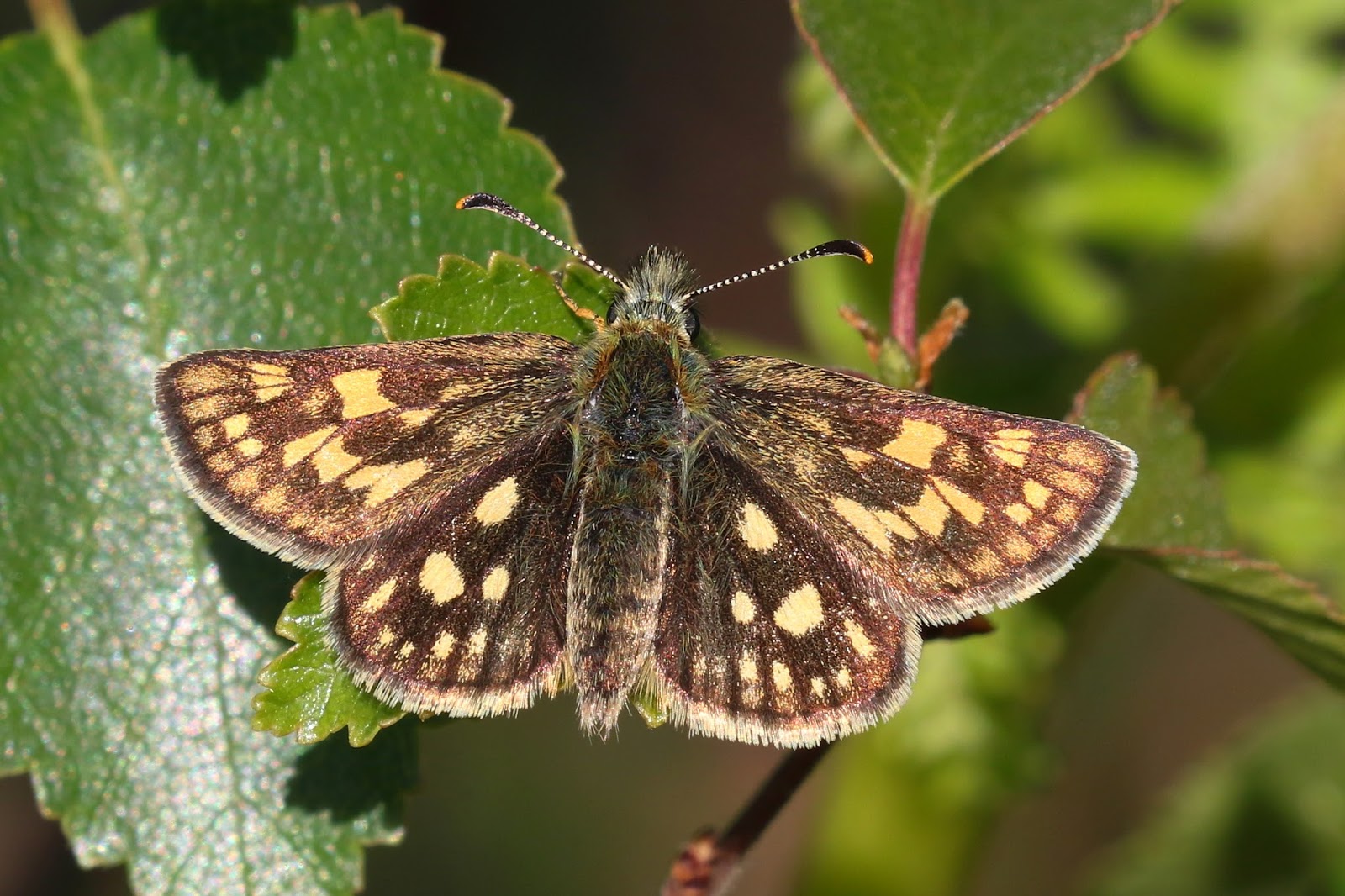
Chequered Skipper - a rarity in Britain restricted to a few sites in north west Scotland - we visited one at Allt Mhuic on the way south from a trip to the Outer Hebs
May ended with one of my most epic and enjoyable adventures of 2016 - a three day trip to the Outer Hebrides with David Bradnum and Paul Welling. We made this mammoth journey to pay homage to the unprecedented spring occurrence of a Black-billed Cuckoo from the Americas and, having done so, to appreciate the dramatic landscapes, the breeding waders and other wildlife of North Uist, South Uist and Benbecula:
Black-billed Cuckoo, North Uist: bird of the month for May
Corncrake, North Uist
Redshank, Outer Hebrides
Female Red-necked Phalarope, Outer Hebrides
One of the highlights of the year and the furthest I travelled in 2016. Fortunately it came at the start of a week off providing for a leisurely stay to appreciate the breeding birds on the Hebrides as well as the vagrant Cuckoo - I would have had neither the energy nor the inclination to just 'smash and grab' the rarity in such a memorable location. And no, Mr Trump, it would not be a good place for a golf course...

Monday, 1 June 2015

A wader week

My travels over half-term enabled me to catch up with some common and some rarer members of my favourite family of birds: the waders. Diverse, colourful, and capable of amazing migrations, and, in the case of rare ones, generally untainted by the possibility of escapes from cages like songbirds or collections like the waterfowl!
This stunning summer plumaged Curlew Sandpiper was at Titchfield Haven in Hampshire (#192)
Superb views from the Meon Shore hide
An arctic breeder, Curlew Sandpiper winters mostly in Africa
Also at Titchfield Haven, the Greater Yellowlegs, a very rare vagrant from America - I couldn't resist going back for seconds
The plumage has advanced significantly since I first saw this bird in April. Compare the bolder, darker streaking on the head, neck and flanks with...
...this shot taken on 11th April. They breed in the boreal regions of Canada and Alaska and migrate as far south as South America
Also along the coast from the Yellowlegs, this tiny Red-necked Phalarope (#193) spent a day at Sidlesham Ferry Pool in West Sussex. Here with a much larger Black-tailed Godwit
I arrived late in the day when the bird was distant and against the light. A few pairs breed on the northern and western isles - one fitted with a geolocator clocked up a 16,000-mile round trip during its annual migration, flying from Shetland across the Atlantic via Iceland, south down the eastern  US, across the Caribbean and ending up off the coast of Ecuador and Peru
On leaving Bempton last week, I went to Frampton Marsh in Lincolnshire where a pair of Black-winged Stilts had appeared
This is the female
And here the pair - male on the right. A widespread species across Europe, Asia and the Mediterranean, 'our' birds are thought to come from populations on the near continent
Commoner waders at Frampton included Lapwing...
This Lapwing was at Titchfield Haven
Redshank, Frampton Marsh. A Temminck's Stint and a White-rumped Sand passed through the day after I did!
Avocets seemed to be doing well wherever I went - they were breeding successfully at Blacktoft Sands in Yorkshire, Frampton Marsh in Lincs and Titchfield Haven in Hampshire
This bird at Titchfield, photographed from the same hide as the Curlew Sandpiper at the start of this post, appeared to be making a nest scrape