Showing posts with label Song Thrush. Show all posts

Tuesday, 29 October 2019

Last day on Scilly

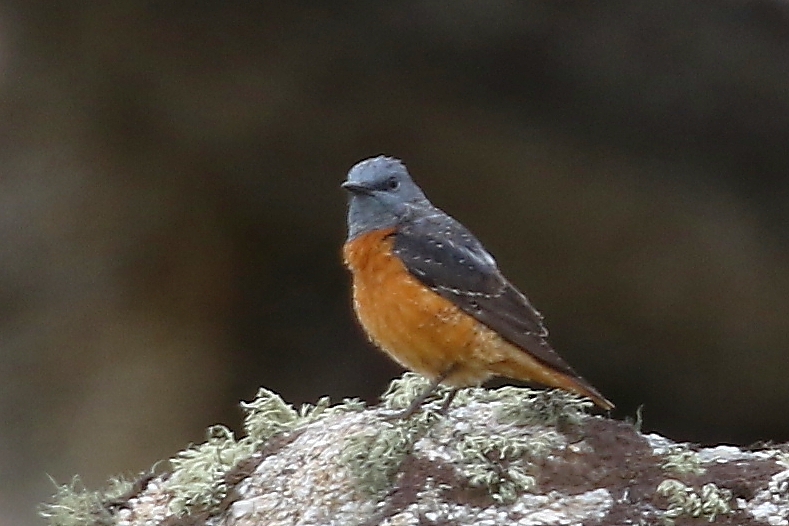
My third and last day of a short trip to the Isles of Scilly saw me resist the temptations of island hopping to stay on St Mary's. The day began as had the previous two with a quick trip to the Garrison for views of the Blue Rock Thrush. From there I meandered around Peninnis for the first time in years, reminiscing as I went about seeing my first Siberian Stonechat, a Short-toed Lark and an ill-fated Chough which spent a few days in the fields on the flanks of the headland in 2012.
Female Stonechat, Peninnis
Male Stonechat, Peninnis
From Peninnis I sauntered through the idyllic Old Town churchyard and on to the Standing Stones field where a male Brambling had joined the House Sparrows at the feeding station set up by the Isles of Scilly Bird Group. After this I strolled through Lower Moors, gaining another brief view of Monday's Spotted Crake, and up the road to Salakee, where the Citrine Wagtail which turned up on my first day was still hanging out with the cattle.
Teal, Higher Moors
Greenshank, Higher Moors
Continuing to Higher Moors there was time for a chat with some birding pals from the mainland and, bird-wise, nothing more exciting than a small flock of Greenshank. My energy levels were flagging at this point and with just 90 minutes to go before last check-in on the Scillonian III, I figured a return to Hugh Town was probably my best option.
Male Brambling, St Mary's
Song Thrush, Old Town churchyard
At this point my phone alerted me to news of a Spotted Sandpiper on the islands - I assumed the St Agnes bird which I had failed to see the previous day had returned but on looking again this time it (or another) was at Watermill, a 15 minute walk from where I was standing. Quickening my pace, I took the direct route through Holy Vale, where we spent several happy October holidays when the children were younger, past the refurbished Borough Farm, and down Watermill Lane towards the cove where the Sandpiper had been reported.
Spotted Sandpiper, Watermill
Juveniles of this species resemble Common Sandpiper but have more yellowy legs, shorter tails and plain tertial fringes
As I approached the beach I heard a Sandpiper calling, and on reaching the strandline the birders assembled there informed me that this must have been the Sandpiper flying off around the corner to the next cove! With just 15 minutes to go before I had to leave to board the Scillonian, I was not optimistic about it returning, but after 14 minutes it did just that, giving me a minute to take some quick pictures before a brisk walk back to town. It was a poetic ending to the trip as this was the only target bird I had missed up to that point - and a reminder of the promise and beauty of the islands which provided many happy memories of my previous visits.
The Spotted Sandpiper picked insects off the rocks in the background
A good bird to end a successful trip

Tuesday, 13 March 2018

A look back at the beast

In the excitement of blogging about patch Hawfinches, I almost forgot to recount everything else I saw during the cold snap in the Swineham/Wareham area a couple of weekends ago. In truth, there was nothing spectacular, but plenty of common or scarce species were turning up in unusual locations, some surprisingly easy to see as the harsh conditions forced them into gardens or otherwise into the open in the search for sustenance. The highlights were a Firecrest in my postage stamp of a town centre garden, and an icicle-clad Spoonbill on the main gravel pit at Swineham. Sadly, two of this last species were found dead in recent days in Dorset: one had presumably succumbed to the cold, the other, which had two broken legs, was thought possibly to have snapped them trying to free itself from ice. An illustration of the harsh impacts of the freeze which, judging by the death toll chronicled on social media, befell many individual birds over the course of a few days. And a reminder to put some food out for the garden birds if the coming weekend's forecast of snow materialises.
Adult Spoonbill - I have never seen one with icicles on the breast feathers.
Black-tailed Godwit, one of several hundred on the frozen fields at Bestwall.
A few dozen Curlew were also present.
Fieldfares were in the gardens of Wareham.
Redwings were everywhere, including my town centre garden and this one in the town's churchyard.
Blackbirds were among the other thrushes in the churchyard.
Normally shy Song Thrushes seemed unusually bold in the cold.
Not a great view of a Water Rail - but any view is a good view in the thick reeds at Bestwall. This was one of three of this species out in the open.
This was the only reasonably sharp photograph of the Firecrest in my garden I could manage, snatched through foggy glass with shaking hands!
The first time I have seen ice floes coming up the River Frome!
Swineham Point inundated by a very high tide - Redshanks, Skylarks, Meadow and Rock Pipits were attempting to feed on the ice here.

Within hours of the last snowflake, the onset of spring seemed to resume: temperatures were back up to double figures and this Dunnock was belting out song as if to declare it had survived the harsh conditions.

Monday, 17 April 2017

Operation Daymark

The Easter Bank Holiday weekend provides a unique opportunity for the lover of rare birds: an uninterrupted four day window at a promising time of year to stress out with the added attraction of heavy traffic. Whilst I had idly clocked news of a Rufous-tailed Rock Thrush on the Isles of Scilly, I hadn't really considered going to see it until, not for the first time this decade, a text message from David Bradnum gave me the kick in the rear I needed to start thinking about it.
Rock Thrush, Bread and Cheese Cove, St Martin's
A red, white and blue riot of colour
Neither of us fancied day-tripping it, preferring an overnight stay to make the most of the islands and provide a second shot at seeing the bird if we were unsuccessful on the day of our arrival. Whilst not impossibly complicated, the logistics weren't straightforward: tickets for Scillonian III would be simple enough to procure, accommodation on Scilly during one of the busiest weekends of the year less so. But after just a few phone calls (Scilly's tourist industry has yet to get the hang of on-line booking), we managed to find a reasonably priced twin room.
The rufous tail seen clearly in flight
Note the white patch on the back of the Rock Thrush
That just left the small matter of getting from St Mary's to Daymark on St Martin's, where the Rock Thrush had spent the previous week. We were due to disembark the Scillonian at 1200 and an inter-island launch was due to leave for St Martin's at 1230, so that shouldn't be a problem either. All that remained was to secure permission to go from respective loved ones, and with that done, Operation Daymark was good to go.
Song Thrush: commoner than Rock Thrush on Scilly, and more confiding too
Daymark on St Martin's viewed from St Mary's
David arrived in Dorset from Essex for a few hours kip at our place and an 0400 start on Good Friday saw us arriving in Penzance in plenty of time to make the Scillonian. After possibly the smoothest crossing I have experienced, we made good time and shortly after midday were at the front of the queue on the quay for the boat to St Martin's. The latter island was hosting a music festival and we watched in dismay as suitcases, guitars and violin cases were unloaded carefully, and therefore excruciatingly slowly, from the Scillonian to a first, second, then third waiting boat - and all by hand. 1230 came and went, and when what appeared to be a drumkit appeared, it was too much for one enterprising birder who chartered a jetboat and offered us two seats on it. Once he had retrieved the hand we had bitten off, we were on our way.
Greenshank: the only wader present at Lower Moors on St Mary's
Wheatear: one of several on Peninnis
The advantage of the jetboat was not just the ability to jump the queue, but also to reduce the travel time and provide another half an hour on St Martin's before we needed to make the return journey. Unfortunately, the low tide meant that the disembarkation point was at the opposite end of the island to the cove where the bird was being seen.
White Wagtail on the quay at Hugh Town
Always a smart bird to see
The best part of half an hour later we arrived breathless and perspiring to catch up with more sprightly souls who had set a blistering pace across the island. Fortunately for all of us, islander Will Scott had the bird staked out in Bread and Cheese cove and shortly after arriving we were enjoying good views as the bird fed on the heather clad slopes and rocks around the cove.
Scilly Wren
This bird was singing on St Mary's
A few late-comers who had not joined us on the jetboat arrived even more breathless and sweaty, but they too enjoyed views of the bird before it headed to the other side of the cove. The walk back to the boat was altogether more relaxed and there was even time for a bit of birding back on St Mary's after the all the yomping around St Martin's.
Rock Pipit at Porthloo
Another songster

After the excitement of Good Friday, Saturday was uneventful but enjoyable on St Mary's. A few dozen Manx Shearwater and a single Common Dolphin provided interest on the way home. A fairly epic twitch then, with thanks to David for driving and providing the motivation to make the effort.
Manx Shearwater from Scillonian III

Rock Thrush - ordinarily at this time of year this bird would be breeding in southern European mountain range above the 1500m line - incredible to see it on a Scilly beach

Monday, 20 April 2015

Also on Scilly...

The Great Blue Heron eclipsed most other news from Scilly this weekend, and while we missed what looked and sounded like a fantastic day on Sunday, there were still a few scarce species and migrants to catch up with after we left the Heron on Bryher on Saturday lunchtime. Best of these was probably a Jack Snipe which bobbed comically outside the ISBG hide at Lower Moors - on the pool which has had the privilege of playing host to both of Britain's Great Blue Herons.
Jack Snipe, Lower Moors (152nd species photographed in Britain this year)
Jack Snipe
Common Snipe for comparison - bill length and size the most obvious differences
As well as being on the first boat over to Bryher on Saturday morning, we were also on the first boat off at 1330, having spent several hours admiring the Heron. Although tempted by Tresco's Black Duck, it would have complicated the logistics and involved travelling back in an open boat as opposed to the covered luxury of the Falcon, so we headed straight back to St Mary's for a few hours leisurely birding before our return flight. If there were Scilly Shrews on Porthloo Beach they were keeping their heads down, though Wheatear, Whimbrel and White Wagtail provided an alliterative trio of birds to admire.
Wheatear, Porthloo
Whimbrel (#153), Porthloo
White Wagtail, Porthloo
Moving on to Lower Moors I saw my first Sedge Warbler of the year, hopping around the reed stems of Shooters Pool. I heard one on the way to work on Friday but didn't have time to stick around to look for it. A Heron dropped in out of nowhere but sadly it was not the Great Blue returning, just a regular Grey Heron. But it did give some idea of how awesome the views must have been for those fortunate enough to see the GBH from this spot.
Sedge Warbler (#154), Lower Moors
An obliging bird
The sound of the camera caught its attention
I have travelled to the islands many times in autumn, but it was the first time I had been there early enough in the year to see Bluebells. There was a good display of these and wild garlic in several places, the Old Town churchyard, where we failed to find a Wryneck, providing one of the best, along with close views of Song Thrushes, which are famously tame on Scilly, and the local Blackbirds.
Blackbird, Old Town Churchyard
Bluebells
Song Thrush, Old Town Churchyard
All too soon it was time to head back to the airport for our return flight. Sitting in the departure lounge tired, wind-blasted but happy, it was quite a contrast to the emotions of doing the same on the mainland 10 hours earlier. We approached Lands End in glorious sunshine, a fitting end to a successful and very enjoyable day.
Grey Heron, Lower Moors
Compare to the Great Blue Heron in the previous post
Swallows at Porthloo found rich pickings over a smelly bit of seaweed (#155)
Their flight speed dropped as they approached enabling a few shots to be taken