Showing posts with label Black-tailed Godwit. Show all posts

Tuesday, 13 March 2018

A look back at the beast

In the excitement of blogging about patch Hawfinches, I almost forgot to recount everything else I saw during the cold snap in the Swineham/Wareham area a couple of weekends ago. In truth, there was nothing spectacular, but plenty of common or scarce species were turning up in unusual locations, some surprisingly easy to see as the harsh conditions forced them into gardens or otherwise into the open in the search for sustenance. The highlights were a Firecrest in my postage stamp of a town centre garden, and an icicle-clad Spoonbill on the main gravel pit at Swineham. Sadly, two of this last species were found dead in recent days in Dorset: one had presumably succumbed to the cold, the other, which had two broken legs, was thought possibly to have snapped them trying to free itself from ice. An illustration of the harsh impacts of the freeze which, judging by the death toll chronicled on social media, befell many individual birds over the course of a few days. And a reminder to put some food out for the garden birds if the coming weekend's forecast of snow materialises.
Adult Spoonbill - I have never seen one with icicles on the breast feathers.
Black-tailed Godwit, one of several hundred on the frozen fields at Bestwall.
A few dozen Curlew were also present.
Fieldfares were in the gardens of Wareham.
Redwings were everywhere, including my town centre garden and this one in the town's churchyard.
Blackbirds were among the other thrushes in the churchyard.
Normally shy Song Thrushes seemed unusually bold in the cold.
Not a great view of a Water Rail - but any view is a good view in the thick reeds at Bestwall. This was one of three of this species out in the open.
This was the only reasonably sharp photograph of the Firecrest in my garden I could manage, snatched through foggy glass with shaking hands!
The first time I have seen ice floes coming up the River Frome!
Swineham Point inundated by a very high tide - Redshanks, Skylarks, Meadow and Rock Pipits were attempting to feed on the ice here.

Within hours of the last snowflake, the onset of spring seemed to resume: temperatures were back up to double figures and this Dunnock was belting out song as if to declare it had survived the harsh conditions.

Tuesday, 16 January 2018

A day out with the buoys

On the Saturday before last I took the boat to Brownsea for a rare winter landing trip. This is usually a great way to get close to waders in front of the hides, and in the days before Christmas, my old friend Hamish Murray, now Dorset Wildlife Trust's Conservation Officer, had been getting great photographs of the long-staying Stilt Sandpiper which had relocated there after extended stays at Lodmoor and Middlebere.
Great Northern Diver, Poole Park. Bonus points for naming the species of crab.
Great Northern Diver, Poole Park 
Unfortunately, on the day of my visit one of the pumps which manages the water levels had broken (pull your finger out, Hamish ;-), and the only waders on the unusually full lagoon were huddled way out on the islands in the middle. Compensation for this slight disappointment came in the form of plenty of good birds, a hunting Peregrine, the resident Red Squirrels and, best of all, the discovery of a Great Northern Diver crabbing the shallows in the unlikely location of Poole Park lake, which I had checked out before boarding the Brownsea boat. I was short of both time and light on that occasion, so I returned this Sunday for another look. It seemed that my luck had run out as park staff were collecting buoys from the Diver's favoured area, pushing it out to the centre of the lake.
Peregrine hunting on Brownsea lagoon, 6th June
Record shot of female Velvet Scoter south of Brownsea, 6th June
After scanning Holes Bay and finding it relatively empty, over a spot of lunch I decided on a change of scene and headed for Ferrybridge, a favourite area for birding at this time of year. I checked out Portland Harbour and photographed some distant Black-necked Grebes before heading for Chesil Cove, where Black Redstarts have proven photogenic in each of the last two winters. On arrival some passers-by suggested I look out for a whale or dolphin in the Cove which they had seen a few minutes earlier, and which they thought might be dragging a buoy from one of the many lobster pots in the area.
Red Squirrel, Brownsea Island
Red Fox, Holes Bay
I scanned the Cove and saw nothing, but looking further out I eventually picked up what looked like an orange buoy creating a bow wave as if being dragged through the water. Then at some considerable distance I saw a cetacean blow, and a small dorsal fin break the surface. It came up a couple more times and, bearing in mind my track record of not being able to identify things off the West Cliffs of Portland, I thought I had better take a photograph in the hope that would help.
Drake Wigeon, Holes Bay
Wigeon, Holes Bay
Within minutes a work colleague who volunteers for British Divers Marine Life Rescue arrived to follow up reports of a whale, suggesting that it had been seen by others before my arrival at the Cove. I checked my photos from which it was clearly a whale of some description while my colleague phoned an update to BDMLR based on what I had seen. We scanned some more but the whale did not resurface. I phoned Martin Cade at the Portland Bird Observatory to encourage him to keep a look out as the whale seemed to be heading broadly away from us and in the direction of the Bill. Sadly I did not see it again, and neither did Martin from a vantage point on the West Cliffs. By now the light was fading and I was still not quite sure what I had seen, but studying the photos through my inverted bins the shape of the dorsal fin started to remind me of the Humpback Whale I saw last February in Devon with Steve Smith. However, I lacked both the expertise and the reference material to be able to eliminate other species on the strength of that. On returning home and emailing the photos to various experts, however, my suspicions were confirmed when they positively identified it as a Humpback Whale.
Black-necked Grebe, Portland Harbour
With the identification confirmed, I posted some record shots on Twitter and, Twitter being Twitter, copped a bit of flack for not putting the news out sooner, based, I trust, on legitimate concern for the welfare of the whale. So for the record, I had the whale in view for just a few minutes, and within minutes of my sighting, BDMLR, who were exactly the people who needed to know about it should some kind of rescue mission be required, were on the scene having already heard the news from elsewhere. Given that the whale appeared to be heading strongly out to sea, and that the light was fading, there was not much more they or anyone else could have done to come to the whale's aid that afternoon.
Dark-bellied Brent Goose, Portland Harbour
I could perhaps, with hindsight, have got news out more quickly of a 'brief sighting of cetacean sp.' which, at that point, I could neither see nor identify - but if it's any comfort, anyone racing down to the Cove on the strength of that would have been disappointed. Anyway, let's hope it has freed itself and comes to no harm. There has been a lot of local media interest (best Q&A thus far - Interviewer: 'How big was it?'; me: 'Err, whale-sized?'.) and I asked the journalists I spoke to to give prominence to the marine conservation organisations like Marine Life and BDMLR who can give the best advice on reporting any future sightings. I am pleased to say most of them have done that thus far.
My distant record shot of the Humpback Whale - described (with some justification) by the breakfast DJ on Radio Solent as 'underwhelming' in photographic terms. A tad ungrateful though as I gave permission for him to use it on his website!
Black-tailed Godwit, Holes Bay

Tuesday, 14 February 2017

Wader wonderland

Almost forgot about these, languishing in a dusty corner of the hard drive labelled 'January'. Some cracking waders from around Poole Harbour last month.
This summer plumaged Bar-tailed Godwit was at Shore Road - the same bird I photographed this time last year
It has spent many winters now returning to this site, standing out among its more conventionally plumaged brethren
Bar-tailed Godwits, Shore Road
Compare to the more plain-backed Black-tailed Godwit 
This bird was feeding alone and at close range in Poole Park
Black-tailed Godwit
Oystercatcher, Shore Road
A blizzard of Avocets at Middlebere (click to enlarge)

Tuesday, 17 January 2017

Birthday treats

It was my birthday recently - a stuttering but undefeated innings of 48, in case you were wondering. To celebrate almost half-a-century of under-achievement I cleared my professional decks, booked the day off work and did some birding around Poole Harbour. The children were at school and Claire was at work, affording me the luxury of neglecting the entire family to go looking for birds without guilt.
Lesser Yellowlegs at Lytchett Bay
Green-winged Teal, just leaving Lytchett Bay
Redhead Smew distantly in Holes Bay
The once fierce competition between Lytchett Bay and Swineham as Poole Harbour birding locations, a fire stoked in these pages on more than one occasion in the past, has tailed off somewhat in recent years. Lytchett has gone from strength to strength under sympathetic management by the RSPB, being diligently scoured by Top 10 Patchwork Challengers (impressive, though I still think Patchwork Challenge sounds like a needlecraft contest). Swineham has gone downhill under a less wildlife-friendly regime, being wilfully neglected by feckless regulars like yours truly. So much so that I felt barely a flicker of shame in shunning the latter for the former to go looking for Lytchett's two long-staying winter rarities from the Americas: a Lesser Yellowlegs and drake Green-winged Teal.
Dark-bellied Brent Geese at Baiter Park
Coot, Poole Park
Drake Goldeneye and Red-breaster Merganser were out in the middle of Poole Park lake
The Yellowlegs was easy enough, sitting out nicely with a Redshank for comparison, the only two medium-sized waders on one of the pools. The Teal required a bit more luck: it flew off just after I arrived, but not before a kindly soul had let me have a quick squint at it through his scope, hence the dodgy record shot above, hurriedly snapped as it pelted away. Around the corner a returning redhead Smew was in Holes Bay for its third winter, while Poole Park held a few photogenic fowl as always. I caught up with a trio of Great White Egrets slightly further afield at Longham Lakes before heading over on the Sandbanks ferry to complete a circuit of the Harbour.
A lone Black-tailed Godwit was on the shore of Poole Park lake
Little Egret, Poole Park lake
Three Great White Egrets at Longham Lakes
The last hour of daylight was spent at Studland, where the raucous calls of a couple of Sandwich Terns were a cruel reminder of just how far away is spring, and the even more raucous calls of the local Ring-necked Parakeets were an equally cruel reminder of just how far away and warm is their native India.
Ring-necked Parakeet, Studland
Sandwich Tern, Studland
I would say watching the sun go down at Studland completed the day, but that wasn't really the end of it as on arriving home there was a birthday present to play with: the US Capitol building from the Lego Architecture range. Quite repetitive assembling the orderly lines of neoclassical columns and other fiddly bits, but ridiculously satisfying, a pure indulgence, and, I am reliably informed by the teenager of the house, substantially more socially acceptable than making an Airfix model. The perfect gift for the middle-aged man-boy in your life.
The US Capitol Building courtesy of the Lego Architecture range - George Washington laid the first brick. If you listen carefully this model makes a strange whirring noise: the sound of a miniature George turning in his grave.

Tuesday, 3 January 2017

Suffering for your art

The first day of 2017, normally a red letter day in the birding calendar, was a bit of a washout with heavy rain causing me to abort a planned afternoon visit to Swineham. Well it's the 'post-truth' era so much easier to conclude it would be birdless from the comfort of the armchair than to actually go there and prove it. So here are a few pictures from before and after that from two of Dorset's urban birding hotspots - Lyme Regis, which I visited to see my godsons last Friday, and the built up north shore of Poole Harbour, around which I strolled with the family yesterday. The sun shone mightily at both, and photographs were the inevitable result.
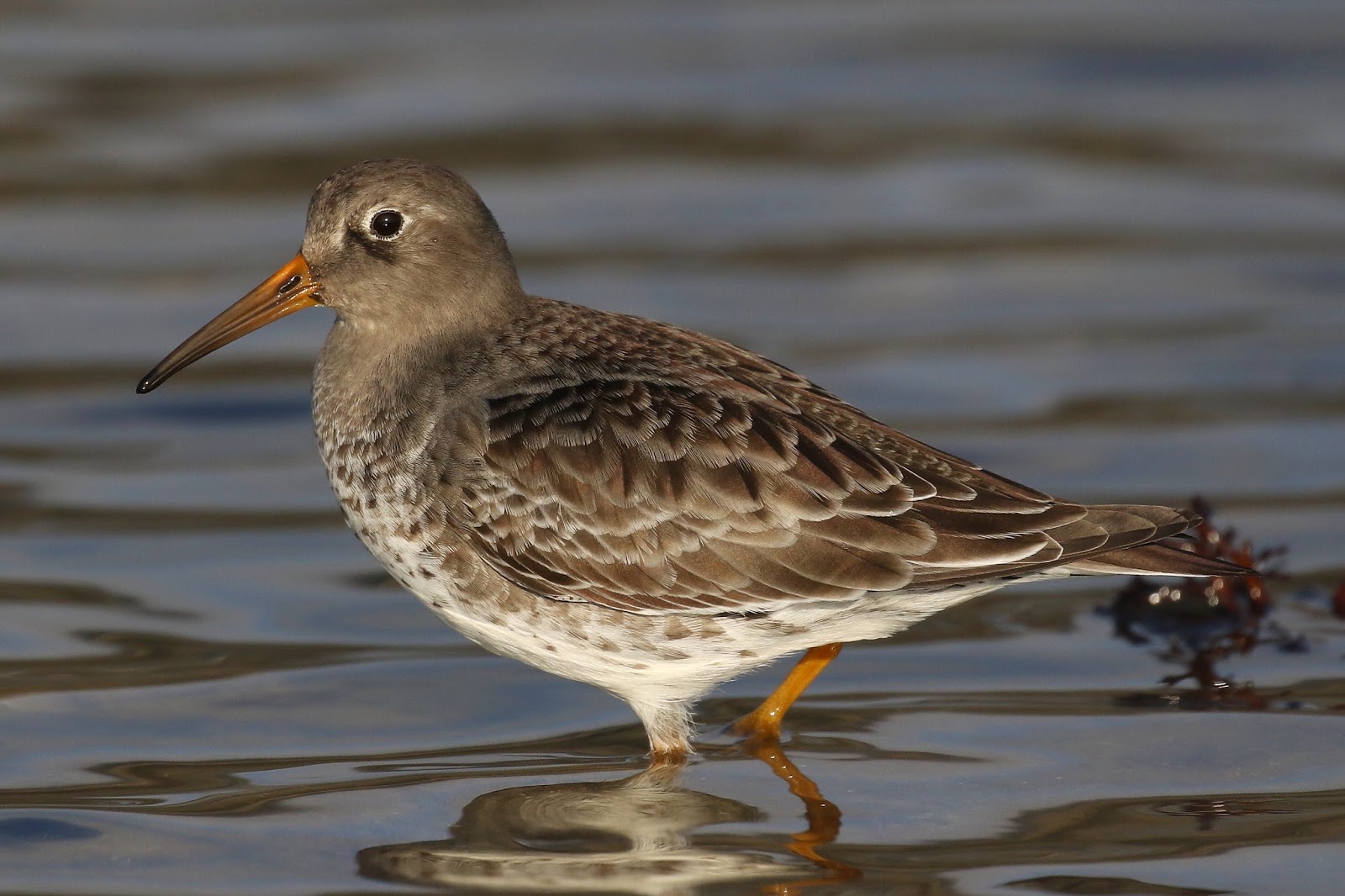
Purple Sandpipers often roost on The Cobb at Lyme Regis but they are either distant there or right underneath you making photography difficult - but it was low tide so I caught up with a flock on a rocky shelf at the beach 
The snag was they were feeding on a ledge surrounded by six inches of water and I was only wearing my 'about-town' shoes. So off they came enabling me to wade through the freezing water, lacerating my feet on the barnacled rocks. Well you have to suffer for your art...
Not often you get to see the beautiful purple iridescence on a Purple Sandpiper - but it can be seen on this one (click to enlarge)
A careful approach allowed me to get pretty close
A pair of Dipper were in the Mill stream which runs through the heart of town
A curtsying courtship display with a flash of the white eyelid
One of very few locations in Dorset where Dipper can be seen

Grey Wagtail also frequent the same stream

A misty Golden Cap from Lyme Regis beach
Mediterranean Gulls were also on the beach at Lyme Regis
No longer a rare sight on the Dorset coast
Ethereal sunset looking west from Chideock - we could see the reflection but not the sun itself
Black-tailed Godwits were present in large numbers at Upton Country Park yesterday - the first sunny day of 2017
Also a large Dunlin flock out in Holes Bay
Mixed flock of Dunlin and Blackwits against the backdrop of urban Poole
A good selection of wintering duck were in the bay including this smart drake Pintail
Blue Tit in the woodland at Upton CP
Finally from Upton a backlit male Stonechat
Earlier in the day saw me on the groynes at Sandbanks where a patient approach allowed me to get close to another favourite wader: Sanderling
Sanderling at Sandbanks
The roosting birds tolerated my careful approach and a less careful approach from a couple of dogs, but ultimately a jetski put them to flight - unfortunately an occupational hazard for the Sandbanks Sanderlings