Showing posts with label Bearded Tit. Show all posts

Friday, 18 January 2019

Around the world

The head of the household was away recently leaving her offspring and I to make our way around the culinary world without the usual level of dietary guidance to constrain our choices. So Monday was Italian night (BBQ chicken pizza), Tuesday the turn of Mexico (Chilli con Carne), Wednesday a 'home' fixture in England (steak pie and three veg), while Thursday saw us indulge a taste of China (sweet and sour chicken). And lest anyone accuse me of undue sloth, I should point out that only one of these was procured in take-away form. When herself, a vegetarian, returned from a five day trip to New York with the Book Club (!) at the end of the week, we had to confess that Veganuary had not been going so well.
Ring-necked Duck, Radipole Lake
All this globe-trotting reminded me of a few visitors from afar which could be found in Dorset during the first few days of 2019. On New Year's Day I headed down to Weymouth with Steve Smith to see if one of them, a Ring-necked Duck from the Americas, was still present. I first saw this bird before Christmas when it was in a drab brown first winter plumage, but by the turn of the year it had smartened up somewhat and was starting to look more like an adult drake should. We located it at the end of the Radipole Lake nature reserve and enjoyed close views in the sunshine.
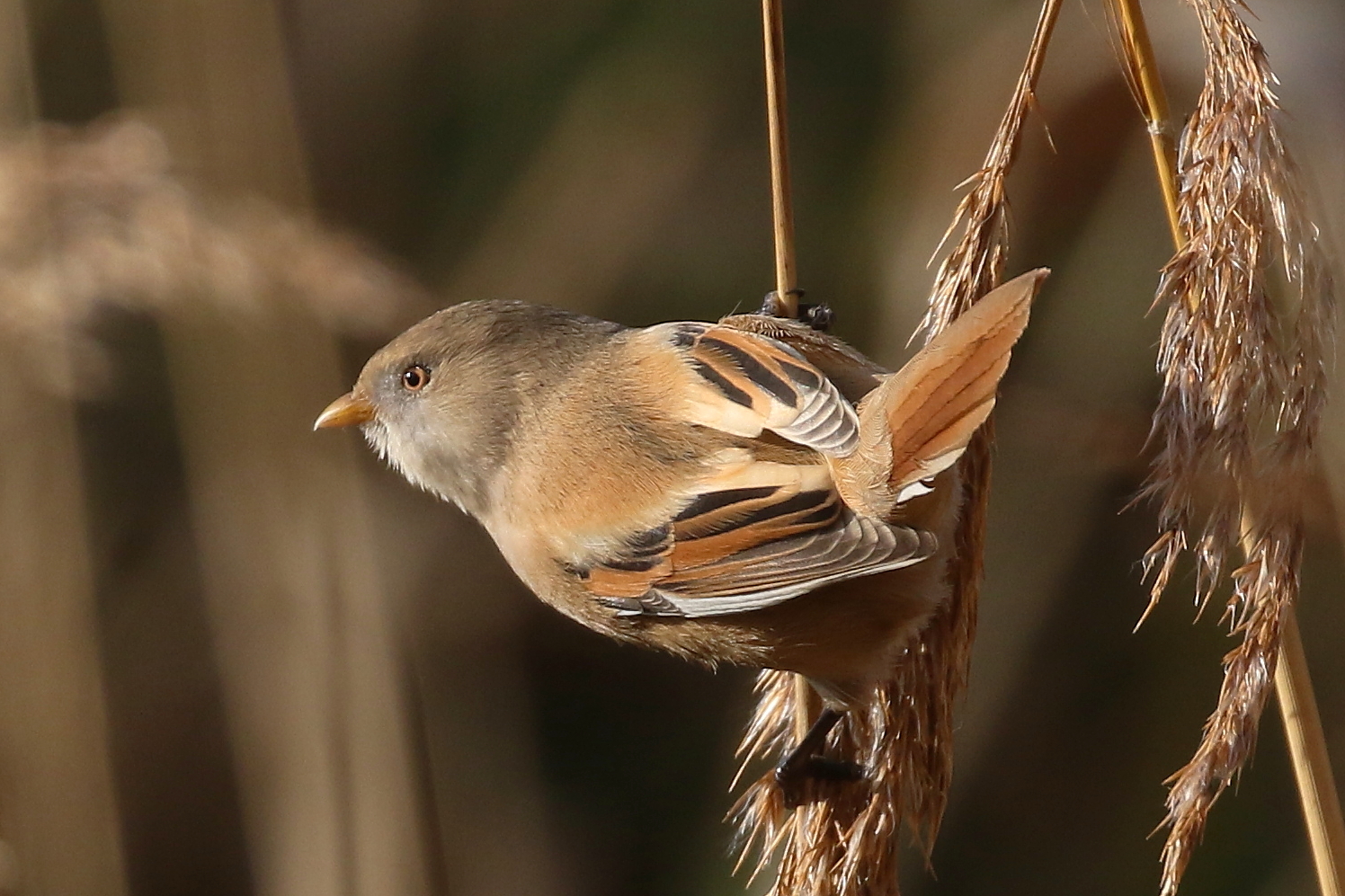
Bearded Tit, Radipole Lake
The other notable wanderer was a juvenile White-fronted Goose which took up with a flock of Greylags before Christmas and which had been seen periodically around my local patch at Swineham and Bestwall. Apart from Greylags, the other grey geese - White-fronted, Pink-footed and Bean - are all quite hard to catch up with in Dorset. Judging by the colouration of our wintering White-front, it will have come from the general direction of Russia, being of the sub-species albifrons. I had seen this bird distantly in flight with Greylags on a couple of occasions, identifiable by its small size compared to the rest of the flock, and eventually caught up with it on the deck at reasonably close range on nearby Bestwall.
White-fronted Goose, Bestwall

Sunday, 15 January 2017

Man about town

Urban birding has become something of a habit lately, and we are fortunate in Dorset to have a number of good options in this regard. Last weekend saw me pottering around a few more of the county's birding hotspots between Portland and Dorchester. First stop was Fortuneswell and Chesil Cove at the southern end of Chesil Beach, where a pair of Black Redstarts were flitting on the rocks - same time, same place as a pair last year. A trio of Eider Duck were the highlight of a quick scan of Portland Harbour before lunch with the ducks and gulls at Radipole Lake in Weymouth. There was just time to twitch a first winter male Rose-Coloured Starling on the rooftops of suburban Dorchester before heading back to Purbeck to see about 10,000 of its more familiar cousin, the Common Starling, come in to a spectacular roost at Studland's South Haven.
Male Black Redstart, Chesil Cove
Black Redstart, Chesil Cove
Female Black Redstart, Chesil Cove
Rock Pipit, Chesil Cove
Meadow Pipit, Ferrybridge
Eiders in Portland Harbour
Bearded Tit, Radipole Lake
Blackbird, Radipole Lake
Carrion Crow, Chesil Cove
Dunnock, Radipole Lake
Shelduck, Radipole Lake
Black-headed Gull, Radipole Lake
Common Gull, Radipole Lake
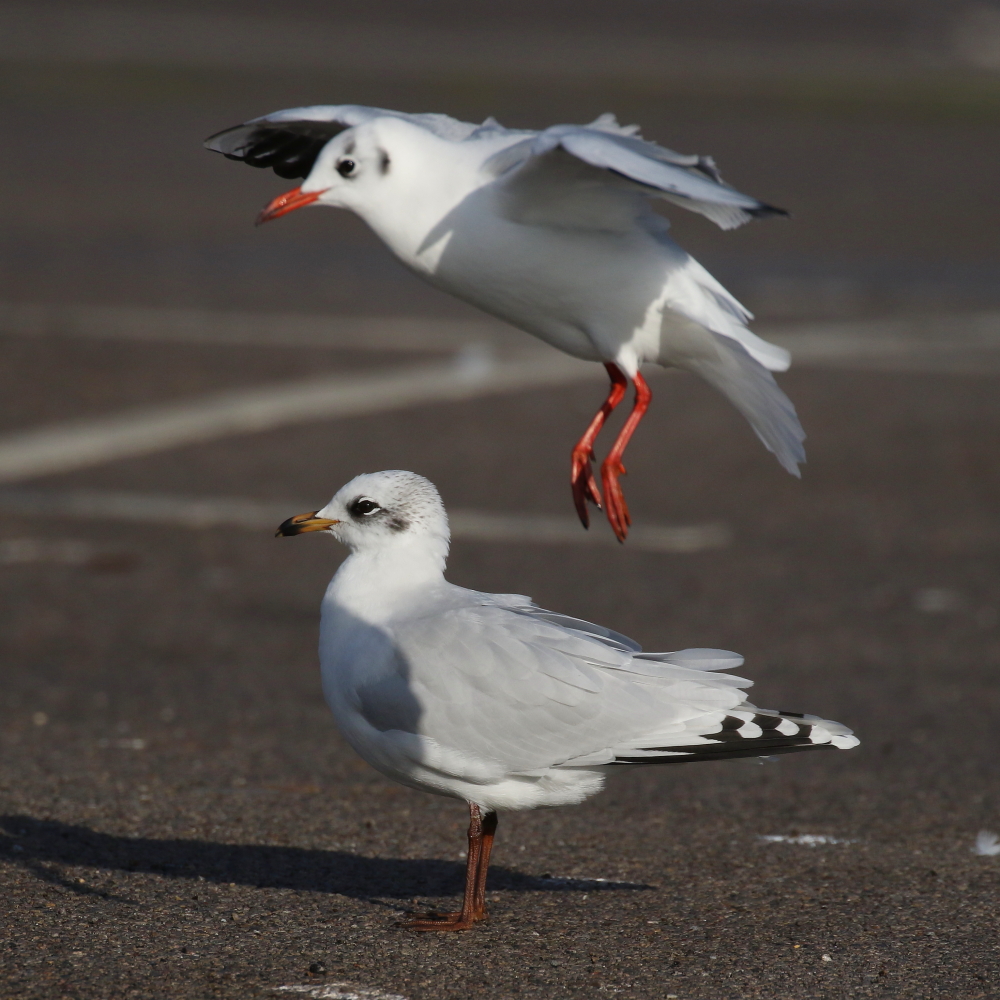
Mediterranean Gull, Radipole Lake
Med Gull with Black-headed Gull above
The drake Hooded Merganser still displaying at Radipole
Always a show-off

Male Marsh Harrier at Radipole
Moorhen, Radipole Lake
Feral Pigeon, Radiploe Lake
Rose-coloured Starling, Dorchester
Not looking so good after a bath
Starling murmuration at Studland

Tuesday, 27 October 2015

Visiting old friends

It's half-term so I've been visiting old friends. First up was Swineham, with whom I was pleased to reacquaint myself after a lengthy absence. Next came a trip to Lyme Regis to see my two godsons and their parents, old college friends.
Male Bearded Tit - Swineham, 25th October
Female Bearded Tit, Swineham 25th October
We took a walk along the impressive new coastal defences to the east of the town before climbing up the hill to watch the first half of Lyme Regis v Cullompton Town. The new sea wall appears to have come a bit late for Lyme FC, as the pitch slopes perilously seawards a couple of yards in from the touchline. The players had enough trouble controlling the ball without that to deal with: the match would best be described as a perfectly good game of running around spoilt by very occasional outbreaks of football.
Buzzard, Bestwall, 25th October
Chiffchaff, Swineham, 25th October
Monday saw us heading from one World Heritage Site, the Jurassic Coast, to another, the City of Bath, to meet up with a friend visiting from Australia, at a gathering which my god-daughter also attended. With all three godchildren thus met in the space of a few days, and their annual dose of spiritual guidance administered, it was time for some birding today.
Little Egret, Holes Bay, 27th October
Redshank, Holes Bay, 27th October
In previous years, the last week of October has given me the chance to see some pretty good birds: Eastern Crowned Warbler (2014), Hermit Thrush (2013), Stejneger's Stonechat (2012), and Steppe Grey Shrike (2011) to name a few. There's been nothing quite so exotic within reasonable striking distance so far this week, so I returned to my checklist to see what still needed snapping for the photo yearlist.
Poole Harbour from Baiter Park
Corfe Castle from Baiter Park
Turns out that Common Scoter and Oystercatcher were still on the wanted list, so I headed to Holes Bay where two of the former have spent the last few days. The Scoter, both drakes, were a good distance out at first but came a little closer in poor light. Oystercatcher was always going to be easy, though I'm not quite sure how I've managed to miss them so far this year. Hopefully there are a few more easy ones to dig out before the list grinds to a halt for the year.
Common Scoter, Holes Bay (#230th species photographed in 2015)
Oystercatcher, Holes Bay (#231)

Tuesday, 29 September 2015

Change of scene

Sunday saw me heading east over the border to Hampshire, Keyhaven Marshes to be precise. This is a great stretch of coastal lagoons and saltmarsh which has attracted some fine rarities over the years, and I have some fond memories of visiting here. Memorably, I chanced my arm to twitch a Lesser Sand Plover just two days before my eldest son was born. Fortunately, he didn't arrive early. The year before I saw my first Stilt Sandpiper here, and since then I have also caught up with Baird's Sandpiper and Semipalmated Sandpiper on the pools behind the seawall.
Long-billed Dowitcher: #225 for my photo yearlist
The Dowitcher on the deck
Kinder light than in the above flight shot
This was as close as the Dowitcher came while feeding, and it was always facing away unfortunately
With such a track record for American waders, the recent arrival of a Long-billed Dowitcher, one of our commoner trans-Atlantic visitors, was not a huge surprise. Needing to travel a bit further at this stage of the year to add to my photo year list gave me a good excuse to reacquaint myself with the area. Half a dozen Bearded Tits were pinging manically around the reedbed as soon as I stepped out of the car - a promising start.
Bearded Tit - male
Bearded Tit - female
The small flock would fly around before landing back in the reedbed
Here the male in flight
A short amble down the seawall to Keyhaven Lagoon brought the Dowitcher within view, and, when it woke up and moved from behind some other waders, within camera range. Grey Plover, Knot, Redshank, Black-tailed Godwit, Lapwing and Dunlin kept it company.
Black-tailed Godwit
Another Blackwit in winter plumage
Dunlin on the shore
Lapwing on the pools behind the seawall
My photos weren't terribly satisfying so I stuck around. It took an age for the Dowitcher to move, and I had returned to the car for lunch when it returned to the saltmarsh. This was enough to tempt me back and despite patiently waiting for a few more hours, the closest I got was when it flew over my head to commute between the lagoon and the saltmarsh.
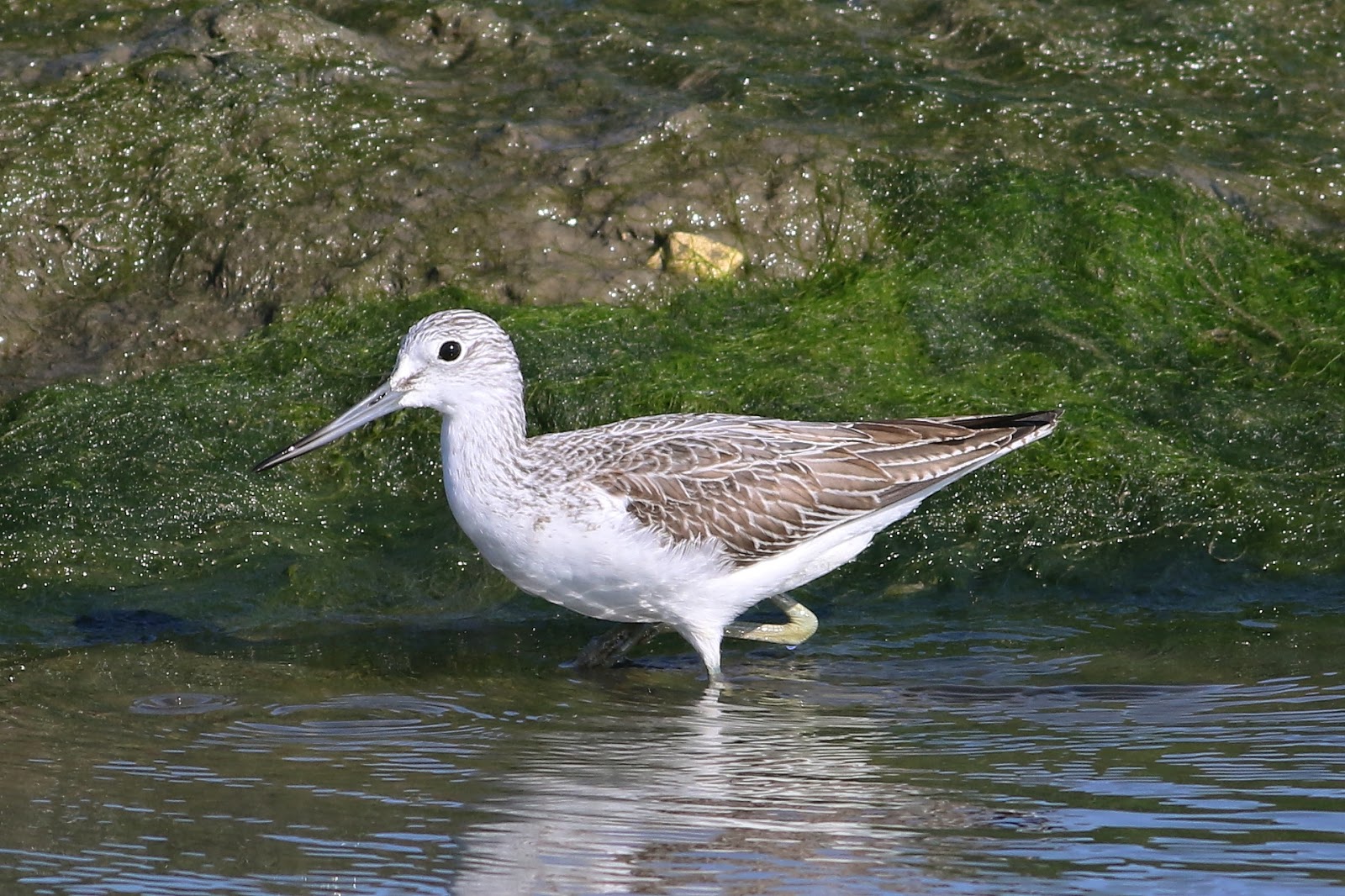
Greenshank: why couldn't the Dowitcher show like this?
Greenshank in flight
The distinctive black armpit of Grey Plover
Grey Plovers on Keyhaven Lagoon
So, while the Dowitcher didn't quite perform as hoped, it was a still a day well spent on a fine stretch of the south coast. The Isle of Wight provides a dramatic backdrop across the Solent, and with so much good habitat there is always a sense of promise at Keyhaven. I'm sure I will be back again soon.
Meadow Pipit
Meadow Pipit
Stonechat - a male
Hurst Castle and Lighthouse from Keyhaven
Male Bearded Tit