Showing posts with label Skylark. Show all posts

Saturday, 17 March 2018

Dropping in for a chat

I joined the ranks of the unemployed this week for the first time in 27 years. In case you were worried there, don't be, I wasn't fired from my job at the council in disgrace: fortunately, unlike many of my colleagues in cash-strapped local government, I was able to leave at a time of my own choosing, and I shall return to full-time employment as early as next week. But more on that later, the week between jobs provided an opportunity yesterday to get out and about with the camera.
Northern Wheatear at Maiden Castle yesterday
The morning light was better at the Bill earlier in the day, but the Wheatears more distant

A female was with the male on a dung-heap at Maiden Castle
A second, less well marked bird at Portland Bill
It being mid-March, as the first summer migrant birds had been trickling in all week, there was one species in particular on my mind: Wheatear. Rising early I negotiated the road works onto Portland and hit the Bill slopes just as they were being kissed by the rising sun. The immediate reward was two male Wheatears. Seeing these long distance migrants from Africa catching the morning light was a tonic and appeared as proof that spring was winning the battle with winter, despite the forecast for weekend snow. Skylarks singing overhead seemed to prove the point. An obliging male Stonechat on the slopes and a Black Redstart in the Bill quarries completed an attractive trio of chats for the morning.
Female Black Redstart
A presumed migrant in the Bill quarries
Male Stonechat - often obliging around the Pulpit Inn
Skylark at Portland Bill
A brisk southerly saw rough seas crashing around the obelisk at the Bill's southern tip, so much so that the Purple Sandpipers which are often directly below had been pushed up to almost eye level, providing unusually good photo-opportunities. They were rather more successful at dodging the spray than I. I headed up to the more sheltered Church Ope Cove to dry off and look for Wall Lizards - more on them in a later post - and was treated to my first photographable butterfly of the year: a Peacock which basked briefly on a warm rock.
Purple Sandpiper
Purple Sandpiper
The Bill was taking a bit of a pounding on Friday
Peacock at Church Ope Cove
On the subject of butterflies, the return to gainful employment mentioned above starts very shortly in the form of probably my dream job at Butterfly Conservation, the UK charity dedicated to saving butterflies and moths, which is based here in Dorset. If you're not a member already, you obviously should be: they do great work for our hard-pressed Lepidoptera. And now there is the extra incentive that by joining you will be keeping me too busy to clutter up the internet with so-so photos :-). Speaking of which, here are a few more chats to end with - and why not!


Wednesday, 14 June 2017

Some Scottish specialities

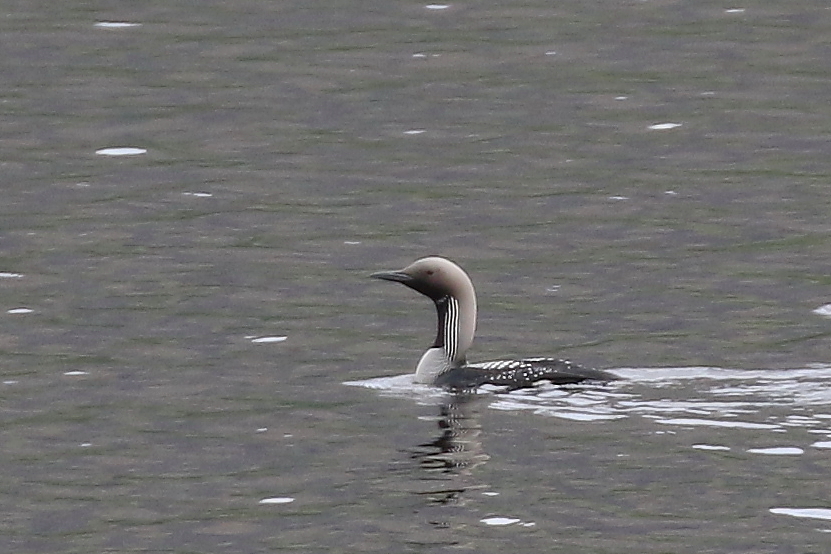
Before I was so rudely interrupted by a flurry of local and national rarities, I was regaling you with tales from our recent Scottish holiday. We'd done the star mammals and the cetaceans, so let's have a look at a few birds. I found a notebook recently from a childhood visit to Gairloch which recorded sightings of three species of diver - Red-throated, Black-throated and Great Northern. By the end of the first day of our recent trip there, I had seen all three species again in a short drive from our cottage on the southern shore of the sea loch to Red Point. Later I counted at least 10 individuals (mostly Red-throats) in one brief scan from the Big Sands campsite where we spent family holidays almost 40 years ago.
This immaculate Red-throated Diver was just off the beach of Red Point
Such a beautiful bird

Another Red-throat was just offshore at Big Sands 
Red-throated Diver flying past us at Red Point
Click to enlarge for a better view of the pinstriped neck pattern
Divers are one of my favourite bird families, combining sleek good looks with haunting calls and an exquisite choice of breeding habitats. It's bad form, not to mention illegal, to bother these protected birds during the breeding season too close to their nesting sites (typically islets on small lochans for Red-throated and on larger lochs for Black-throated), so my plan was to check out plenty of coastal and roadside habitat and hope for close views in areas where there was no risk of disturbance. An early morning visit to the vast shoreline of Loch Maree - the most important breeding site for Black-throated Divers in the country - produced very distant sightings of three birds, which nest on the large islands way out in the middle of the loch. A visit later in the day was equally unsuccessful as the lochshore was busy with kayakers - no chance of a close view in those circumstances.
A reasonably close view of not one...
...or two...
...but three Black-throated Divers on Loch Maree
You have to be a long way north to see Hooded Crow - this one was on the shore near Gairloch harbour
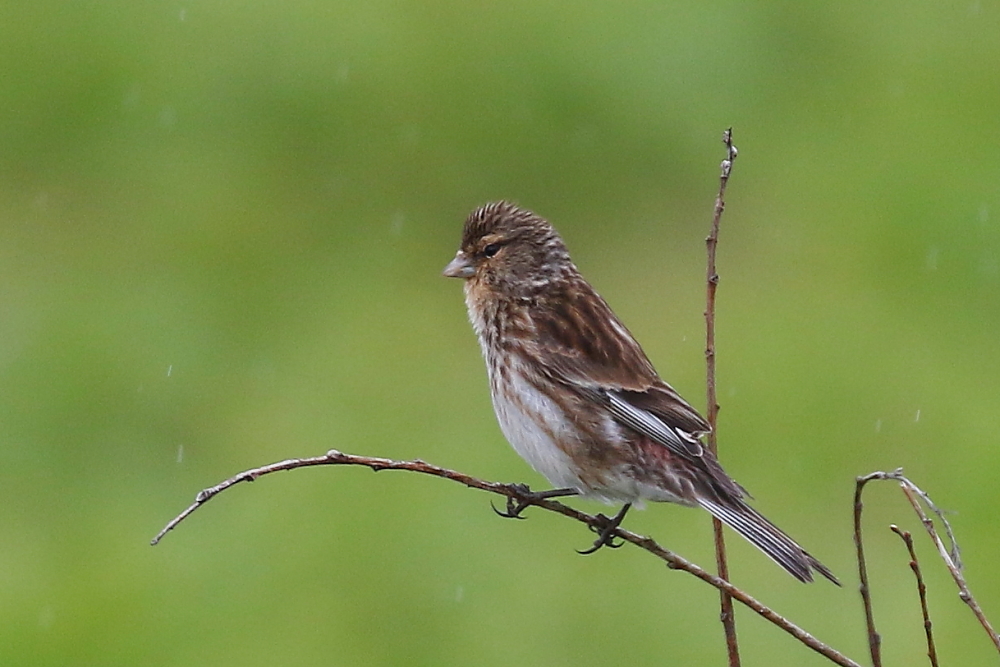
Twite was on my target list for the week - we saw just the one pair, in the rain along the north shore of Gairloch
On another day a couple Black-throats were snoozing close in to an inaccessible stretch of coast near Red Point. So despite good telescope views I was struggling for a photo of a breeding plumaged bird. Then a few days later, when at the south end of Loch Maree looking for dragonflies (more on that in a later post), in an area with few islands and therefore not where one would expect to see divers, not one, or two, but three Black-throated Divers sailed past, apparently too absorbed in each other to pay much attention to me as I fumbled with my camera settings on the shore.

Siskin in the garden of our holiday accommodation
Red-breasted Merganser flying over the sealoch
Skylark at Red Point
Repoll at Red Point - apparently we don't even have to worry about what flavour these days
Northern Wheatear with prey near Red Point
The Beinn Eighe National Nature Reserve, close to where we were staying, is home to another special bird I was hoping to see on our trip - Scottish Crossbill, the UK's only endemic species. A couple of quick visits to suitable habitat had produced nothing more than some distant calls, but a more leisurely stroll with the family around the woodland trail in the NNR was more successful: first a male Crossbill, then a pair. The various site guides I had suggested that Crossbills in this area ought to be Scottish Crossbill, but as I was not carrying sound recording equipment, I guess I can't really prove it. They were fairly chunky, and the calls sounded deeper to my ear than the Common Crossbills near home, so for the sake of argument and the want of a sonogram, let's just call them 'presumed' Scotsbill.
Presumed Scottish Crossbill
Scottish Crossbill has a chunkier more bull-necked appearance than Common
Tree Pipit, Beinn Eighe
I really enjoyed the general 'bumbling around' birding and bumping in to commoner species as well as seeing the local specialities - plenty of breeding Skylark, Siskin, Redpoll, Tree Pipit and Wheatear, all pictured above, were a delight to see. Stand by for one more post on the birds of Wester Ross and then we'll make our way down the food chain to the odonata and lepidoptera before closing the Scottish chapter at the very bottom of the ecological and moral web with an excoriating critique of the West Highland Midge...


Sunday, 30 October 2016

Net migration

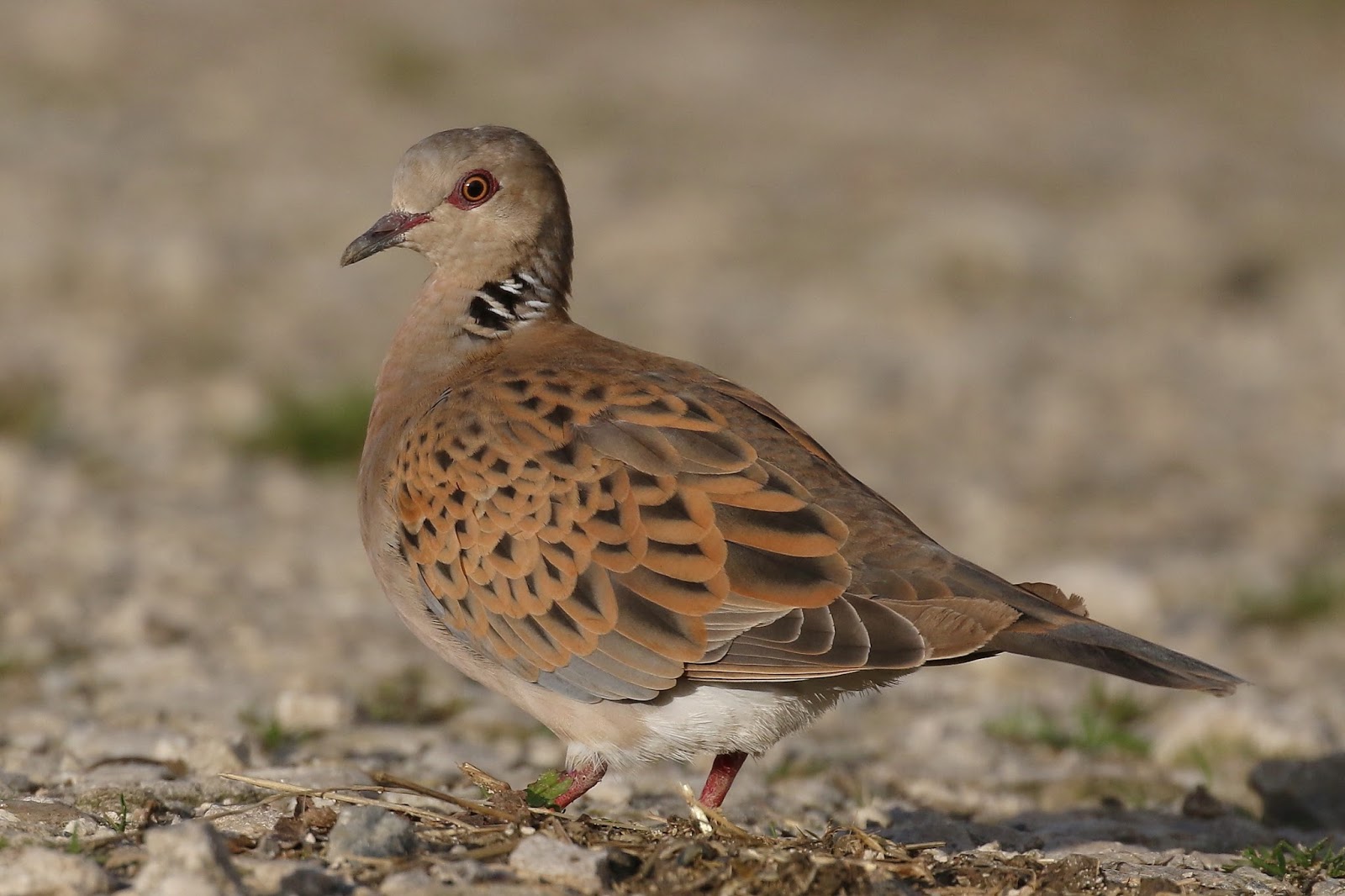
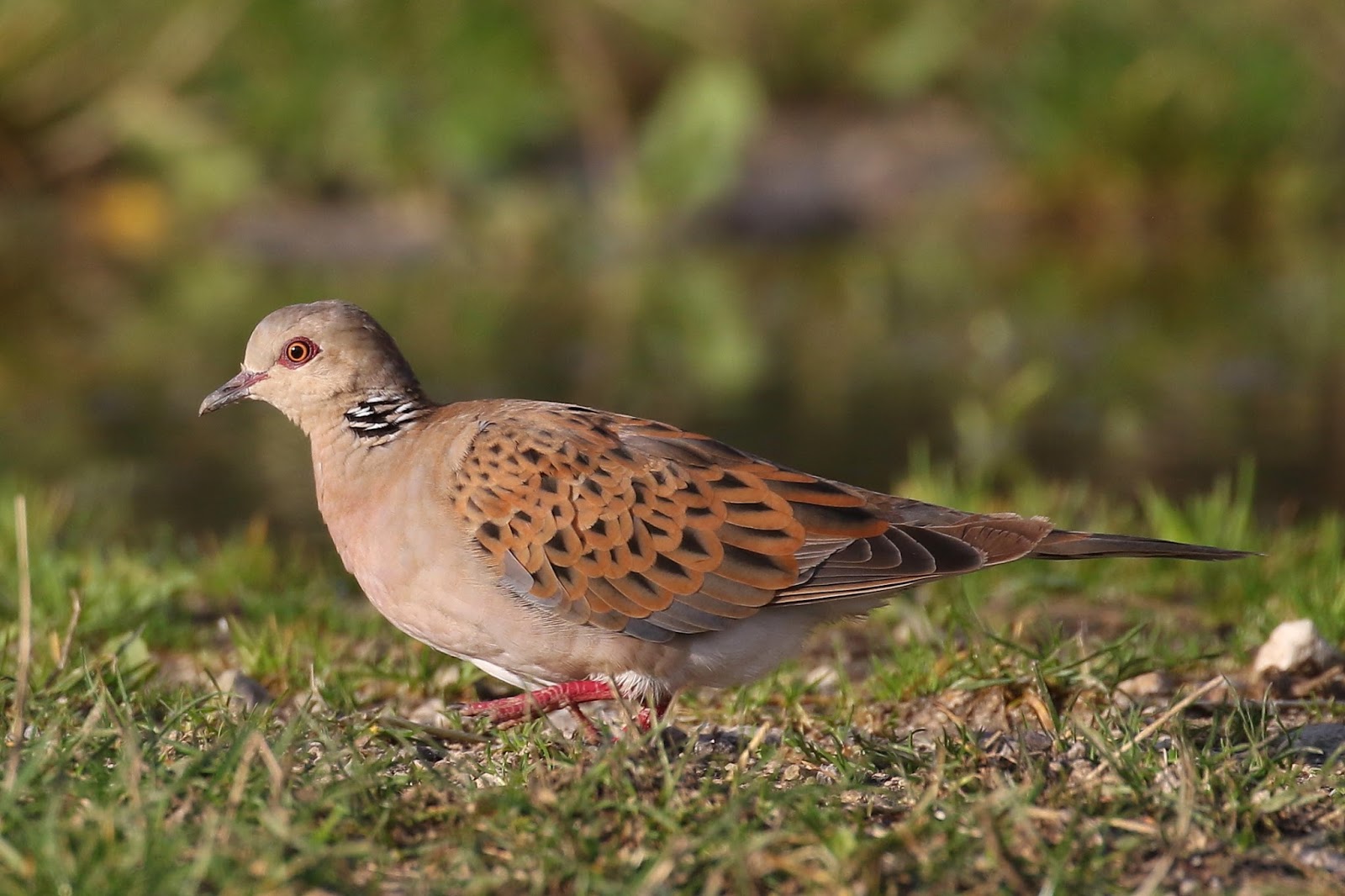
Four visits to Portland this half-term may have failed to deliver the hoped for Dorset mega - several rare migrants being netted and ringed but not seen again after their release - but in addition to the raptors featured in my last post, there were still some other attractive birds to photograph. Perhaps most widely appreciated by birders dipping on the Red-flanked Bluetail and the Pine Bunting was the Reap Lane Turtle Dove. The precipitous reduction in the number of this once commonplace species in Britain is well documented so I won't bang on about it here. Suffice to say if the depressing combination of factors which have contributed to its decline could be reversed we could all look forward to spring, and the sight and sound of this handsome bird, a little more.
Turtle Dove, Reap Lane
This bird seemed unperturbed by people, dogs and even the local cats
A few years since I last saw one in Dorset
I lay down to get these photos, doing well to avoid the obvious hazards of Reap Lane, a favoured area with dog walkers
When not on the ground it was roosting in a small Sycamore yards from the path
Stonechats always seem quite obliging on Portland
This the female of a pair
With the Siberian Accentor invasion still ongoing, Dunnocks have been getting a bit more scrutiny lately
A few Redwings were in evidence on Portland this week
A pair of Ravens on Portland
A small crowd of fellow Bluetail dippers at the Bill
West Cliffs, Portland
I also managed a visit to Durlston this week - Blackcaps were the most conspicuous warbler
This a female Blackcap
Skylarks were on the grasslands...
...and a late Small Copper was in the gully  
Evening mist in the Frome Valley
Turtle Dove
Turtle Dove