Showing posts with label Yellowhammer. Show all posts

Tuesday, 11 April 2017

Bog trotting

The warm weather tempted me out onto the local heaths last weekend, Morden Bog being a particular favourite at this time of year. Emperor Moths were whirling past in the heat but I was unable to find one perched. This has long been a photographic target for me and I am determined to achieve it one day, and without the aid of a pheromone lure! Fortunately there is still plenty of the spring left to persevere. In the meantime, some offerings from the weekend: 
The first thing I stumbled across was not a sign of the developing spring but the outgoing winter: a Great Grey Shrike.
Close views of an impressive bird - it will soon be heading off for its breeding grounds
This well camouflaged Woodlark flushed form the path and perched above me briefly
A Yellowhammer was easier to spot
Stonechat is always prominent on the heathlands...
...and Dartford Warblers are more evident at this time of year.
Siskin was among the songsters at Morden Bog...
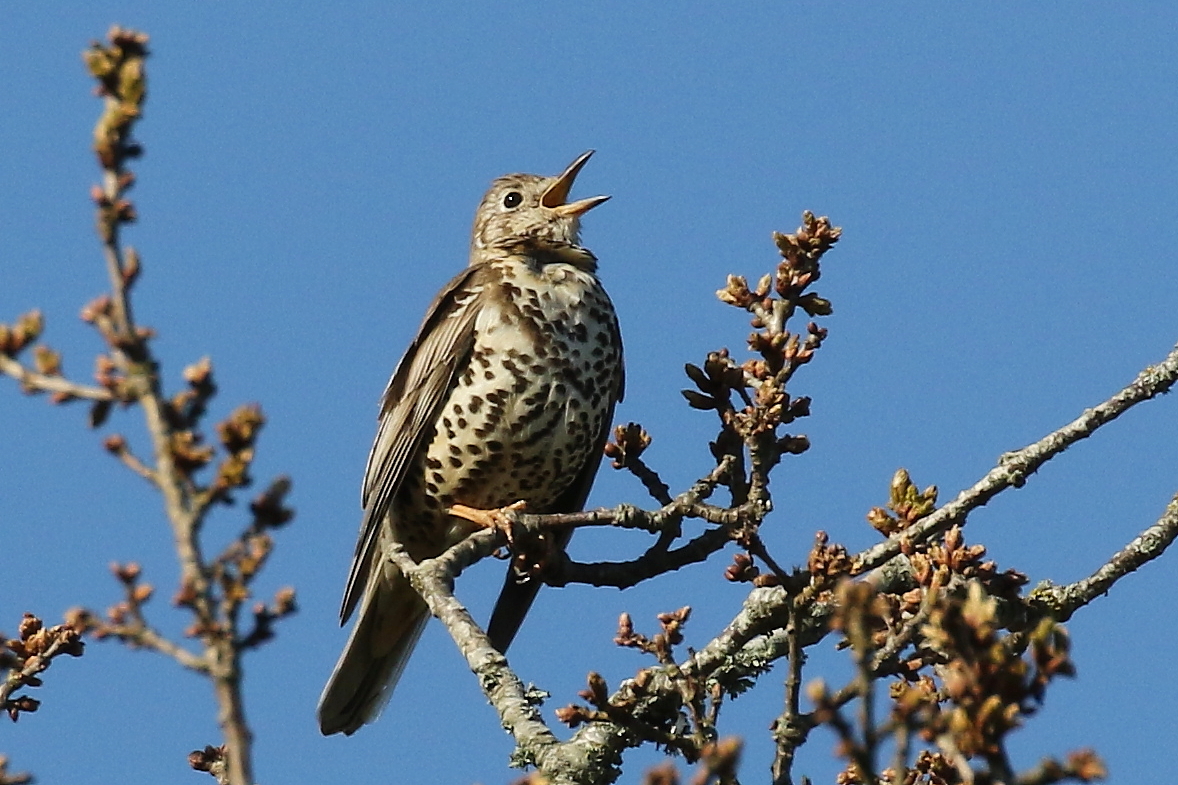
...as was the Mistle Thrush - a haunting song
A migrant Wheatear was out on the heath
Judging by the webbed rear feet I believe this to be a Palmate Newt - photographed in a large puddle on a heathland path
A Stoat was also a welcome surprise at Morden Bog
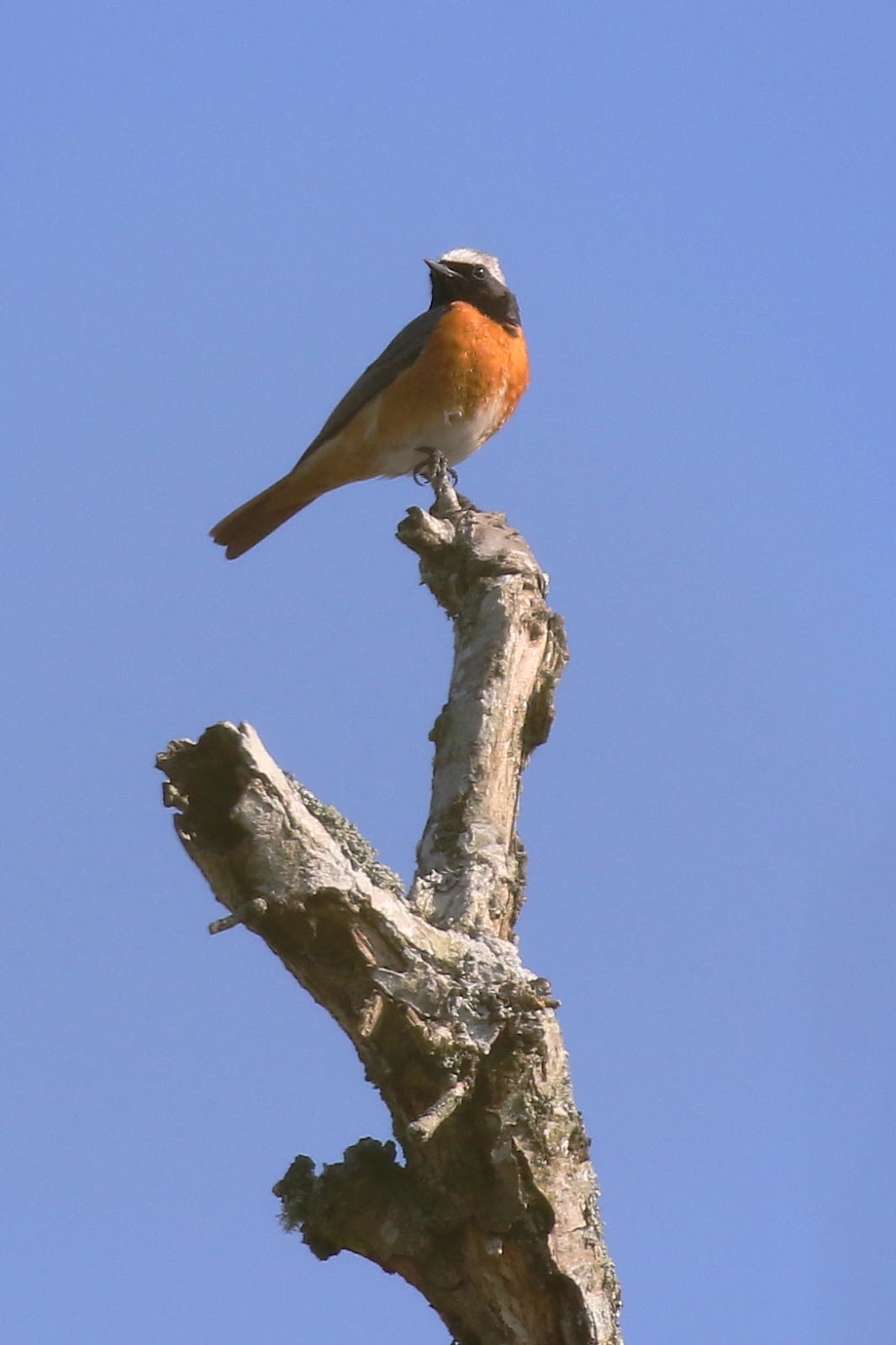
And finally, one of the most sought after spring migrants has returned to the Bog: Common Redstart, a singing male

Monday, 6 February 2017

The best laid plans

'Fail to plan, plan to fail' say the text books, an aphorism I sometimes find myself using when being unnecessarily pompous at work. Then when my own plans come crashing to the ground, I am reminded of the alternative philosophy posited by the well known management guru, Mike Tyson: 'Everyone has a plan - until they get punched in the face'.
Distant Pacific Diver at East Chevington: incapable of sticking to a perfectly good plan
Pacific Diver shows a vent strap, part of which is visible here
These conflicting truisms rather sum up my weekend before last. The plan was as follows: drive through the night to see the sun rise at Druridge Bay Country Park in Northumberland, where a Pacific Diver had been giving the definition of crippling views on Ladyburn Lake. I have seen the returning Cornish bird several times so while it would not have been a new bird for me, the opportunity to photograph a confiding major rarity is what makes me tick these days, so it seemed worth the effort. If the Diver was present, I would fill my photographic boots and be on the road south by 1000 at the latest, get down to North Yorkshire for noon, tick my first British Pine Bunting, and then take a birder's detour on the way home via another long-staying, photogenic diver, the Lincolnshire White-billed, to complete a remarkable rare double-diver day. And with luck, I would still be home in time to tuck the children in to bed.
Pacific Diver lacks the white flank patch of the commoner Black-throated Diver, and is generally a dinkier bird - as comparison with a Coot shows
Pacific Diver has a paler grey hindneck compared to Black-throated Diver
The perfect plan, then: all I needed to do was execute it. Originally I was going to go on Saturday, but a poorly wife, and a glance at the weather forecast, persuaded me to leave it until Sunday. I drove part way up on Saturday evening and stayed at a motel to make Sunday's driving less tiring, and pulled into an icy car park at Druridge Bay as the sun was rising. Julian Thomas from Somerset, a familiar face from the Portland scene, pulled up next to me and with no-one else around, we strolled to the lake in anticipation of a close encounter with the Pacific Diver. It soon became apparent that the Diver had gone - the first day in nine that it had not graced Ladyburn Lake with its presence. I resolved to check the pool at East Chevington, where the diver had been seen before it relocated to Ladyburn, and concluded it wasn't there either after a cursory scan of the pool - too cursory as it turned out, as a call from Julian relayed that it had been found at the far end of the pool by a more diligent observer.
A mixed flock of White-fronted and Pink-footed Geese flying over Druridge Bay
Another skein of Pink-footed Geese over East Chevington
A breathy canter to the far end of the pool enabled a few record shots to be taken, and excellent telescope views to be had, and while it was bitterly disappointing that the Diver had chosen today to not perform at close range, at least I had seen it. By the time I left, I was half-an-hour behind my original plan - an imperfect, but recoverable situation, or so it seemed at the time. A relatively smooth journey to Dunnington near York saw me arrive just after 1230, and as I made the short walk from the car to the paddock near where the Pine Bunting was showing, birders leaving told me that it had been seen just minutes earlier.

I spent the next couple of hours grilling a large feeding flock with which the Pine Bunting had hooked up, as birds flew from a weedy field to the surrounding trees. Yellowhammers, Corn Buntings, Reed Buntings, Tree Sparrows, Bramblings, Chaffinches, Greenfinches and Bullfinches came and went but no Pine Bunting. It had been seen on and off in previous days either here or in a nearby sheepfield, so with enough daylight left to still go for the White-billed Diver, I tried the sheep field, where a seeded area was attracting plenty of Yellowhammers. While there, the Pine Bunting showed briefly back at the paddock - too briefly for me to get back in time to see it unfortunately. It didn't show again before I left at 4. So no Pine Bunting, and no time for the White-billed Diver either.
Tree Sparrows are much easier to see in the north of England - they were present at Druridge Bay and the Pine Bunting site
Close, but no cigar: Yellowhammer is a near relative of the Pine Bunting, another bird which hadn't read the script
Unbroken rain accompanied the long journey home. By the time I reached Dorset I had rationalised it quite well with the usual guff about how it would be no fun if rare birds always did what they were supposed to etc etc, and consoled myself with the thought that I had the best views of Pacific Diver I have enjoyed to date. Pine Bunting becomes officially my bogey bird, having now dipped a few, though with several being found this winter, perhaps I will get another opportunity to see one before long. A Plan B, if you will.

Wednesday, 17 June 2015

A tragedy of miscalculation

I think it was the great historian AJP Taylor who described the outbreak of World War I as a 'tragedy of miscalculation'. While the consequences for world peace were slightly less serious, the same phrase could be used to describe how last weekend went for me. I have come to bore even myself, let alone long-suffering readers, with my seasonal moaning about camping, and about this time of year, I would normally be bleating about being subjected to a weekend in a tent in the New Forest to celebrate my wife's birthday. This year the special day fell on Saturday, but to avoid the humiliations of canvas, we pushed the boat out and hired a campervan (a 1970s VW T2 called Maggie from the excellent Kombi Klassics in Wareham) in which we resolved to go to South Devon.
Male Cirl Bunting, Prawle Point
It shouldn't have been a surprise then, but was still a bit of a kick in the teeth, when the pager mega-alerted a male Eastern Black-Eared Wheatear in, you guessed it, the New Forest on Saturday morning. This would have been the closest new British bird for me to home this year, had I not already gone 100 miles in the wrong direction.
An attractive bird in an equally attractive habitat
As if to underline my miscalculation, the finder Gary Howard was down from Kent for the weekend - on a camping trip! And while theoretically mobile (we were in a campervan, after all), the duties of officiating at the birthday party, not to mention the fuel consumption of the van, meant that nipping back for the bird was not really an option. A bit like last month's Citril Finch, the other accessible spring weekend mega which I was unable to go for on the day of its discovery, it did not stick around.
Compare to this closely related male Yellowhammer
So I had to put it from my mind and concentrate on enjoying the sights of South Devon - Salcombe for lunch, Hope Cove for dinner, Kinsgbridge for fried breakfast in the van, Slapton for ice cream and the always inspiring Prawle Point for the resident Cirl Buntings. These provided some balm to soothe my Wheatear-related bitterness. Not a photo-year tick, on account of the trio of birds seen in Dorset earlier in the year, but still great to see and hear in song.
The acceptable face of camping: a pig to drive, but lots of fun

Saturday, 21 March 2015

Bunting hat-trick

After twitching a Bonaparte's Gull before work on Wednesday, I ended the week with another successful local twitch on Friday night at nearby Maiden Castle, a short detour on my way home from work. A Snow Bunting had been present for a couple of days and I soon relocated it on the cycle path and later in the same field where a large flock of Golden Plover spent the winter. As well as the Snow Bunting, by Friday night these had been replaced by a few Wheatears, my first of the year. Singing Corn Buntings completed a nice evening jaunt.
Snow Bunting, Maiden Castle (#129th species photographed in 2015)
A well marked bird
It was finding plenty of seeds to eat in this field
Corn Bunting, Maiden Castle (#130)
Any why should Buntings get all the attention? Here's a Linnet at Maiden Castle...
...a Lark: Skylark, Maiden Castle...
...and finally from Maiden Castle, the first Wheatear of the year (#131)
One more for the finches: Siskin, near Wareham last weekend (#132)
OK, Buntings, have the last word: Yellowhammer, nr Wareham last weekend (#133)


Sunday, 27 April 2014

New arrivals

Spring migrants continue to arrive - those that haven't been needlessly slain in Malta, that is - click here for details of the problem there and what you can do about it. If the Nightingales which return to Dorset to breed in small numbers every year follow a similar route to this one tagged with a geolocator a few years ago, they don't have to go through Malta, so that's at least one peril they don't have to face.
Nightingale
Nightingale
When I lived in Kent we had some healthy colonies nearby and competing males singing almost constantly throughout the day could be almost showy, particularly early in the breeding season. Not so in Dorset, where there are just a few small colonies, and where any view is a good view. An early start took me to one of the traditional sites where an unusually visible male had a melodic duel with a nearby rival.
Not quite the repertoire of a Nightingale, but always nice to hear Yellowhammer
Another male Yellowhammer
Garganey, our only summer visiting duck, is another migrant to get the pulse racing. So a report of three drakes on the patch at Swineham saw me hot-footing it down there last night in a race against the weather and the twilight, which I just about won. Fortunately they weren't on the distant floods which those who saw them insist on calling 'the Stilt pools' (grrr) but on the much closer ones next to the main path.
Female Blackcap
Male Bullfinch
Twitching this trio deprived me of the opportunity to sit poolside in 40 degree temperatures surrounded by the shrill echo of parental encouragement as various children, including my own, performed at a swimming gala. They did well, and while I was sad to dip out on that, I'm sure there will be other opportunities. There were not to be for the Garganey, which had moved on by the time I dragged my own little dabblers back down to Swineham this morning.
Stonechat are well into their breeding routine - this is the male
And this the female
Speaking of new arrivals, we had a couple ourselves today. Not human ones, I hasten to add - even I would have mentioned that higher up the post - para 2 at least. No, I have been under pressure to accede to getting a family pet for some time. I agreed to stick insects but these weren't cuddly enough apparently. A cat was clearly out of the question, and, having stepped in too many of their by-products over the years, so was a dog.
Garganey at Swineham
You wait for ages...
Fearing another veto, the rest of the family decided to not even consult me about the latest acquisitions - and so today arrived a pair of Guinea Pigs, donated by friends who presumably have enough to eat. At least they are quiet, don't need walking, keep the grass to a nice short sward and are sufficiently low maintenance to not get in the way of birding. Plus, being the long-haired variety, they look like they might come in handy when I get home from Swineham and my mud-caked wellies need a shine. In conclusion, about as tolerable as possessing a rodent could be. 

Raptors were also on the wing this weekend around Purbeck - Peregrine
A Buzzard was making off with some kind of rodent. Guinea Pig?
Whitethroat - many now back on territory


Saturday, 8 June 2013

A splash of colour

The good weather and light evenings made it possible to nip out after work a couple of times towards the end of last week. Well, it was that or finish my dissertation. If I have the car Morden Bog is on the way home so always a favourite. Birds may be keeping a lower profile and plumages becoming a bit worn as the breeding season progresses, but there was still plenty of colour on show near Lawson's Clump.
Linnet
Stonechat
Yellowhammer

Less colourful but no less enjoyable was a Friday night stroll around Swineham - some flooded fields are looking even more promising than on my last visit but at this rate will they stay wet long enough for return wader passage to pull in something good? Who knows, but 200 Black-tailed Godwits will do for now.
Black-tailed Godwit

Black-tailed Godwit

Black-tailed Godwits, Swineham
Willow Warbler, Lawson's Clump
Black-tailed Skimmer (I think), Swineham