Sunday, 25 December 2016

June...

A bit odd to be talking about June on Christmas Day, I know, but with stomachs and the dishwasher groaning under the weight of the day's gluttony, it seems like as good a time as any to chalk off another month in my review of the year. And the temperature outside is about the same too. Oh, a very merry Christmas by the way, and thanks for reading - I know it's been hard going lately with all this reminiscing.

Speaking of which, back to June and early in the month I combined a quick trip to Cornwall to see the long-staying Dalmatian Pelican of unknown origin with a return via Branscombe in Devon to search for Wood White butterflies - a rare species in these parts which were quite easy to find on the crumbling undercliff. A memorable day, not least as the car broke down, as if chiding me for twitching the Pelican.
Dalmatian Pelican, Drift Reservoir
A spectacular bird, though whether it will make Category A of the British list is another matter
Wood White at Branscombe - my photo of the month for June 2016
Some other rare butterflies featured prominently on my travels in June. A visit to Kent on business provided the opportunity to catch up with Heath Fritillaries in the Blean Woods, while Small Pearl-bordered and Marsh Fritillaries were on the wing closer to home in Dorset. A beautiful but fussy family with particular habitat requirements, all facing long-term decline, though the Marsh Fritillaries are at least doing well on the chalk in Dorset. A bit of moth-trapping in our Wareham garden also made for some family fun, a monster Privet Hawk being the highlight.
Small Pearl-Bordered Fritillary, Purbeck
Marsh Fritillary, Cerne Abbas
Heath Fritillary, Blean Woods
Mid-month  saw the whole family heading to Norfolk in a campervan for the weekend, and an opportunity to add Great Knot to my British list followed by a fry-up in the van - twitching in style! It was good to be able to combine some birding with some family time, though getting them up in the morning proved a challenge - the Great Knot was only seen thanks to an early morning lift from Dave Bradnum while they were all still in bed. Cheers Dave.
Great Knot, Titchwell Beach, Norfolk: bird of the month for June
Red-backed Shrike - a smart male snapped whilst in Kent
Privet Hawkmoth in our Wareham garden

Friday, 23 December 2016

May...

Donald Trump said yesterday that he thinks the USA needs to tool up with more nukes. Well, greetings of the season of peace and goodwill to you too, Mr President-elect. With 2016 being seriously discussed among historians as a candidate for 'the worst year ever', the ominous tweet seemed almost designed to underline how little there is to look forward to in 2017 for those on the lunatic fringe who think nuclear holocaust a very bad idea. A good excuse to look back, then, to a time before democracy proved it's not all it's cracked up to be - to spring, and to May in particular, whose turn it is in my review of the year, as migrant birds arrived in their millions to distract us from the grim realities of existence.

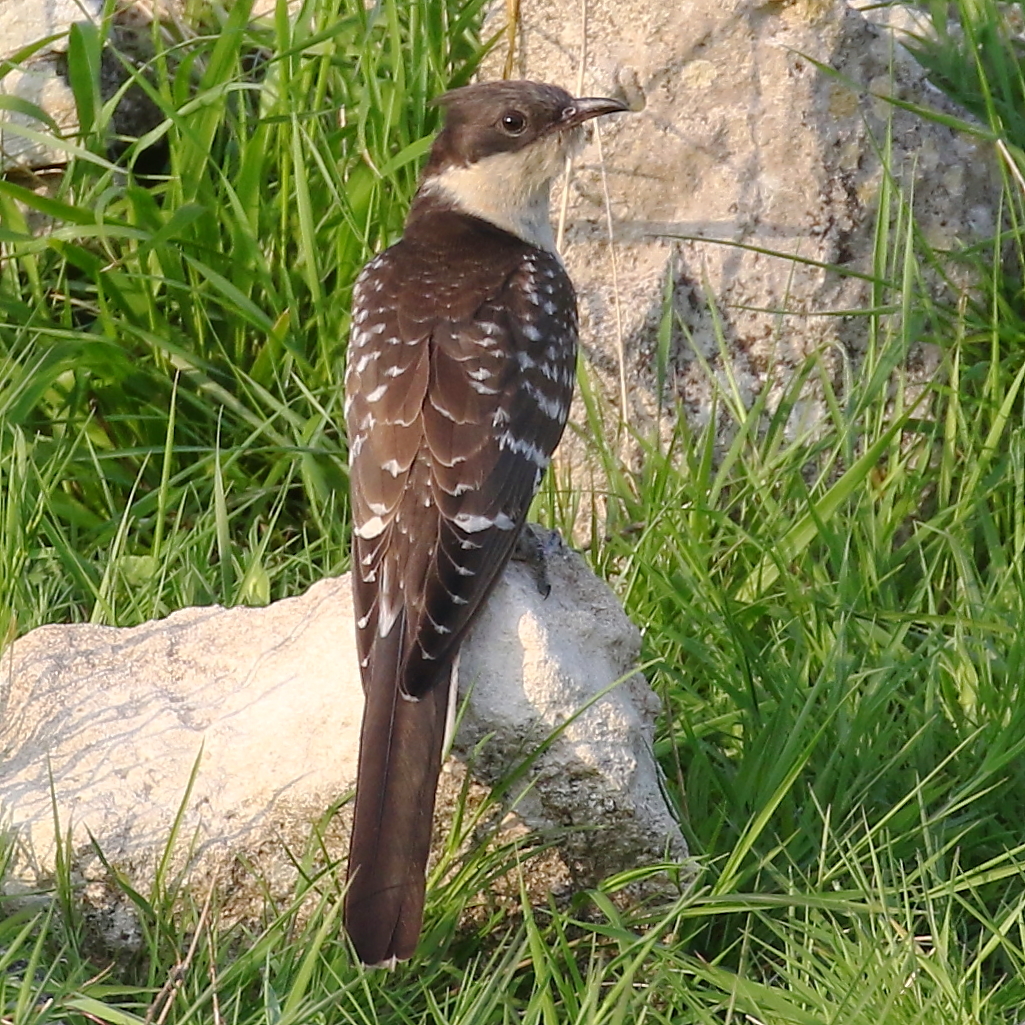
The first half of the month was enlivened by some rare and scarce visitors to my adopted home county of Dorset - Kentish Plover, Black-winged Stilt and Red-rumped Swallow were all good birds, but top billing went a to dashing female Red-footed Falcon at nearby Morden Bog and a Great Spotted Cuckoo on Portland - a Dorset tick for me and many others. It gorged on Brown-tail moth caterpillars, which can be found in huge numbers at Reap Lane, for several weeks.
Red-footed Falcon, Morden Bog: my photo of the month for May
Great Spotted Cuckoo, Portland
Red-rumped Swallow, Lodmoor
Kentish Plover, Ferrybridge
Lepidoptera loomed quite large in my life in 2016: as well as being the first spring in which I had the opportunity to put my new lens through its paces photographing these smaller subjects, I steered an Action Plan for Pollinators through to adoption at Dorset County Council - a small but important attempt to boost the prospects of our declining butterflies, moths and other pollinating insects. Later in the year, some wildflower verges we had created as part of this got a hugely positive reaction from the public - the first time in my twelve year career in local government when the compliments in my inbox have outstripped the complaints! But back to May, which saw the emergence of many sought after species around Dorset's butterfly hotspots:
Duke of Burgundy, Cerne Abbas
Green Hairstreak, Cerne Abbas
Small Blue, Portland
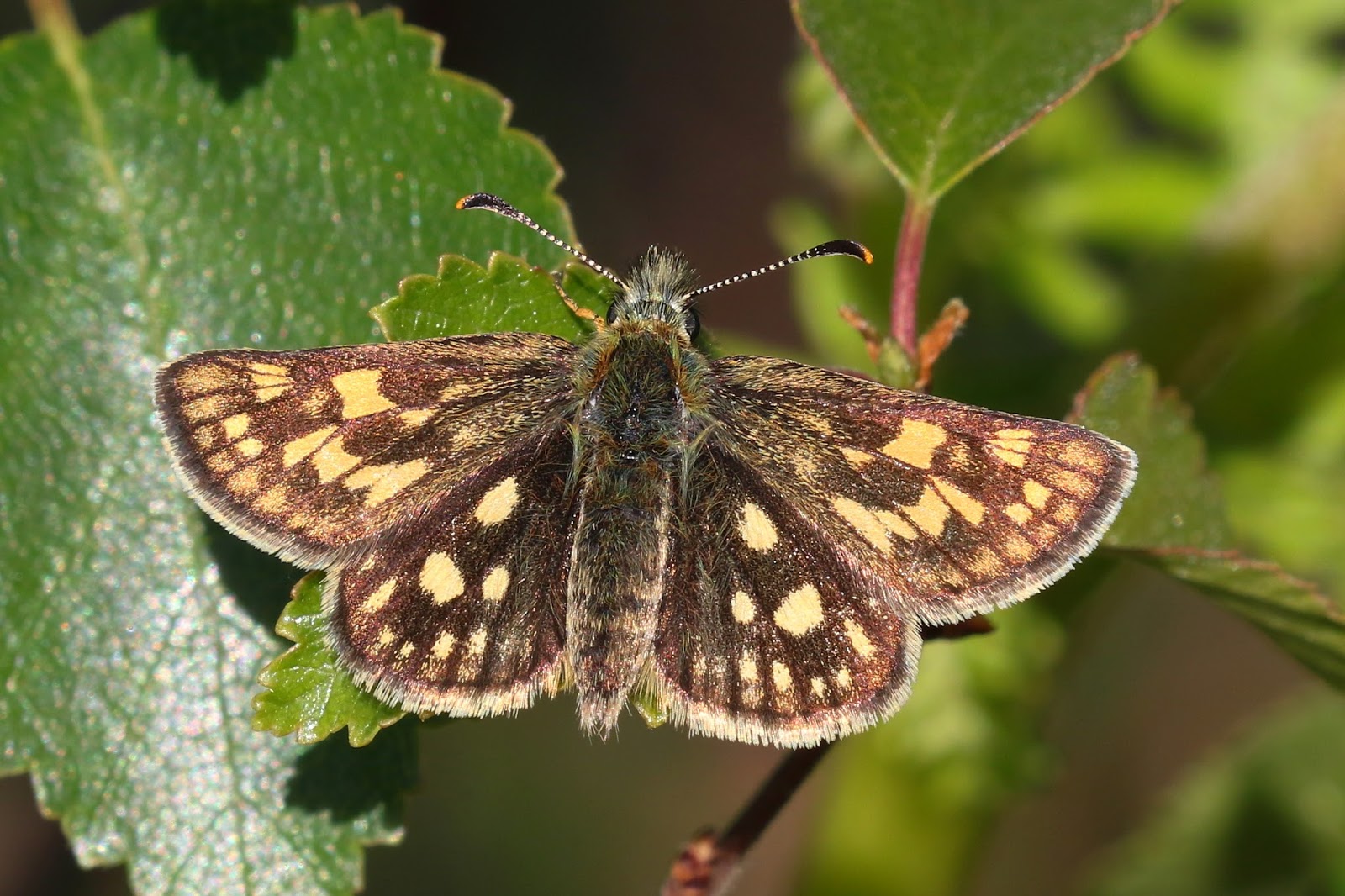
Chequered Skipper - a rarity in Britain restricted to a few sites in north west Scotland - we visited one at Allt Mhuic on the way south from a trip to the Outer Hebs
May ended with one of my most epic and enjoyable adventures of 2016 - a three day trip to the Outer Hebrides with David Bradnum and Paul Welling. We made this mammoth journey to pay homage to the unprecedented spring occurrence of a Black-billed Cuckoo from the Americas and, having done so, to appreciate the dramatic landscapes, the breeding waders and other wildlife of North Uist, South Uist and Benbecula:
Black-billed Cuckoo, North Uist: bird of the month for May
Corncrake, North Uist
Redshank, Outer Hebrides
Female Red-necked Phalarope, Outer Hebrides
One of the highlights of the year and the furthest I travelled in 2016. Fortunately it came at the start of a week off providing for a leisurely stay to appreciate the breeding birds on the Hebrides as well as the vagrant Cuckoo - I would have had neither the energy nor the inclination to just 'smash and grab' the rarity in such a memorable location. And no, Mr Trump, it would not be a good place for a golf course...

Wednesday, 21 December 2016

April...

I'm not sure I am going to get through this review of the year at this rate, so expect increasingly frequent and more badly drafted posts from this point on as I seek to catch up. The highlight of April 2016 for me was a family holiday in Scotland, in a divine cottage on the shores of Loch Creran. Divers, Tysties and Eiders from the garden made for a special location, and a bit of Scottish nightlife was on show too thanks to the moth trap. Despite some typically dreich weather, the birdlife in Oban Harbour provided plenty to photograph:
Black Guillemot, Oban Harbour: my photo, and bird, of the month for April
Iceland Gull, Oban Harbour
Hooded Crow, Oban Harbour
On returning from Scotland, spring migration was in full flow in Dorset - I was able to photograph an approachable Hoopoe, a more elusive Bluethroat and a positively coy Western Subalpine Warbler on the same memorable day on Portland:
Hoopoe, Portland
Western Subalpine Warbler, Portland
White-spotted Bluethroat, Portland
Closer to home spring also produced some good birds around Purbeck: Nightingales returning to their traditional breeding site on the Corfe Ridge, Hobbies hawking over Stoborough Heath and, one of the patch highlights of the year, a strikingly summer-plumaged Bar-tailed Godwit at Swineham.
Nightingale
Hobby, Stoborough Heath
Bar-tailed Godwit, Swineham
 

Sunday, 18 December 2016

Feeding time

Willow Tit is now sadly considered extinct as a breeding bird in Dorset, for reasons which are not entirely clear. Pondering the causes over a pint with some fellow Swineham regulars the other evening, a number of possibilities were mooted: variations on the established themes of competition (from other tit species?); predation (including by Great Spotted Woodpeckers?); changes to their of preferred habitat etc. Maybe even a lack of observer coverage in 'The Shire', the green and pleasant parts of western Dorset which used to be the stronghold of the species.
On the back of this rather dispiriting discussion, last Sunday's excursion to Derbyshire presented a good chance to catch up with Parus montanus as they are doing relatively well there, including at a few sites where they come to feeders to supplement their natural diet. One such is Carsington Water, a large Severn Trent reservoir which is managed for a range of recreational activities and for wildlife. Having got about as good a view of the Dusky Thrush as I was going to get, I headed straight there hoping for a reasonably quick result so I could still get home at a sensible time. I didn't realise how easy it would be - I heard my first chay chay call just after leaving the car park from a Willow Tit which flew across the path as I headed to the wildlife centre. On entering it or another was on the feeding table before I could ask one of the friendly volunteers 'Are there any Willow Tits about?'
Confusion was Marsh Tit, a similar species which also comes to feeders, was conveniently avoided as they are not present at Carsington. The volunteer wardens kindly let me open a window to get some photos, and I retired outside to get a few photos in a more natural setting than the feeding table - not too difficult to see the birds perched, very difficult to get a decent photo in the continuing low light of last Sunday afternoon.  A healthy flock of Tree Sparrows, another species not often seen in Dorset, provided further cheer and their chipping calls were still ringing in my ears as I headed south for home.

Wednesday, 14 December 2016

March...

This month-by-month review of 2016 lark is proving harder than I thought. Not just remembering what happened - that's difficult enough as I hurtle through the foothills of middle age - but summoning up the creativity to write something interesting about it. Fortunately, March was almost wholly uneventful, thus sparing me the bother. Little was achieved in the way of photography, the highlights being:
Treecreeper, Blandford Forum: my photo of the month - against not very stiff competition, it has to be said
Black-necked Grebe, Studland
Firecrest, Kingston Lacy
Great Grey Shrike, Wareham Forest - a late winter visitor
Northern Wheatear, Portland - a harbinger of spring

Monday, 12 December 2016

Eastern promise

December is not known for being the best month for rare birds in Britain, but after an autumn dominated by easterly airflows which brought the Siberian Accentor invasion, a sprinkling of Eastern Black Redstarts and the odd rare Thrush, good birds are still turning up. The most recent mega-rarity, a Dusky Thrush, spent last week in the unlikely location of land-locked Derbyshire. I saw one of this species a few years ago in Kent, but it was a slightly frustrating experience as the bird remained largely obscured in a tree during a brief visit which had to be curtailed in the interests of marital harmony. A second chance at photographing this species therefore appealed, so with time off for good behaviour having entertained parents on Friday and nephews on Saturday, I resolved to go on Sunday.
Dusky Thrush - it may sound like an STD, but is in fact an attractive and very rare visitor from central Siberia
The long-staying Derbyshire bird follows a brief occurrence of this species on the Isles of Scilly earlier in the year
I had planned to leave relatively late on Sunday morning, but on waking in the small hours and realising I was unlikely to get back to sleep, I changed my plans and headed off at about 0330. Fortunately I had Test Match Special to keep me company on the journey north, and if England's performance wasn't exactly anything to cheer about, it was a good way to pass the time. Oxford, Birmingham and Derby came and went and before long I was leaving the motorway and making my way to Beeley, an attractive village on the edge of the Peak District National Park, some of which was just about visible as I arrived shortly after dawn.
Apples on the orchard floor drew the Dusky Thrush back to the orchard repeatedly
It was pretty dark in there, a slightly grainy ISO 2000 was often needed to avoid camera shake

The Dusky Thrush was present in a favoured orchard on my arrival, but it took a while to see as it was deep in cover. It took several more hours of patient waiting to get a half-decent photograph, as when present it tended to remain obscured in trees or obscured in the long grass of the orchard floor. At first light the crowd was three or four deep at the wall overlooking the orchard, but when the Thrush flew to neighbouring fields, as it regularly did, it thinned out and I was able to stake out a space with room to swing a moderately long lens. As the Thrush reappeared I was able to kneel down by the wall, providing a firm base to hold the lens steady in the low light of the shaded orchard as well ensuring I wasn't obscuring the view for those behind me.
A better view of the breast pattern
Rufous panel in the wing can just about be seen here
By now Beeley was fully awake and witnessing another day of potential mayhem. When twitchers descend on rural English villages, they seem to react in one of two ways. The first is to reject the whole thing like a body rejects a heart transplant - something to do with the fact that twitches bring the one thing which Daily Mail reading hamlets fear more than illegal immigration and child abduction: inconsiderate parking. The other reaction is to embrace it, take pride in the presence of a celebrated avian visitor and recognise the opportunity to raise a few quid.
A rare, clear view - bit it wouldn't look back over its shoulder!
A wider crop of the first photo above
Twitter was abuzz with tales of the hospitality of the burghers of Beeley, so I was keen to check this out for myself. It was all true: the village's reaction to potential parking chaos was not to call the police, but to lay on a free park-and-ride shuttle bus from a nearby car park. Having elbowed my way to a good viewing spot on the orchard wall, I though I was going to miss out on the bacon rolls being sold to birders by the tray-load for fear of losing my spot, but the Christmas spirit had infected the birders too and a saintly one behind me grabbed one on my behalf. Hot drinks and other snacks were available and I hope and expect that visiting birders spent and gave generously, and that local businesses and charities made a small killing over the course of the weekend. Top stuff, Beeley, let's hope others follow your example.
Eastern Black Redstart - a very attractive male
Lack of light was a bit of an issue again - this taken at ISO 3200 handheld
Before setting off for Derbyshire, I had considered whether it would be possible to combine the Dusky Thrush with a trip to Cleveland to see a long-staying and highly photogenic Eastern Black Redstart, a sub-species of Black Redstart I have coveted seeing since dipping a much celebrated bird in Kent a few years ago. I concluded that as reports of the Dusky Thrush seemed more frequent in the mornings, to see that first and then head even further north would have made for too gruelling a journey. Miraculously, however, as I was preparing to leave Derbyshire, news broke of a male Eastern Black Redstart which had just been found at Tewkesbury Abbey in my native county of Gloucestershire - possibly the bird seen in neighbouring Worcestershire a couple of weeks back.
A striking bird in a striking location
A rear view of the EBR
Tewkesbury is just off the M5, and with the westerly route home to Dorset via Bristol being not much further than the more direct route via Oxford, a couple of hours later I was pulling into a car park near the Abbey and joining a small crowd to look for the EBR. We scanned the parapets and rooftops of the Abbey without success for a few minutes and then, incredibly, a chap standing next to me picked up the bird in a tree in front of us, much closer than the Abbey. It flitted briefly between the lichen-covered branches of this and a neighbouring tree for a few seconds before dropping to the ground, then sallying over our heads for a spot of fly-catching before heading back up to the Abbey rooftops. Two excellent eastern rarities in the same day, the last one being a complete bonus which also broke up the long journey south.
Sunset on the grounds of Tewkesbury Abbey
Tewkesbury Abbey